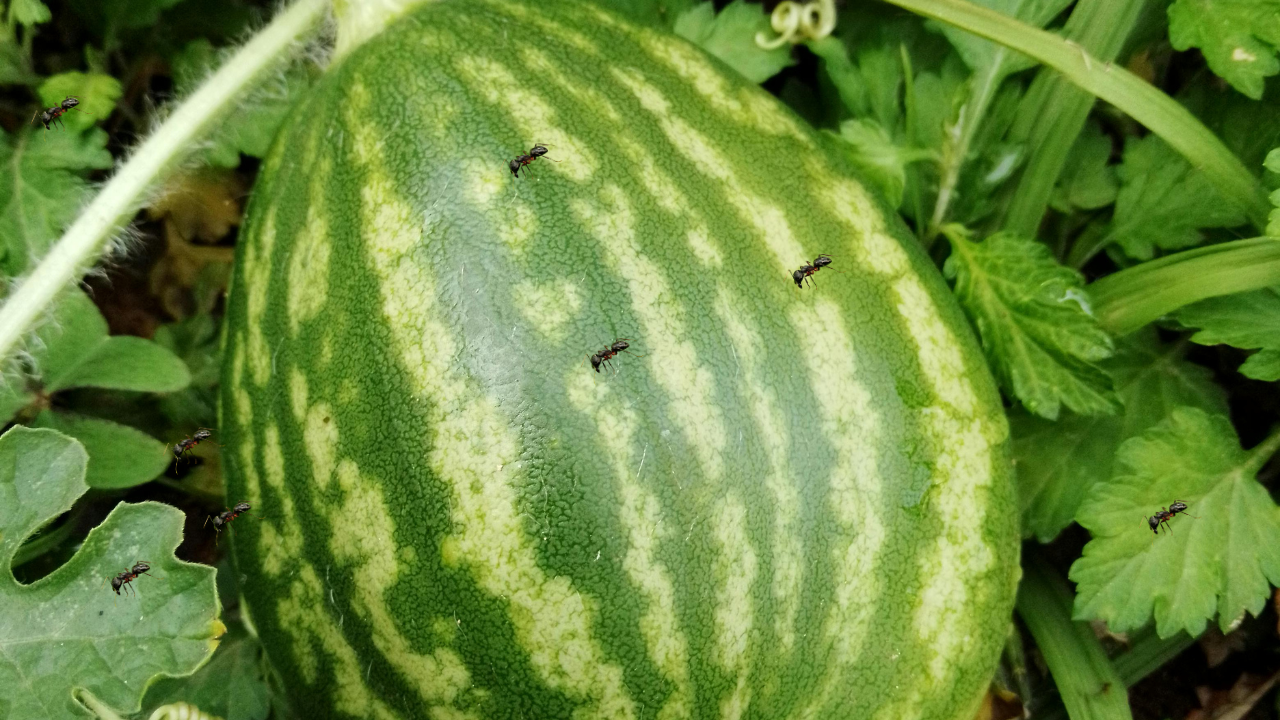
Ants on Watermelon Plants. Because of their sweet and hydrating fruits, watermelon plants are a favorite among home gardeners. Yet, dealing with ants on watermelon plants is a regular issue for gardeners. If ignored, these little insects can cause annoyance and even damage to the plants. This article will examine the causes of ant attraction to watermelon plants, the dangers they may present, and efficient ways to manage them. You can make sure your watermelon plants are healthy and productive by adhering to these recommendations.
1. Understanding the Attraction of Ants to Watermelon Plants
Because watermelon plants produce pleasant byproducts like nectar and honeydew, ants are frequently drawn to them. Nectar-rich blossoms on watermelon plants can be an alluring food source for ants. Moreover, some insect pests, such as aphids, can infest watermelon plants and create honeydew, a sweet liquid that ants eat. In exchange for honeydew, ants defend aphids from predators to create a symbiotic partnership. Ant activity on watermelon plants may rise as a result of this mutualistic connection.
2. The Potential Risks of Ants on Watermelon Plants
While ants may not harm watermelon plants directly on their own, their presence might indirectly cause a number of problems. First, by obstructing pollinators like bees that visit watermelon blossoms, ants might interfere with the normal pollination process. Low levels of pollination may lead to poor fruit ripening and poorer yields. Moreover, ants can shield and support colonies of other harmful pests, such as scale insects or aphids, which can harm plants by consuming their sap. Last but not least, ant activity on watermelon plants can result in lesions that act as points of entry for illnesses.
3. Identifying Ant Species on Watermelon Plants
Identification of the ant species present is crucial for managing ants on watermelon plants. Various ant species may display varying behavior and react to control measures in different ways. The Argentine ant, fire ant, and carpenter ant species are frequently observed on watermelon plants. You can adjust your management methods in accordance with the specific ant species by having an understanding of them.
4. Natural Remedies for Ant Control
There are various choices available if you would rather control ants on your watermelon plants naturally. Disrupting ant trails by adding cinnamon, coffee grounds, or diatomaceous earth along their travel routes is one practical method. By erecting barriers, these compounds prevent ants from getting to the plants. Spraying vinegar and water directly on ant trails and colonies is another all-natural cure. Also, you may help keep ants away from your watermelon plants by growing ant-repellent herbs like mint or tansy there.
5. Chemical Solutions for Ant Infestations
Chemical solutions can be taken into consideration in circumstances of severe ant infestations where natural cures are ineffective. It’s critical to choose pesticides carefully labeled for ant control and to adhere to all directions. Targeting complete ant colonies is a popular application of ant baits. These baits include enticing ingredients mixed together with toxicants that affect slowly. The colony is effectively destroyed when the ants carry the bait back to their nests. Instead, ants on the watermelon plants can be specifically targeted using contact pesticides. To protect the plants from any harm, however, vigilance must be taken.
6. Preventive Measures to Keep Ants Away
The key to preventing ant issues on watermelon plants is prevention. Start by keeping your garden clean by clearing away any fallen fruit or other debris that can serve as an ant attraction. Check your plants for aphid or scale infestations frequently because these pests can draw ants. If you see any ant activity, act right once to stop it from getting worse. Ants can be discouraged from climbing up by erecting physical barriers, such as sticky bands or petroleum jelly, around the stems of watermelon plants. Keeping ant-repellent plants in the area might also act as a natural deterrent.
7. Ensuring the Health of Watermelon Plants
In addition to taking care of the ant problem, it is essential to provide your watermelon plants with the best care possible. Make sure they get enough water, sunlight, and food for healthy growth. Keep a close eye on the plants for any symptoms of disease or stress, and intervene quickly if necessary. You can increase the plant’s resistance to pests and reduce its allure to ants by preserving the plants’ general health and vitality.
Conclusion
Using a proactive and multifaceted approach is necessary to control ants on watermelon plants. You may safeguard your watermelon crop and increase its output by comprehending why ants are drawn to these plants, the possible dangers they bring, and putting into practice efficient control techniques. Always remember to select the right treatments depending on the extent of the infestation and the particular ant species involved. You can have a flourishing watermelon garden free from ant-related problems with attentive observation and prompt treatments.
FAQs
Q: Can ants directly damage watermelon fruits?
A: No, ants alone do not cause damage to watermelon fruits. However, their presence can indirectly contribute to issues like poor pollination and increased pest populations.
Q: How can I identify the ant species on my watermelon plants?
A: Ant identification can be challenging, but observing their physical characteristics and behavior can provide clues. Consult online resources or seek assistance from a local entomologist if needed.
Q: Are there any organic methods to control ants on watermelon plants?
A: Yes, several organic methods, such as using cinnamon, coffee grounds, vinegar sprays, or ant-repellent plants, can help deter ants from watermelon plants.
Q: Can ants damage the stems or leaves of watermelon plants?
A: While ants may not directly harm the stems or leaves, their movement can create wounds that serve as entry points for diseases. It is important to address any issues promptly.
Q: What are some preventive measures to keep ants away from watermelon plants?
A: Good garden hygiene, removing fallen fruits or debris, using physical barriers, and cultivating ant-repellent plants are effective preventive measures against ant infestations.