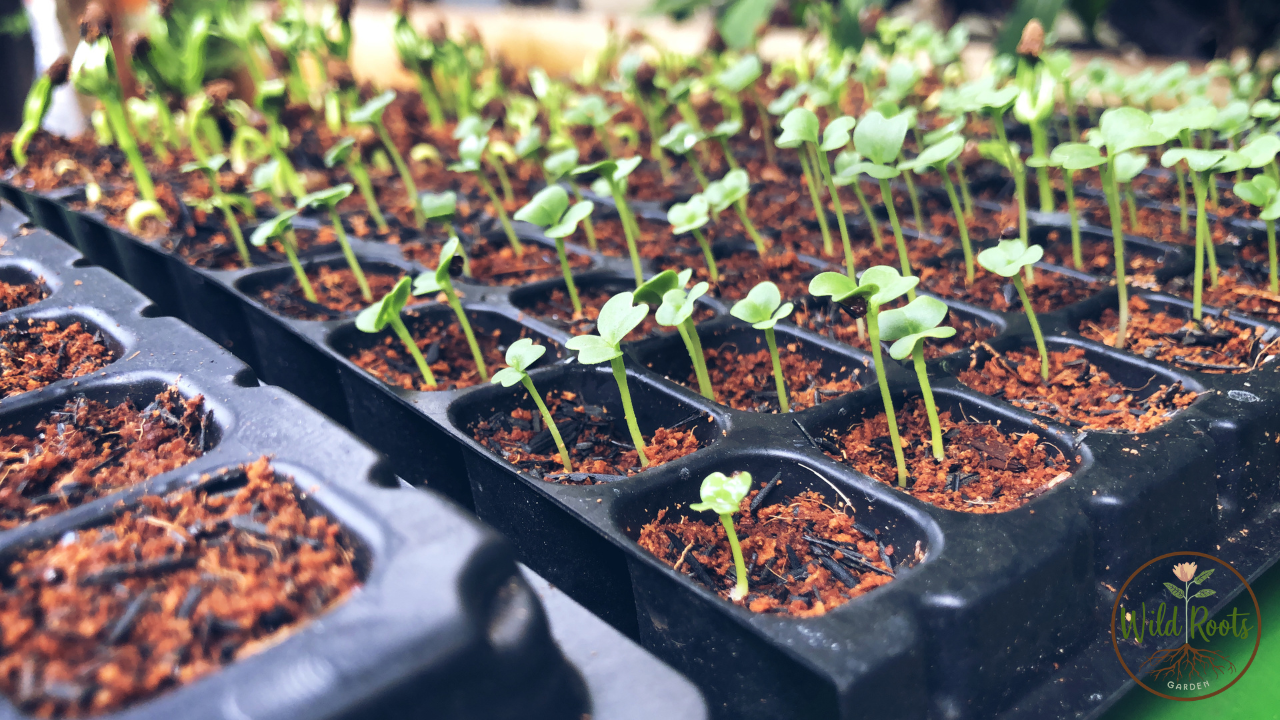
Starting your own vegetable seeds indoors is one of the most rewarding things you can do as a Florida gardener. You get to choose from hundreds of unique varieties you’ll never find at the garden center, save significant money, and best of all—you get a head start on our intense growing seasons before the heat arrives.
But here’s the thing: Florida presents unique challenges. Our spring heats up fast, our winters can surprise you with frost, and the humidity… well, you already know about that.

The good news? With the right setup, you can successfully start seeds indoors and grow strong, healthy transplants that thrive in our unique climate. This guide covers everything you need—from basic setups to pro-level systems—with specific recommendations for Florida conditions.
Why Start Seeds Indoors in Florida?
Before we dive into equipment, let’s talk about why this matters for Florida gardeners.
The real advantage of starting seeds is the ability to select whatever variety you wish, and the cost saving of creating 100 plants for the same price as buying one . But beyond that:
| Advantage | Why It Matters in Florida |
|---|---|
| Beat the heat | Summers get hot very early. Starting indoors gives plants a head start so they reach maturity before extreme heat arrives |
| Extend the season | Grow warm-season crops like tomatoes and peppers that need a longer growing period |
| Protect from weather | Shield delicate seedlings from unexpected cold snaps and intense sun |
| Better variety selection | Access hundreds of varieties not available as transplants locally |
For fall gardening, starting seeds indoors lets you get crops like broccoli, cabbage, cauliflower, kale, and lettuce established before the heat breaks .
What You’ll Need: The Complete Equipment List
Essential Supplies (Non-Negotiable)
| Item | Why You Need It | Florida-Specific Notes |
|---|---|---|
| Grow lights | Windowsills don’t provide enough light for strong seedlings | T5 fluorescents or LEDs work well; lights need to be 2-4 inches above seedlings |
| Seed starting mix | Light, sterile, well-draining medium | Never use garden soil—it’s too heavy and contains pathogens |
| Containers | Cell packs, small pots, or trays | 2-3 inches deep is ideal; deeper containers are hard to keep evenly moist |
| Labels | You will forget what you planted | Label with crop, variety, and planting date |
| Water source | Gentle watering is critical | Spray bottle for seeds; bottom-watering for seedlings |
Nice-to-Have Equipment (Makes Life Easier)
| Item | Purpose | When to Consider |
|---|---|---|
| Heat mat | Speeds up germination for warm-season crops | Essential for peppers, tomatoes, eggplant in cooler months |
| Humidity dome | Retains moisture during germination | Use until seeds sprout, then remove |
| Timer | Automates light cycles | Set for 14-16 hours of light daily |
| Small fan | Strengthens stems, prevents mold | Use once true leaves appear |
Grow Lights: The Most Important Investment
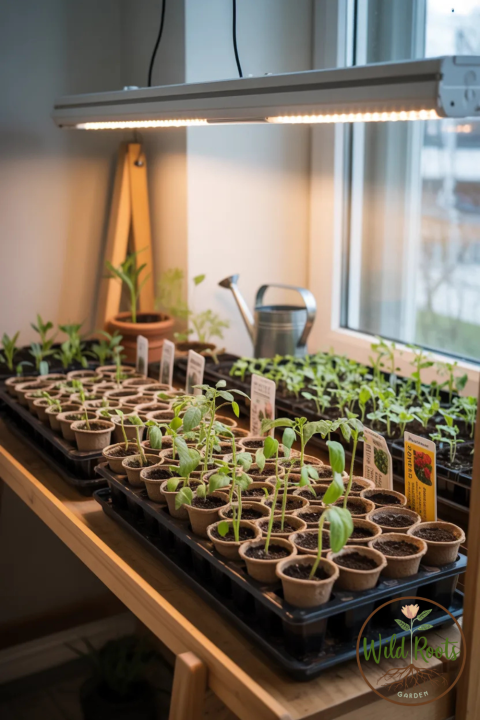
This cannot be overstated: placing seed containers on a windowsill or in a bright room does not really work . Florida’s windows often get intense afternoon sun that can cook seedlings, and the light is directional, causing plants to bend.
Light Options Compared
| Type | Pros | Cons | Best For |
|---|---|---|---|
| T5 Fluorescent | Inexpensive, not too warm, effective | Older technology | Beginners; works great 2-4 inches above plants |
| LED Grow Lights | Energy-efficient, long-lasting, cooler | Higher upfront cost | Serious gardeners; 14-16 hours/day |
| Shop Lights (T8/T12) | Very affordable | Lower light output | Budget setups; keep very close to plants |
Light Positioning Tips
-
Germination stage: Keep lights off until seeds sprout
-
Seedling stage: Position lights 2-4 inches above the top of the seedlings
-
Duration: 14-16 hours of light per day
-
Adjust as they grow: Move lights up as plants get taller
Containers and Soil: Getting the Foundation Right
Container Options
| Container Type | Pros | Cons | Best Use |
|---|---|---|---|
| Plastic cell packs | Standard size, reusable, fit in trays | Need disinfecting between uses | Starting many seeds |
| Peat pots | Plant directly in ground | Can wick moisture away from roots | Individual plants |
| DIY containers | Free (yogurt cups, etc.) | Need drainage holes | Small-scale starts |
Container depth: Shallow containers (2-3 inches) work best. Deeper containers are difficult to keep evenly moist without remaining soaked .
Seed Starting Mix vs. Potting Soil
| Medium | Best Use | Why |
|---|---|---|
| Seed starting mix | Germination | Fine-textured, sterile, retains moisture without waterlogging |
| Potting soil | Up-potting seedlings | Contains nutrients for growth |
| Garden soil | NEVER for starting | Too heavy, contains pathogens, full of weed seeds |
Pro tip: If using last year’s containers, wash them with a mild bleach/water solution to eliminate lingering pathogens .
The 7-Step Seed Starting Process
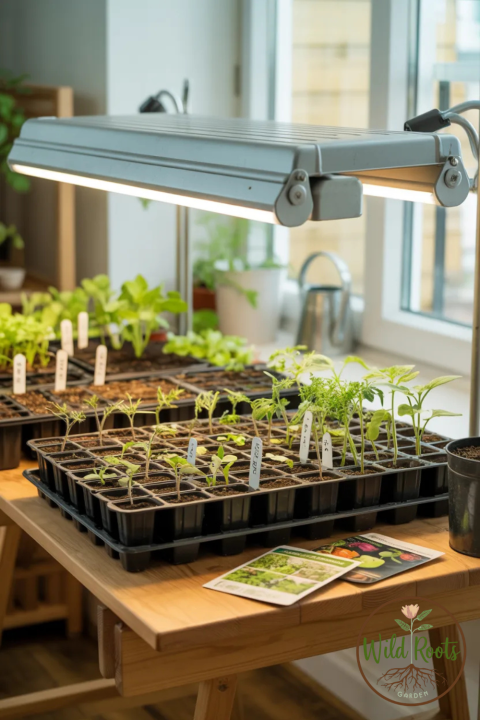
Step 1: Know Your Timing
Florida is divided into three growing regions—north, central, and south—with different planting windows.
General rule: Start seeds indoors 4-8 weeks before the suggested outdoor planting dates .
| Crop Type | When to Start in North Florida |
|---|---|
| Spring tomatoes, peppers, eggplant | January |
| Fall broccoli, cabbage, kale | Late summer |
| Herbs | Year-round indoors |
For specific planting dates, refer to the UF/IFAS Florida Vegetable Gardening Guide .
Step 2: Prepare Your Mix and Containers
-
Moisten the seed-starting mix in a separate container until it’s damp but not dripping
-
Fill containers with the moistened mix, tapping gently to settle
-
Create shallow indentations at a depth about 2-3 times the seed’s diameter
Step 3: Sow the Seeds
-
Plant 2-3 seeds per cell (you’ll thin to the strongest later)
-
Cover lightly with dry starting mix
-
Label everything—including variety and date
Exception: Root vegetables (beets, carrots, radishes, turnips), peas, and beans should be directly seeded in the garden because their delicate root systems don’t transplant well .
Step 4: Create a Germination Environment
-
Mist the surface with a spray bottle to avoid disturbing seeds
-
Cover with humidity dome or plastic wrap to retain moisture
-
Place in a warm spot—germination is best between 50-80°F for fall crops, warmer for summer crops
-
Consider a heat mat for warm-season crops like peppers, tomatoes, and eggplant
For Florida winters: A simple “grow box” using a clear storage container with lights on top creates the perfect warm, humid environment for germination .
Step 5: Provide Light—Immediately After Sprouting
As soon as seeds sprout (typically 5-14 days, depending on crop), remove the humidity cover and move seedlings under lights .
-
Position lights 2-4 inches above seedlings
-
Run lights 14-16 hours daily
-
Use a timer to automate
If using a windowsill (not recommended for more than a few plants), choose a south- or west-facing window and rotate trays 180 degrees every couple of days to prevent bending .
Step 6: Water and Feed Correctly
Watering:
-
Keep soil evenly moist but not waterlogged
-
Water from below once seedlings emerge—add water to the tray and let pots wick it up
-
Allow soil to dry slightly between waterings
Fertilizing:
-
Start fertilizing when true leaves appear (about 10-14 days after sowing)
-
Use a diluted, balanced fertilizer (like 15-30-15 at 100 ppm)
-
For longer-growing seedlings, yellowing leaves may indicate nutrient deficiency
Step 7: Thin and Strengthen
Thinning:
-
When true leaves appear, snip weaker seedlings at soil level (don’t pull—this disturbs roots of the remaining plant)
-
Leave the strongest seedling per cell
Strengthening:
-
Once true leaves develop, add a small fan to gently blow on seedlings for 10-15 minutes daily
-
This builds strong stems and prevents mold
Up-Potting: When and Why
When seedlings outgrow their starter cells (typically when true leaves appear), transfer them to larger pots—this is called up-potting .
How to Up-Pot
| Step | Action |
|---|---|
| 1 | Fill larger pots (2-4 inches wide) halfway with nutrient-rich potting mix |
| 2 | Water seedlings thoroughly, then carefully remove from starter cells |
| 3 | Place each seedling in its pot, fill with more mix, and water |
| 4 | Keep under lights (4-6 inches above canopy) for 12-14 hours daily |
When to skip: If temperatures are favorable (below 86°F), you can transplant directly from starter cells to the garden. However, up-potting offers better protection from rain, wind, and pests .
Hardening Off: The Critical Final Step
Seedlings started indoors are adapted to the gentle environment of your home. Transplanting them without preparation is like dropping them off in the desert—they’ll get sunburned, dehydrated, or even die .
The 7-Day Hardening Off Process
| Day | Exposure | Notes |
|---|---|---|
| 1 | 1-2 hours in morning sun | Start in a protected, shady spot |
| 2-3 | Gradually increase to 4 hours | Monitor for wilting |
| 4-6 | Increase to 6-8 hours | Include some direct sun exposure |
| 7 | Full day outdoors | Ready to transplant |
Always water at the beginning of the outdoor period and watch for signs of sunburn (brown patches on leaves) .
Pro tip: Plant on a cloudy day or late in the afternoon to give seedlings extra time to adjust .
Florida-Specific Growing Strategies
Spring Planting (January-March in North Florida)
Start indoors in January for spring gardens :
-
Tomatoes, peppers, eggplant
-
Summer squash
-
Herbs (basil, cilantro, parsley)
Key challenge: Our springs heat up fast. Getting plants to maturity before extreme heat arrives is crucial .
Fall Planting (Late Summer in North Florida)
Fall gardening offers reduced pest pressure, decreased watering needs, and more favorable temperatures .
Start indoors for fall :
-
Broccoli, cabbage, cauliflower
-
Kale, lettuce, Swiss chard
-
Cilantro, parsley
-
Brussels sprouts
Fall planting dates vary by region—check the UF/IFAS Florida Vegetable Gardening Guide for specific windows .
South Florida Considerations
South Florida has unique growing conditions:
-
Summer heat makes indoor growing attractive—climate-controlled homes combined with long days work well for herbs and greens
-
Tropical seeds like peppers may need extra heat for germination; a grow box with lights creates ideal conditions
Sample Setup Budgets
Basic Setup ($75-100)
| Item | Estimated Cost |
|---|---|
| T5 shop light with bulbs | $30-40 |
| Seed trays and cells | $10-15 |
| Seed starting mix | $8-12 |
| Spray bottle | $3-5 |
| Timer | $10-15 |
| Labels | $3-5 |
Intermediate Setup ($150-200)
Add to basic setup:
| Item | Estimated Cost |
|---|---|
| Heat mat | $25-35 |
| Humidity dome | $10-15 |
| Small fan | $15-20 |
| Wire shelving unit | $40-60 |
Advanced Setup ($300-500)
| Item | Estimated Cost |
|---|---|
| LED grow lights (2-4) | $100-200 |
| Multi-tier wire shelving | $80-120 |
| Heat mats with thermostats | $50-80 |
| Automated timer system | $20-40 |
Common Problems and Solutions
| Problem | Likely Cause | Fix |
|---|---|---|
| Leggy, stretched seedlings | Insufficient light | Move lights closer (2-4 inches above) |
| Seedlings damp off (collapse at soil line) | Fungal disease from too much moisture | Improve air circulation; water from below; use sterile mix |
| Mold on soil surface | Poor air circulation, overwatering | Add small fan; allow soil to dry slightly between waterings |
| Slow germination | Soil too cool | Add heat mat for warm-season crops |
| Yellowing leaves | Nutrient deficiency (for older seedlings) | Begin diluted fertilizer |
| Brown patches after transplanting | Sunburn from inadequate hardening off | Harden off more gradually next time |
Frequently Asked Questions
When should I start seeds indoors in Florida?
North Florida: Start spring seeds in January; fall seeds in late summer .
Central Florida: Slightly earlier spring start, later fall start.
South Florida: Year-round possibilities, but summer is best for indoor herbs and greens .
Can I start seeds on a Florida windowsill?
Only for a few plants and with careful attention. South- or west-facing windows are best, but you’ll need to rotate trays daily to prevent bending. For more than a dozen seedlings, invest in grow lights .
What vegetables should NOT be started indoors?
Root vegetables (beets, carrots, radishes, turnips), peas, and beans have delicate root systems that don’t transplant well. Direct seed these in the garden .
How do I prevent mold on my seedlings?
Use a small fan for air circulation, water from below, and remove humidity domes as soon as seeds sprout .
Is it worth starting seeds indoors in Florida?
Absolutely. The main investment is grow lights, which can be used year after year. The ability to choose any variety and the cost savings make it worthwhile .
The Bottom Line
Starting seeds indoors is one of the most satisfying skills a Florida gardener can develop. With the right setup—quality grow lights, sterile seed-starting mix, proper containers, and attention to timing—you’ll grow stronger, healthier transplants than you can buy anywhere.
Remember the Florida essentials:
-
Start spring seeds in January in North Florida
-
Use grow lights positioned 2-4 inches above seedlings
-
Water from below to prevent damping off
-
Harden off for a full week before transplanting
-
Time your starts to beat the summer heat
The investment in a good setup pays for itself in one season. And there’s nothing quite like harvesting vegetables you grew yourself—from seeds you started with your own hands.
Happy growing, Florida gardeners!