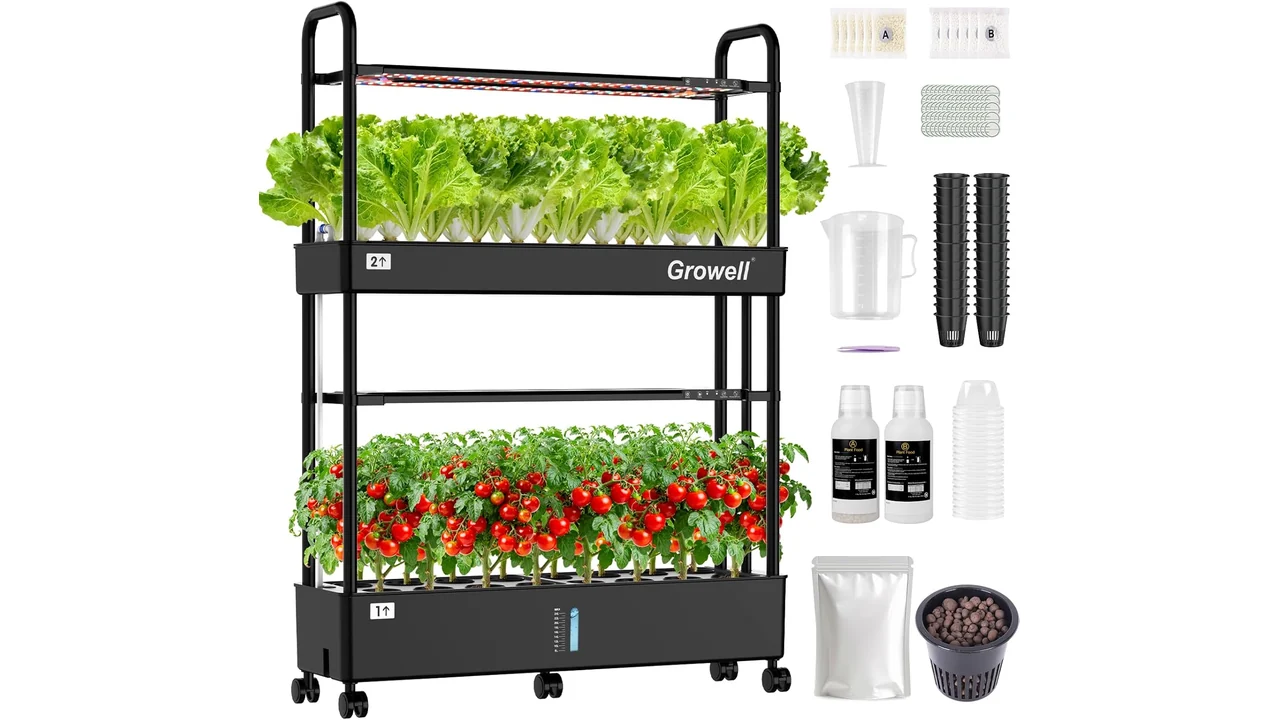
Discover how the SUNCOZE 3-Tier Hydroponics System makes growing fresh, delicious produce at home simple and fun, even for total beginners! With its user-friendly design and impressive 36-pod capacity, you can enjoy a vibrant indoor garden all year long.
Tag: herb garden
Grow fresh herbs and veggies year-round, right in your kitchen, with this amazing 12-pod hydroponics kit! It’s super easy to use, even for beginners, and comes with everything you need to start growing delicious produce today.
Imagine enjoying fresh herbs and veggies all year long, effortlessly! This smart hydroponics system lets you grow a thriving indoor garden with ease, even if you’re a complete beginner.
Say hello to fresh herbs and greens all year! This smart 12-pod hydroponics system makes indoor gardening a breeze, even for beginners, with its adjustable height and helpful LED screen.
Ready to grow your own fresh produce right at home? Dive into the future of gardening with this comprehensive 4-bucket hydroponic system, perfect for beginners and pros alike!
Craving fresh herbs without the fuss? This brilliant self-watering hydroponic kit lets you effortlessly grow organic basil, parsley, and oregano right in your kitchen!
Revolutionize your indoor gardening with this 28-pod hydroponics system! Imagine fresh herbs and veggies year-round, grown effortlessly in a compact, mess-free tower perfect for any space.
Topic: Social Media Algorithms
Keywords: social media algorithms, how social media algorithms work, algorithm function
Content Summary: Explain that social media algorithms are a set of rules that determine what content users see, prioritizing relevance and engagement. Briefly mention various factors like user interests and past interactions.Social media algorithms are like digital gatekeepers, a set of rules that decide which content appears in your feed. These complex systems aim to show you the most relevant and engaging posts, rather than just the newest ones. They analyze factors like your past interactions, what you’ve liked, shared, and commented on, and even the accounts you follow. Understanding how social media algorithms work helps explain why some posts get more visibility than others, as algorithm function prioritizes content that it believes you’ll find interesting.
**Schema Markup Explained: Boosting Your Website’s Visibility**
Schema markup provides structured data that helps search engines understand your website’s content. By embedding specific code snippets into your HTML, schema markup tells search engines what your content means, not just what it says. This semantic HTML enhancement allows search engines to display richer search results, such as star ratings, rich snippets, or product information, directly on the search engine results page (SERP). Implementing schema markup doesn’t directly improve your search engine rankings but significantly enhances how your website appears to users, driving improved organic traffic and click-through rates. Common types of schema markup include those for articles, products, local businesses, and reviews. Utilize Google’s Structured Data Markup Helper to generate accurate schema and validate it with the Rich Results Test tool.
Understanding **website analytics** is crucial for anyone managing an **online presence**. These tools collect and present data about how users interact with a **website**, offering insights into **website traffic**, **user behavior**, and the effectiveness of **digital marketing campaigns**. By analyzing metrics like page views, bounce rate, and conversion rates, website owners can make informed decisions to improve user experience and achieve their online goals.