
Finding The Right Light Meter For Your Plants
If you’ve ever tried growing plants indoors or in a controlled environment, you know how tricky it can be to get the lighting just right. Measuring light accurately is important, but choosing the right light meter often feels confusing. There are different types, varying price points, and several features to consider.
Some meters focus on general light intensity, while others measure specific light spectrums important for plant growth. You’ll find simple devices that are easy to use and more advanced tools built for precision and data tracking. Deciding what fits your needs means balancing accuracy, ease of use, and budget without getting overwhelmed by technical details.
This article will help you understand the essentials behind these light meters. It’s designed to guide you through the key considerations so you can pick the tool that suits your plants and growing conditions.
What Matters When Choosing A Light Meter For Plants
Not all light meters are created equal, especially when it comes to plants. The way they measure light can differ — some measure overall brightness in lux or foot candles, while others focus on the photosynthetically active radiation (PAR) spectrum, which is crucial for photosynthesis.
Think about what you really need: are you checking general light levels in a room or monitoring the exact light energy your plants use? Also consider how you plan to use the meter. Will you need to record measurements over time, or is a quick snapshot enough? These choices affect which meter will be most helpful.
Common Mistakes To Avoid
A common pitfall is buying a device that’s either too basic or overly complex for your situation. Some people buy expensive meters without needing advanced features, while others settle for cheap models that don’t provide useful data for plant health. Also, don’t assume that all light meters measure the right type of light for plants; focusing on lux alone can be misleading if you want to optimize photosynthesis.
How To Approach Your Decision
Start by clarifying your goals for measuring light. Are you a hobbyist, a serious grower, or someone doing scientific research? Your level of precision and data tracking needs will vary. Next, consider the environment where you’ll use the meter — indoor grow rooms, greenhouses, or outdoor settings. Portability and ease of use can be important depending on your setup.
Price is another factor. Some meters are budget-friendly and cover basic needs, while others are premium tools with detailed features. Balancing cost with functionality will help you find the right fit without overspending or missing key capabilities.
With these points in mind, you’ll be ready to explore the options that follow. The products selected cover a range of features and price points, aimed at different types of plant growers and lighting measurement needs.
Urceri Digital Light Meter
This URCERI device is a reliable choice as the Best Light Meter for Plants, offering accurate light and temperature measurements to support healthy growth.
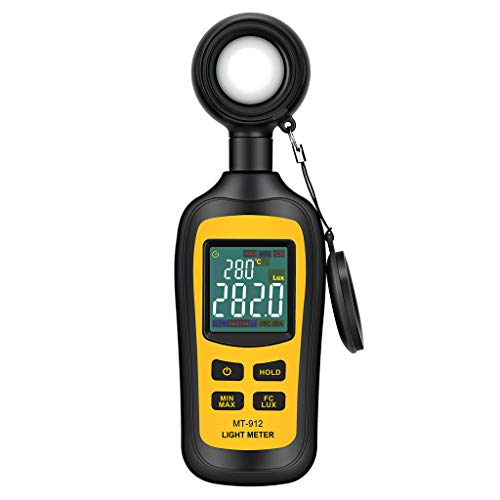
The URCERI Digital Light Meter is a handheld tool designed to measure light intensity and ambient temperature, essential for monitoring plant environments. It can read luminosity up to 200,000 Lux with high accuracy, helping you adjust lighting conditions efficiently.
Using this meter feels straightforward with its clear 4-digit color LCD screen and compact size. It offers consistent readings and useful features like data hold and minimum/maximum values, making it easier to track changes without guesswork.
Key Advantages for Plant Care
- Measures both light intensity and ambient temperature in one device
- Wide measurement range suitable for various indoor and outdoor plants
- High accuracy ensures reliable data for optimizing growth conditions
- Color LCD screen enhances visibility of readings under different lighting
- Compact and lightweight for easy handling and portability
- Includes data hold and min/max reading functions for thorough monitoring
- Two-year warranty adds confidence in long-term use
Considerations Before Buying
- Limited customer reviews available, so user experience feedback is minimal
- Basic model without advanced connectivity or app integration
- Small size may require careful handling to avoid misplacement
Who This Works Well For
This light meter suits plant enthusiasts and small-scale growers who need precise light and temperature readings without complicated features. It removes the guesswork involved in assessing plant lighting, helping you maintain ideal conditions easily.
To get the best results, regularly check both light and temperature readings to adjust your setup timely. The device’s reliability and clear display offer peace of mind, ensuring you won’t miss changes that affect plant health. Its compact design fits well with a hands-on gardening style.
| Best for | Why |
|---|---|
| Indoor plant growers | Accurate light and temperature data help optimize indoor environments |
| Home gardening hobbyists | Simple to use with clear readouts for casual monitoring |
| Office or factory plant setups | Wide measurement range fits diverse lighting conditions in workspaces |
| Users needing portable meters | Compact size and lightweight design enable easy transport and use |
Quantum Par Light Meter
The Quantum PAR Light Meter is a reliable Best Light Meter for Plants that delivers precise readings of light energy for photosynthesis in both indoor and outdoor settings.

The Quantum PAR Light Meter measures the photosynthetically active radiation (PAR) between 400 and 700 nm, providing accurate data on the light available for plant growth. This meter helps growers understand and optimize light conditions for healthier plants without guesswork.
Using this meter feels straightforward and efficient thanks to its portable design and real-time display of recent readings. Its ability to store up to 100 measurements means you can track light changes over time with confidence and ease.
Key Benefits for Plant Light Measurement
- Accurate PAR measurement within 400-700 nm waveband ensures relevant data for photosynthesis.
- Stores up to 100 data points for tracking light changes over time.
- Real-time display shows the last four readings for quick monitoring.
- Tripod socket allows stable, hands-free measurement for consistency.
- Compact and lightweight design makes it easy to carry and use anywhere.
- Ergonomic interface simplifies operation for users of all levels.
Considerations Before Buying
- Tripod sold separately, which may add to initial setup needs.
- Focused solely on PAR light measurement; not suitable for general light lux readings.
- No built-in connectivity for data transfer; manual review required.
My Practical Take
This light meter is ideal for serious growers or researchers who need precise PAR data to optimize plant health. It removes the uncertainty of light measurement, helping reduce stress and improve crop management decisions.
To get the best results, regularly record and compare measurements across different parts of your growing area. This will give you a reliable understanding of your plants’ light environment, ensuring fewer surprises and better growth outcomes.
| Best for | Why |
|---|---|
| Indoor plant growers | Measures precise light levels where sunlight is limited or supplemented. |
| Greenhouse managers | Tracks light intensity changes to optimize energy use and plant health. |
| Plant researchers | Provides accurate PAR data necessary for scientific analysis. |
| Hobbyists with mixed lighting | Portable design allows testing in various environments easily. |
Dr.meter Lx1330b Light Meter
The Dr.meter LX1330B is a reliable choice as the Best Light Meter for Plants, providing precise light intensity readings for optimal plant growth.

The Dr.meter LX1330B is a digital illuminance meter designed to measure light intensity ranging from 0 to 200,000 lux. It helps plant growers determine the best lighting conditions, whether indoors or outdoors, ensuring plants get the right amount of light for healthy growth. Its ability to switch between foot-candles (FC) and lux units adds flexibility for gardeners with different preferences.
Using this meter feels straightforward and dependable. The fast response time means you get up-to-date light readings quickly, which is especially useful for adjusting lighting setups or assessing natural sunlight. Its compact size and clear display make it easy to handle and read, giving confidence in consistent measurements over time.
Key Advantages for Plant Light Measurement
- Fast readings twice per second for timely adjustments
- Switchable FC and LUX units to match user preference
- PEAK data recording captures highest light intensity easily
- Low battery alert prevents unexpected shutdowns
- Suitable for indoor and outdoor light measurement
- Compact and lightweight for easy portability
Considerations Before Buying
- Requires a 9V battery which needs occasional replacement
- Basic display without advanced data logging features
- Not designed for professional photographic light metering despite category
Who This Fits Best
This light meter is ideal for hobbyist and serious indoor gardeners who want reliable, quick light intensity checks to optimize plant health. It removes guesswork by providing clear measurements that help adjust lighting setups effectively, reducing the risk of under- or overexposure.
To get the best results, regularly measure different spots around your plants to ensure even lighting. Its simple controls and fast response mean less time fiddling with gear and more time focused on growing. Peace of mind comes from knowing your plants receive the right light consistently.
| Best for | Why |
|---|---|
| Indoor gardeners | Quickly assess and adjust artificial lighting to match plant needs |
| Outdoor plant enthusiasts | Measure natural sunlight intensity to optimize placement |
| Hobbyists needing simple, reliable tools | Easy-to-use with clear readouts and unit conversion |
| Those monitoring peak light intensity | PEAK button helps capture brief high-intensity light events |
Uni-t Ut383 Light Meter
The UNI-T UT383 is a reliable choice among the Best Light Meter for Plants, offering precise light intensity readings to help optimize plant growth conditions.

The UNI-T UT383 Light Meter is a professional digital device designed to measure light intensity accurately in units of Lux or Foot Candles. It covers a wide range from 0 to 199,900 Lux, making it useful for various lighting conditions, including plant growth environments.
Using this compact meter feels straightforward with its large backlit LCD and quick sampling time of 0.5 seconds. It helps users maintain consistent light levels without guesswork, saving time and improving confidence in lighting decisions for plants.
Key Advantages for Plant Light Measurement
- High accuracy with a range suitable for indoor and outdoor plant lighting.
- Easy-to-read backlit display for use in varied lighting conditions.
- Fast sampling time ensures quick and efficient measurements.
- Portable and compact, convenient for field or indoor use.
- Auto shutdown and low battery indicator help conserve power.
- Data hold and max/min functions assist in tracking light intensity changes.
- Access to 24/7 customer support for troubleshooting.
Considerations Before Buying
- Primarily a light meter; does not offer plant-specific analytics or growth suggestions.
- No wireless or app connectivity for remote monitoring.
- Requires manual reading; no automated logging features.
Who This Fits Best
This meter suits plant enthusiasts and professionals who need accurate, quick light intensity readings to optimize plant health. It removes the guesswork involved in assessing light levels, ensuring plants get the right amount of illumination.
For better results, consistently measure at plant canopy level and compare readings throughout the day. Its reliability and ease of use provide peace of mind that lighting conditions are safe and adequate for plant growth. It’s a practical tool for anyone who values straightforward, dependable measurements.
| Best for | Why |
|---|---|
| Indoor gardeners | Quickly checks light levels to adjust grow lights efficiently. |
| Greenhouse managers | Measures natural and artificial light to maintain plant health. |
| Photography and plant science enthusiasts | Offers precise readings for both lighting setups and plant study. |
| Homeowners monitoring plant light | Easy to use and portable for occasional checks around the house. |
Toptes Ts-710 Light Meter
The TopTes TS-710 is an accurate and versatile Best Light Meter for Plants that helps you find the ideal lighting conditions for healthy growth.

The TopTes TS-710 Light Meter measures light intensity accurately in lux and foot candles, covering a wide range suitable for plants as well as other light sources. Its 180° rotating sensor allows precise readings from different angles, ensuring you understand your plant’s lighting environment fully.
Using this meter is straightforward with its large backlit display, making it easy to read data in any lighting. It provides continuous measurements every 0.5 seconds, so you can quickly assess lighting changes and make adjustments confidently.
Key Benefits for Plant Light Measurement
- Wide measurement range from 0.1 to 200,000 lux suits various plant lighting needs
- 180° rotating sensor offers flexible placement for accurate readings
- Backlit 2.25″ LCD screen ensures readability in low-light conditions
- Measures both lux and foot candles for versatile usage
- Includes temperature and humidity measurement for environmental monitoring
- Data-hold and MAX/MIN recording help track changes over time
- Auto shut-off and low battery indicator enhance usability and reliability
Considerations Before Buying
- Compact size means the screen and buttons are small, which may be less comfortable for some users
- Primarily designed for visible light measurements; not specialized for complex scientific analysis
- Requires AAA batteries, which may need replacement over time
Where This Meter Works Best
This light meter is ideal for gardeners and indoor plant growers who want to optimize their lighting conditions easily without guesswork. It reduces stress by providing reliable and quick light readings, so you can adjust lighting setups confidently.
To get the best results, take readings at multiple points around your plants using the rotating sensor. This helps identify uneven lighting and ensures all plants receive adequate exposure. Its dependable accuracy means fewer surprises in plant growth outcomes.
| Best for | Why |
|---|---|
| Indoor plant growers | Accurately measures light to optimize plant growth conditions |
| LED and fluorescent lighting setups | Measures various light sources common in grow rooms |
| Home and office environments | Helps diagnose lighting issues affecting plant health or workspace comfort |
| Users needing temperature and humidity data | Provides environmental info alongside light measurements for better monitoring |
Understanding Light Meter Types And Their Uses
Light meters vary based on the type of light measurement they provide and the intended application. For example, lux meters measure illuminance, which is useful for general lighting assessment. PAR meters focus on photosynthetically active radiation, essential for plant growth and agricultural purposes. Consider what you need to measure before choosing a device.
Photographic and General Purpose Light Meters
These meters typically measure light intensity in lux or foot-candles. They are suitable for indoor and outdoor lighting assessment, photography, and ensuring proper lighting conditions for various environments.
PAR Meters for Plant Growth
PAR meters measure light in the 400-700 nm range, indicating the light usable by plants for photosynthesis. They are specialized tools for growers, researchers, and horticulturists focused on optimizing plant light exposure.
Key Considerations Before Purchasing A Light Meter
Measurement Range and Accuracy
Check the measurement range to ensure it covers your lighting conditions. Accuracy is important for reliable data; look for meters with specified accuracy percentages and tolerances.
Display and Readability
A clear, backlit digital display improves usability, especially in low-light environments. Features like MIN/MAX readings and data hold can enhance measurement tracking.
Portability and Build
Consider the size, weight, and durability of the meter if you plan to use it in different locations or outdoor conditions. Lightweight and compact designs are easier to carry.
Additional Features
Some meters offer extra functions such as temperature measurement, data recording, auto power-off, and tripod mounting options. Evaluate which features align with your needs.
Common Mistakes When Using Light Meters
Avoid these pitfalls to get accurate and useful readings:
- Not calibrating or verifying the meter periodically
- Measuring light at inconsistent angles or distances
- Ignoring environmental factors like reflections or shadows
- Using the wrong meter type for the intended application
Maintenance And Care Tips For Longevity
Proper upkeep ensures your light meter stays accurate and functional:
- Store the meter in a protective case when not in use
- Keep sensors clean and free from dust or smudges
- Replace batteries promptly to avoid measurement errors
- Handle the device carefully to prevent sensor damage
Frequently Asked Questions
How often should I calibrate my light meter?
Calibration frequency depends on usage and manufacturer recommendations, but generally once a year is sufficient to maintain accuracy.
Can I use a lux meter for measuring plant growth light?
Lux meters measure visible light intensity but do not differentiate light usable by plants. For precise plant growth measurement, a PAR meter is more appropriate.
What is the difference between lux and foot-candle units?
Lux and foot-candles both measure illuminance; 1 foot-candle equals approximately 10.764 lux. Some meters offer the option to switch between these units.
Is it necessary to have a backlit display?
A backlit display is helpful for taking readings in dim or dark environments, improving visibility and reducing errors.
Are light meters affected by temperature?
Temperature can impact sensor accuracy. Some meters include temperature measurement to help account for environmental effects.
Final Thoughts On Choosing A Light Meter
Choosing the right light meter involves understanding your specific measurement needs and the environment in which you’ll use the device. Whether for photography, plant cultivation, or workplace lighting, selecting a meter with appropriate range, accuracy, and features will provide reliable data. Careful use and maintenance will ensure the meter remains a useful tool over time.