- Embark on an exciting journey of discovery with Grow Your Own Future: Hydroponic STEM Projects For Students: Hands-On STEM Gardening Projects and Science Experiments for Classrooms and Homeschool Families. This engaging resource empowers young minds to explore the fascinating world of hydroponics through practical, hands-on activities, making science and nature come alive in a fun and accessible way. Prepare to cultivate curiosity and a deeper understanding of how things work, right from your classroom or kitchen table.
- Simple Hydroponic Projects: Dive into building various hydroponic systems, including easy-to-assemble Kratky jars, efficient wick-fed planters, and even small-scale family systems, all utilizing common household materials.
- STEM/STEAM Learning Connections: Every project is thoughtfully integrated with core concepts across science, technology, engineering, art, and mathematics, fostering a holistic educational experience.
- Kid-Friendly Science Vocabulary: Complex scientific terms are demystified with clear, concise definitions, ensuring that even the youngest learners can grasp new ideas without feeling overwhelmed.
- Science, Nature & How It Works: The fundamental principles of plant growth and ecological systems are explored, offering a direct connection to the natural world.
- Accessibility of Materials: The emphasis on using everyday items for building hydroponic systems makes this a budget-friendly and practical choice, eliminating the need for specialized, expensive components.
- Integrated Learning Approach: The explicit connection of each project to STEM/STEAM principles ensures that learning is not just about building but also about understanding the underlying scientific and engineering concepts. This promotes a deeper, more meaningful educational experience.
- Vocabulary Development: The inclusion of kid-friendly definitions for scientific terms is a significant plus, making complex topics approachable and encouraging vocabulary growth in young learners. This feature supports comprehension and confidence.
- Versatile Application: Whether used in a classroom setting to supplement curriculum or at home for homeschooling families, the projects are adaptable to different learning environments and paces.
- The design of the projects, focusing on simple hydroponic systems like Kratky jars and wick planters, ensures that students can achieve success relatively quickly, fostering engagement and a sense of accomplishment.
- The direct link to STEM/STEAM Learning Connections means that students aren’t just gardening; they are actively engaging with principles of physics (water flow, gravity), biology (plant needs, nutrient uptake), engineering (system design), and even art (observational drawing of plant growth) and math (measurement, data tracking).
- The clarity provided by the kid-friendly science vocabulary significantly enhances the learning process. Students can understand the ‘why’ behind what they are doing, not just the ‘how.’
- The approach of using everyday materials supports the principle of resourcefulness and demonstrates that scientific exploration doesn’t require costly equipment. This makes the learning process more sustainable and replicable.
- Classroom Teachers: Educators looking for engaging, hands-on activities to supplement science curriculum, particularly in units related to botany, ecosystems, or sustainable practices.
- Homeschooling Families: Parents and guardians seeking to provide their children with a comprehensive STEM education that is both fun and academically enriching, with structured projects and clear learning objectives.
- Young Learners (Elementary and Middle School): Students in this age range will benefit most from the simplified explanations and the tangible results of growing plants, making abstract scientific concepts more concrete.
- Curious Minds Interested in Science and Nature: Any child or group of children with a natural inclination towards understanding how plants grow and the science behind it will find this resource incredibly rewarding.
- Anyone Looking for Eco-Friendly Projects: The focus on hydroponics naturally lends itself to discussions about water conservation and sustainable food production.
- Project Simplicity and Scalability: Look for projects that start with easy-to-build systems using readily available materials, like the Kratky jars and wick planters mentioned. The ability to scale up to small family systems offers a progression for more advanced learners.
- Clear STEM/STEAM Integration: The best resources explicitly connect activities to specific science, technology, engineering, art, and math concepts. This ensures that the projects are not just fun but also educationally robust.
- Accessible Language: Kid-friendly vocabulary and clear definitions are crucial for ensuring that young learners can understand the scientific principles being explored.
- Hands-On Approach: Products that emphasize building and experimentation over passive learning are more effective for engaging students and fostering retention.
- Focus on Natural Principles: A good product will illuminate fundamental aspects of science, nature, and how things work, providing a foundational understanding of the world around us.
- Age Appropriateness: While described as for “Students,” consider the specific age range the projects are best suited for. The vocabulary and complexity of the STEM connections will often dictate this.
- Space Requirements: Hydroponic systems, even small ones, require some space. Assess how much room you have available, whether for a classroom setup or a home project.
- Time Commitment: Understand the time involved in setting up projects, monitoring growth, and completing experiments. This will help in planning educational schedules.
- Durability and Reusability: For classroom use, consider how durable the constructed systems are and if they can be reused for multiple students or future projects.
Key Features That Stand Out
This educational kit is packed with features designed to make STEM learning enjoyable and impactful:
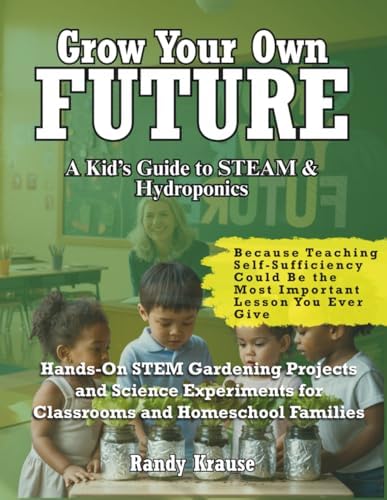
Grow Your Own Future: Hydroponic STEM Projects For Students: Hands-On STEM Gardening Projects and Science Experiments for Classrooms and Homeschool Families
What We Like
The Grow Your Own Future: Hydroponic STEM Projects For Students: Hands-On STEM Gardening Projects and Science Experiments for Classrooms and Homeschool Families offers several compelling advantages for educators and families:
Performance Analysis
This product excels in providing a hands-on learning experience that directly translates theoretical concepts into practical applications. The core strength lies in its ability to transform abstract ideas about plant biology and environmental science into tangible experiments.
Best For
The Grow Your Own Future: Hydroponic STEM Projects For Students: Hands-On STEM Gardening Projects and Science Experiments for Classrooms and Homeschool Families is an ideal resource for a variety of educational settings and learners:
Buying Guide
When considering a product like Grow Your Own Future: Hydroponic STEM Projects For Students: Hands-On STEM Gardening Projects and Science Experiments for Classrooms and Homeschool Families, it’s important to focus on key aspects that ensure a valuable learning experience.
Key Features to Look For
Important Materials
Based on the features, the focus is on utilizing everyday materials. This means you likely won’t need to purchase highly specialized or expensive components. Common household items like jars, containers, wicks (from fabric or rope), and basic growing media (like perlite or coco coir, though some projects might even bypass this) are expected to be sufficient. The product likely guides you on what to gather, making procurement straightforward.
Essential Factors to Consider
Budget Planning
The emphasis on using everyday materials suggests a highly budget-friendly approach. The primary costs will likely be for the initial purchase of the educational resource itself, seeds, and potentially nutrient solutions if the projects require them. Compared to kits that include all specialized equipment, this product type offers significant value by leveraging existing resources. Expect the overall cost to be very reasonable, making STEM education accessible.
When to Buy
There’s rarely a “wrong” time to invest in educational resources that promote learning and curiosity. However, consider purchasing this resource at the start of a new school term or academic year to integrate it seamlessly into lesson plans. It’s also an excellent gift for young learners around birthdays or holidays. If you are particularly interested in the science of growing plants or specific environmental topics, timing your purchase to coincide with those units can maximize engagement.
Frequently Asked Questions
What types of hydroponic systems can be built with this resource?
This resource focuses on building simple hydroponic systems such as Kratky jars, wick-fed planters, and small family-sized systems. These are designed to be constructed using common household materials, making them accessible for students.
How does this product connect to STEM/STEAM learning?
Each project is explicitly linked to science, technology, engineering, art, and math concepts. This integration ensures that students understand the broader scientific and technical principles behind hydroponic gardening, fostering a holistic educational experience.
Is the scientific vocabulary easy for children to understand?
Yes, the product emphasizes kid-friendly science vocabulary with clear definitions. This approach aims to make new and potentially complex scientific ideas easy for students to grasp and learn.
Do I need to buy a lot of special equipment to get started?
No, a key feature is the ability to build these hydroponic projects using everyday materials. This significantly reduces the need for specialized or expensive gardening equipment, making it a more accessible option.
What age group is this product most suitable for?
While designed for students, the combination of simple projects and clear vocabulary makes it particularly effective for elementary and middle school students who are beginning to explore STEM concepts in a hands-on manner.
Can these projects be used in a classroom setting?
Absolutely. The resource is designed for both classrooms and homeschool families, offering hands-on STEM gardening projects and science experiments that can effectively supplement curriculum and engage students.
What is the primary educational goal of these hydroponic projects?
The primary goal is to teach students about science, nature, and how things work through practical hydroponic gardening. It aims to foster curiosity, critical thinking, and an understanding of sustainable growing methods.
In conclusion, Grow Your Own Future: Hydroponic STEM Projects For Students offers a fantastic, hands-on approach to learning about science and nature. Its focus on simplicity, accessibility, and integrated STEM/STEAM concepts makes it an invaluable tool for educators and families alike.