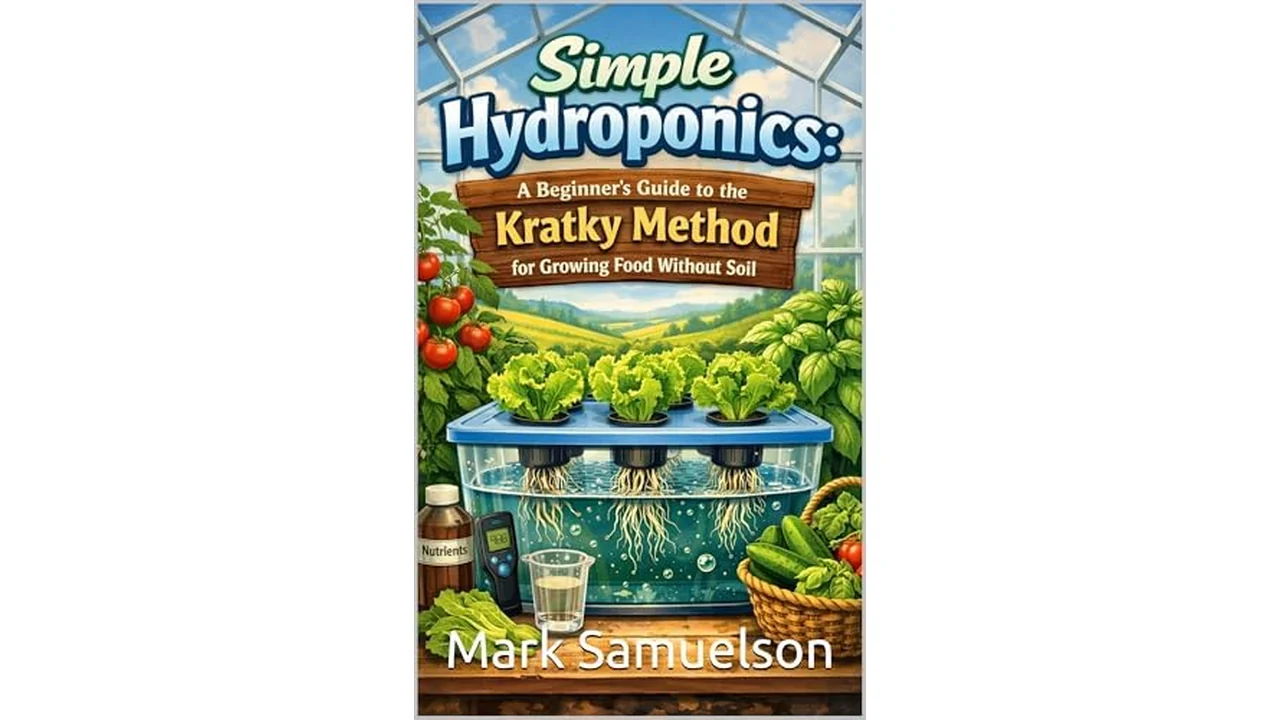
- Dreaming of fresh, homegrown produce but lack the space or traditional gardening know-how? Simple Hydroponics: A Beginner’s Guide to the Kratky Method for Growing Food Without Soil offers a compelling solution for aspiring urban farmers and anyone seeking a straightforward, soil-free growing experience. This guide promises to demystify hydroponics, making it accessible and achievable for even the most novice gardener.
- Category: Crafts, Hobbies & Home, indicating its appeal to a broad audience interested in DIY projects and home improvement.
- Sub-Category: Gardening & Horticulture, directly addressing its core subject matter.
- Sustainability Focus: Labeled as Organic & Sustainable, highlighting its alignment with eco-conscious growing practices.
- Publication Date: Scheduled for release on February 22, 2026, suggesting it’s a recent or upcoming resource.
- Visuals: An “Image Unavailable” note is present, indicating that detailed product imagery might be limited or yet to be released.
- Simplicity of the Kratky Method: The guide focuses on a method known for its ease of use, requiring minimal equipment and no pumps or electricity. This makes it ideal for true beginners.
- Accessibility: Categorized under Crafts, Hobbies & Home and Gardening & Horticulture, it signals that this book is designed for home enthusiasts looking to expand their skills.
- Sustainable Approach: The emphasis on Organic & Sustainable growing practices is a significant plus for those concerned about environmental impact and healthy food production.
- Focus on Soil-Free Gardening: For individuals with limited space, poor soil quality, or simply a desire to try something new, the soil-free aspect is a major draw.
- Beginner-Friendly Orientation: The title itself, “A Beginner’s Guide,” promises a clear and approachable learning experience, avoiding overly technical jargon.
- Ease of Learning: The Kratky method’s inherent simplicity means this guide likely provides clear, step-by-step instructions for setting up and maintaining a soil-free garden.
- Scalability: The method is adaptable, allowing users to grow a few herbs on a windowsill or a larger system for more substantial produce, a flexibility this guide should cover.
- Resource Efficiency: As a water-based system without pumps, the Kratky method is designed to be resource-efficient, a point this book likely emphasizes.
- Educational Value: The guide serves as a foundational text, equipping readers with the knowledge to start their hydroponic journey, covering essential topics like nutrient solutions and plant selection.
- Sustainability Credentials: Its positioning as Organic & Sustainable suggests the content will promote environmentally friendly gardening techniques.
- Absolute beginners in hydroponics who want a straightforward, no-fuss entry into growing food without soil.
- Apartment dwellers or those with limited outdoor space who wish to cultivate fresh herbs, vegetables, or fruits indoors.
- Individuals interested in sustainable living and organic food, as the Kratky method aligns well with these principles.
- Hobbyists and DIY enthusiasts looking for a new and engaging project within the Crafts, Hobbies & Home category.
- Anyone seeking a low-maintenance gardening solution that doesn’t require constant monitoring or complex equipment.
- Key Features to Look For: For this specific product, the primary feature is its focus on the Kratky Method, known for its simplicity. Look for guides that clearly explain this method, including nutrient management and container setup without pumps or electricity. The emphasis on Organic & Sustainable practices is also a key indicator of its value.
- Important Materials: While this is a book, it will instruct you on necessary materials. Expect it to detail common items like opaque containers (to prevent algae growth), growing medium (like rockwool or coco coir), plant nutrients, and suitable seedlings or seeds.
- Essential Factors to Consider: Think about your available space and the types of plants you want to grow. The Kratky method is highly adaptable, so a good guide will help you determine the right container size and plant choices for your environment. The ease of setup is paramount for beginners.
- Budget Planning: The cost of the book itself is an initial investment. Beyond that, the Kratky method is relatively inexpensive to start, requiring basic household items. Consider the cost of nutrient solutions and seeds, which are generally affordable for small-scale setups.
- When to Buy: Since this is a guide, it can be purchased at any time. However, if you’re looking to start a spring garden or simply want fresh greens year-round, purchasing it a few weeks before you plan to start your first system will give you ample time to read, plan, and gather supplies.
Key Features That Stand Out
This guide to the Kratky method stands out with several noteworthy features, as indicated by its Amazon listing:

Simple Hydroponics: A Beginner’s Guide to the Kratky Method for Growing Food Without Soil
What We Like
Based on the provided product information, several aspects of Simple Hydroponics: A Beginner’s Guide to the Kratky Method for Growing Food Without Soil are particularly appealing:
Performance Analysis
While a direct performance analysis of a book is different from a physical product, we can infer its effectiveness based on its stated purpose and features:
Best For
Simple Hydroponics: A Beginner’s Guide to the Kratky Method for Growing Food Without Soil is ideally suited for:
Buying Guide
When considering a guide like Simple Hydroponics: A Beginner’s Guide to the Kratky Method for Growing Food Without Soil, several factors come into play:
Frequently Asked Questions
What is the Kratky Method and why is it good for beginners?
The Kratky Method is a passive hydroponic technique where plants are suspended over a nutrient-filled water reservoir. As the plant grows and consumes water, the water level drops, creating an air gap that provides oxygen to the roots. It’s excellent for beginners because it requires no electricity, pumps, or timers, making it very low-maintenance.
Does this guide cover what plants are best suited for the Kratky Method?
While not explicitly detailed in the provided features, a comprehensive beginner’s guide to the Kratky Method typically includes recommendations for plants that thrive in this system, often focusing on leafy greens, herbs, and some smaller fruiting plants.
What kind of containers are typically used in the Kratky Method, and will this book explain that?
Opaque containers, such as food-grade buckets or jars, are commonly used to block light and prevent algae growth. It is highly probable that this guide will detail various suitable container options and how to prepare them.
Is the Kratky Method considered sustainable, and how does this book address that?
Yes, the Kratky Method is often praised for its sustainability due to its low energy consumption and water efficiency. The book’s designation as “Organic & Sustainable” strongly suggests it will delve into these aspects and promote environmentally friendly practices.
What are the main benefits of growing food without soil using hydroponics?
Growing food without soil offers several benefits, including faster growth rates, reduced pest and disease issues associated with soil, water conservation, and the ability to grow produce in areas with poor soil quality or limited space.
When is the publication date for this book?
The publication date for Simple Hydroponics: A Beginner’s Guide to the Kratky Method for Growing Food Without Soil is February 22, 2026.
Final Thoughts
Simple Hydroponics: A Beginner’s Guide to the Kratky Method for Growing Food Without Soil appears to be a promising resource for anyone looking to dip their toes into the world of hydroponics. Its focus on the user-friendly Kratky Method and its commitment to sustainable practices make it an attractive option for home growers seeking a simple yet effective way to cultivate their own food.