Tomato planting temperature is the single most critical factor that distinguishes a thriving, fruit-laden tomato patch from a garden of disappointment. Every year, eager gardeners, dreaming of sun-warmed, juicy tomatoes, make the same mistake: they plant too early. Lured by a few warm spring days, they set out their delicate seedlings, only to watch them shiver, turn purple, and stall. The secret to unlocking your best-ever tomato harvest doesn’t lie in a fancy fertilizer or a secret pruning technique; it begins with understanding and mastering the simple, yet profound, science of temperature. This guide will walk you through every aspect of temperature, from the soil under your feet to the air around the leaves, ensuring you have the knowledge to plant your tomatoes with confidence and reap a bountiful reward.
The Science of Warmth: Why Temperature is Your Tomato’s Best Friend
Before we dive into specific numbers, it’s essential to understand why temperature holds so much power over your tomato plants. Tomatoes ( Solanum lycopersicum ) are subtropical natives. Their entire biological system is hardwired to thrive in consistent warmth. When they are exposed to conditions that are too cold or too hot, their internal processes either slow to a crawl or shut down entirely.
The Dangers of Planting Too Cold:
This is the most common pitfall for gardeners in temperate climates. The consequences of jumping the gun are severe and can set a plant back for weeks, if not for the entire season.
Root Shock and Stagnation: Cold soil is the primary enemy. When tomato roots encounter soil below 50°F (10°C), they are unable to function properly. They struggle to absorb water and, most critically, cannot take up phosphorus. Phosphorus is vital for root development and energy transfer. This deficiency is why cold-stressed tomato seedlings often develop a distinct purple cast on their leaves and stems—it’s a classic symptom of their inability to access this key nutrient.
Stunted Growth: With the roots unable to supply nutrients, all top growth halts. The plant hunkers down in survival mode, not growth mode. A seedling planted in 65°F (18°C) soil will outgrow and outperform a seedling planted two weeks earlier in 50°F (10°C) soil every single time.
Increased Disease Vulnerability: A stressed plant is a weak plant. Chilled seedlings are far more susceptible to soil-borne fungal diseases like damping off and root rot, which can quickly prove fatal.
Irreversible Frost Damage: A late frost, even a light one, can kill a young tomato plant outright. The water inside the plant’s cells freezes, expands, and ruptures the cell walls, causing the foliage to turn black and mushy.
The Dangers of Planting Too Hot:
While less common for spring planting, gardeners in southern climates or those planting a second crop need to be aware of the perils of excessive heat.
Blossom Drop: When daytime temperatures consistently exceed 90°F (32°C) and nighttime temperatures stay above 75°F (24°C), tomato pollen becomes sterile. The plant will continue to produce beautiful yellow flowers, but they will fail to pollinate, wither, and drop off without setting fruit.
Sunscald: The fruit itself can get sunburned. Sunscald appears as a white or yellowish, papery, and sunken area on the side of the tomato exposed to the most intense sun.
Heat Stress: Extreme heat forces the plant to close the stomata (pores) on its leaves to conserve water, which slows down photosynthesis and overall growth, leading to a general lack of vigor.
The Goldilocks Zone: Finding the Perfect Tomato Planting Temperature
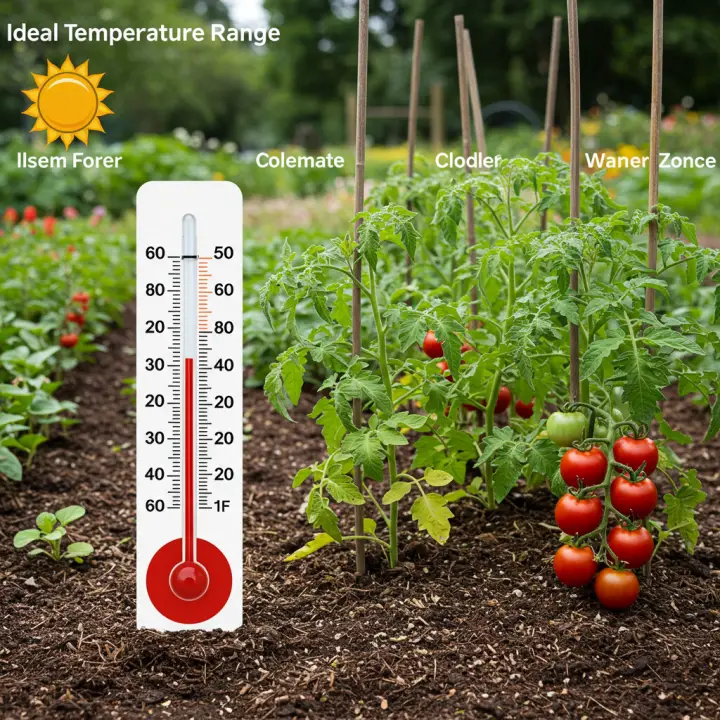
Tomatoes, like Goldilocks, want their conditions “just right.” Not too cold, not too hot. This sweet spot involves three different temperature measurements: soil, daytime air, and nighttime air.
The Foundation: Ideal Soil Temperature
If you remember only one thing, let it be this: soil temperature is king. The air can feel perfectly pleasant, but if the soil is still winter-chilled, your plants will suffer.
Absolute Minimum: The bare minimum soil temperature for planting tomatoes is 60°F (15.5°C). At this temperature, the roots can begin to function and absorb nutrients.
Optimal Range: The ideal soil temperature for robust, rapid growth is between 65°F and 70°F (18°C to 21°C).
How to Measure Soil Temperature:
Don’t guess! A simple soil thermometer is an inexpensive and invaluable tool for any serious gardener. To get an accurate reading, insert the thermometer about 4-6 inches deep into the soil (the depth of the root ball) in the morning, before the sun has had a chance to heat the surface layer. Take readings for three consecutive mornings. If all three readings are consistently at or above 60°F (15.5°C), you are likely in the safe zone.
The Growth Engine: Daytime Air Temperature
Once the soil is warm enough, the air temperature dictates the speed of foliage growth and photosynthesis.
Ideal Range: Tomatoes perform best when daytime temperatures are consistently between 70°F and 85°F (21°C to 29°C). In this range, photosynthesis is at its peak, and the plant can dedicate maximum energy to growing strong stems and lush leaves.
The Fruiting Trigger: Nighttime Air Temperature
This is the sneaky factor that many gardeners overlook. Cool nights can be just as problematic as cold soil, especially when it comes to producing fruit.
Ideal Range: For optimal pollination and fruit set, nighttime temperatures should remain between 55°F and 75°F (13°C and 24°C).
The Danger Zone: If nights consistently dip below 55°F (13°C), it can interfere with pollen formation and lead to poor fruit set, even if daytime temperatures are ideal. This is why plants set out too early may grow leaves but fail to produce many tomatoes.
A Practical Timeline: From Seedling to Garden Bed
Knowing the numbers is one thing; applying them to your garden’s unique timeline is another. Here’s how to put this knowledge into practice.
Step 1: Know Your Last Frost Date
Your region’s average last frost date is your starting point. You can easily find this by searching online for your zip code or consulting a local university extension office. However, remember this critical fact: the last frost date is an average, not a guarantee. A late frost is always a possibility.
Step 2: Practice the Two-Week Rule
A safe and reliable strategy is to plan on transplanting your tomatoes into the garden approximately two weeks after your average last frost date. This buffer period provides several advantages:
It drastically reduces the risk of a freak late frost killing your plants.
It gives the soil crucial extra time to absorb the spring sun’s warmth and reach that magic 60°F+ (15.5°C+) range.
Step 3: Harden Off Your Seedlings (This is Non-Negotiable)
Seedlings started indoors have been living a pampered life. They’ve had stable temperatures, no wind, and filtered light. Throwing them directly into the harsh outdoor environment is a recipe for shock, sunburn, and wind damage. The process of gradually acclimating them is called “hardening off.”
Begin this process 7-14 days before your target planting date.
Days 1-2: Place seedlings outside in a sheltered, shady spot for 1-2 hours. Bring them back inside.
Days 3-4: Move them to a spot with morning sun for 3-4 hours. Protect them from strong afternoon sun and wind.
Days 5-6: Increase their time outside to 5-6 hours, introducing them to a bit more direct sunlight.
Days 7-9: Leave them out for most of the day in their final planting location. Begin leaving them out overnight if nighttime temperatures are safely above 50°F (10°C).
Day 10+: Your plants are now fully acclimated and ready for their new home in the garden soil.