Many new gardeners in Florida wonder about growing onions. They often think you need special seeds, but there’s an easier way. If you’ve ever bought an onion from the store and wondered if you could plant it, the answer is yes!
This guide is for you. We will show you exactly how to grow onions from onions without seeds in florida. It’s simpler than you might think, and we’ll walk you through every step.
Grow Your Own Onions From Store-Bought Bulbs
Growing onions from existing onion bulbs is a fantastic method for home gardeners, especially in Florida’s warm climate. It skips the often tricky process of starting seeds indoors or waiting for seedlings. You simply use a part of an onion you already have.
This is a great way for beginners to get started because it’s very straightforward.
Florida’s weather can be a bit unique for gardening, but it’s actually quite good for growing many types of onions. The key is picking the right time to plant and giving them what they need. Using a bulb you bought at the grocery store is a shortcut.
You’re essentially giving the onion a head start. It’s already a developed plant, just waiting to grow roots and new leaves.
What You Need To Get Started
Before you begin, gather a few simple things. You don’t need fancy equipment. This makes it easy to try this method even if you have a small garden space or just a few pots.
- An onion bulb (choose a fresh, firm one)
- A sunny spot in your garden or a pot
- Good soil
- Water
Choosing The Right Onion Bulb
Not all onions are created equal when it comes to regrowing. You want a healthy, firm onion. Avoid any with soft spots, mold, or signs of sprouting already in the store.
The fresher the bulb, the better chance it has of growing well.
You can use yellow, white, or red onions. The type of onion you choose might affect when it’s ready to harvest and its flavor, but they all can be regrown using this method. If you want to plant a green onion, you can often just use the white root end.
Preparing Your Onion For Planting
This is the most important step. You don’t plant the whole onion. You will cut it into pieces.
Each piece should have at least one sprout or eye. This is where new growth will come from.
Take your onion and carefully slice it. If it’s a large onion, you can cut it into quarters. If it’s a smaller one, halves might be enough.
You want to make sure each piece has some of the root plate at the bottom and a little bit of the green part at the top. This is the part that will sprout.
| Onion Size | How to Cut | What to Look For |
|---|---|---|
| Large | Cut into 3-4 wedges | Each wedge needs root plate and at least one eye |
| Medium | Cut into halves | Each half needs root plate and an eye |
| Small (like for green onions) | Use whole base | The white root end is all you need |
Planting Your Onion Pieces
Now it’s time to get them in the ground or pot. You want to plant them about an inch or two deep. Make sure the cut side is facing down, or at least not exposed to the air too much.
This helps prevent them from drying out.
If you are planting in the ground, space your onion pieces about 6-8 inches apart. This gives them room to grow and spread. If you’re using pots, make sure the pot is at least 6 inches deep.
You can plant a few pieces in a larger pot, keeping the same spacing.
It’s a good idea to let the cut surfaces dry out for a day or two before planting. This helps prevent rot. You can place the cut pieces on a paper towel in a dry spot indoors.
Once they look a little calloused over, they are ready to plant.
Finding The Right Spot In Florida
Onions love sunshine. You need a spot that gets at least 6 to 8 hours of direct sunlight every day. In Florida, the summer sun can be very intense.
For planting in late fall or winter (when onions are often grown in Florida), full sun is usually best.
The soil should be loose and well-draining. Heavy clay soil can hold too much water, which can cause the onion bulbs to rot. If your soil is heavy, you can mix in some compost or sand to improve drainage.
Watering Your Growing Onions
Water is important, but not too much. Keep the soil consistently moist, but not waterlogged. After planting, water gently.
Check the soil moisture by sticking your finger about an inch down. If it feels dry, it’s time to water.
As the onion plants grow, they will need more water, especially during dry spells. However, avoid watering from overhead if possible. Watering at the base of the plant helps prevent fungal diseases.
Reduce watering when the tops start to yellow and fall over, which signals the bulb is maturing.
Caring For Your Onion Plants
Onions don’t need a lot of feeding. If you started with good compost-rich soil, they will likely do fine. If you notice the leaves are a pale green, you can give them a light feeding with a balanced liquid fertilizer.
Follow the instructions on the fertilizer package.
Weeding is important. Weeds can steal nutrients and water from your onion plants. Gently pull any weeds that pop up.
Be careful not to disturb the onion bulbs.
Dealing With Pests and Diseases
Onions are generally pretty hardy. However, sometimes pests like onion maggots or thrips can be a problem. You can often prevent these by ensuring good soil health and proper watering.
If you see signs of pests, try natural remedies first. Ladybugs can help with aphids. For diseases, good air circulation and avoiding overwatering are key.
Make sure your plants aren’t too crowded.
When and How To Harvest
The best part is harvesting! You’ll know your onions are ready when the green tops start to turn yellow and fall over. This usually happens in late spring or early summer in Florida, depending on when you planted.
Gently loosen the soil around the base of the onion with a trowel. Then, carefully pull the onion out of the ground. If the soil is dry, they will come out more easily.
After harvesting, let the onions cure. Lay them out in a warm, dry, well-ventilated place for a week or two. This allows the skins to dry and harden.
It also helps them store longer. You can cure them on screens, in shallow boxes, or on a clean floor.
Growing Green Onions From Scraps
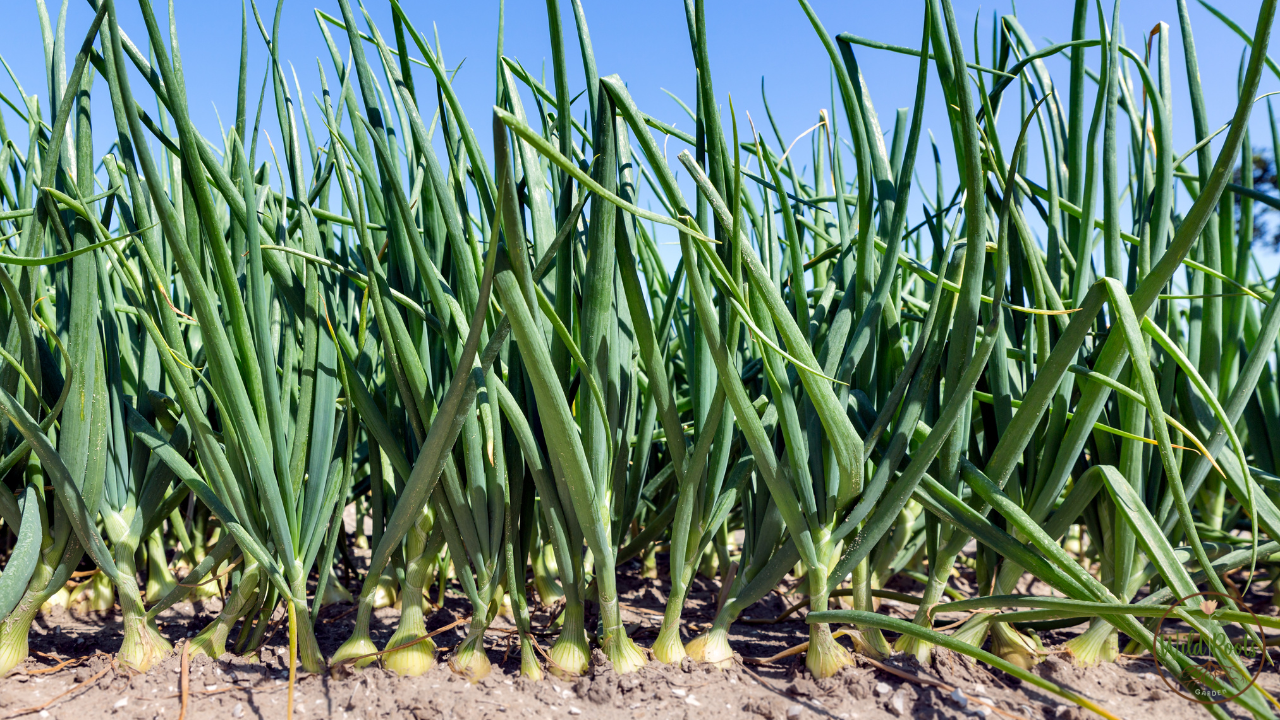
If you just want green onions, the process is even simpler. You don’t even need to cut the onion. Just take the white root end of a green onion (the part you usually throw away) and place it in a glass of water.
Put the glass in a sunny spot. Change the water every couple of days. You will see new green shoots start to grow from the top of the root.
Once they have grown a bit, you can plant the whole thing (root and new shoots) in soil. They will continue to grow, and you can snip the green tops as needed.
Tips for Florida Gardeners
In Florida, consider planting onions in the fall and winter. Many onion varieties do well in cooler weather. They will grow through the cooler months and be ready to harvest in spring.
This avoids the intense heat and humidity of a Florida summer, which can sometimes cause bulbs to split or rot.
Choose onion varieties that are suited for warmer climates. Look for “short-day” onions. These are types that have been developed to form bulbs in areas with shorter winter daylight hours.
This is important for Florida’s light cycles.
Frequently Asked Questions
Question: Can I plant any onion from the grocery store?
Answer: It’s best to use fresh, firm onions. Avoid those that are soft, moldy, or already sprouting a lot. The fresher it is, the better your chances of success.
Question: How deep should I plant the onion pieces in Florida?
Answer: Plant your onion pieces about 1 to 2 inches deep. Make sure the cut side is facing down and the root end is in the soil.
Question: What kind of soil is best for growing onions in Florida?
Answer: Onions prefer loose, well-draining soil. If your soil is heavy clay, mix in compost or sand to help with drainage.
Question: How often should I water onions in Florida?
Answer: Keep the soil consistently moist but not soggy. Check the soil with your finger; water when the top inch feels dry. Reduce watering as the tops begin to yellow.
Question: When is the best time to plant onions from bulbs in Florida?
Answer: The best time to plant onions from bulbs in Florida is typically in the fall or early winter. This allows them to grow through the cooler months for a spring harvest.
Final Thoughts
Growing onions from bulbs in Florida is quite simple. You can get started with just a few items from your kitchen and garden. Remember to choose a good onion, prepare your pieces correctly, and plant them in a sunny spot.
With a little water and care, you’ll be enjoying your own homegrown onions soon.