Tomato plant temperature is arguably the single most important factor determining success or failure in your garden. While we fuss over soil amendments, watering schedules, and pruning techniques, none of it matters if the ambient temperature falls outside the narrow range these heat-loving plants can tolerate. For many gardeners, understanding this is the key to unlocking a bountiful harvest. Tomatoes aren’t just plants; they are a summer-long project that demands a specific environment to thrive, flower, and produce the delicious fruits we crave.
This guide delves into the critical worst limits for your tomato plants. We will explore the “Goldilocks zone” where they flourish, but more importantly, we will define the absolute breaking points on both the cold and hot ends of the thermometer. Understanding these limits—what happens to the plant’s biology at these extremes and how to recognize the warning signs—is crucial for protecting your plants and ensuring they live to produce another day.
The Ideal Range: The Tomato “Goldilocks Zone”
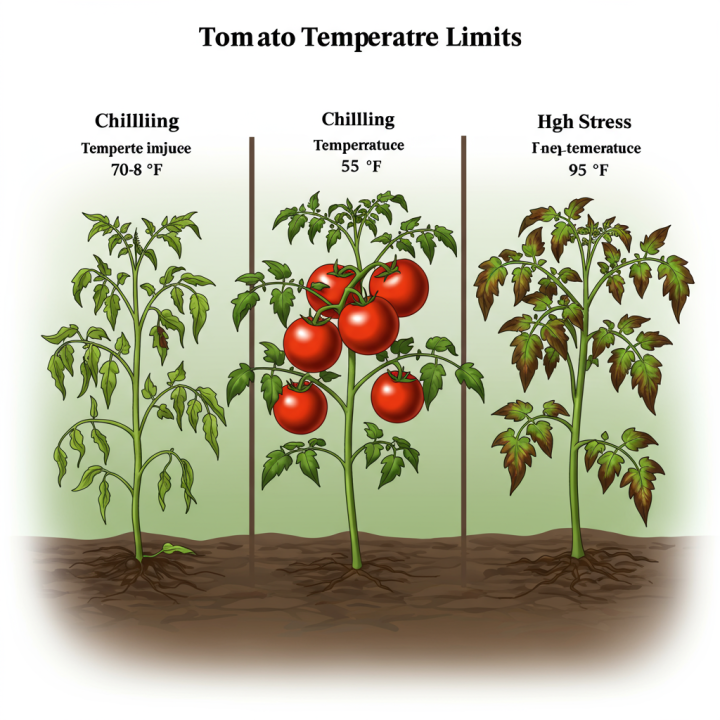
Before we explore the dangers, we must first define the ideal. Tomatoes are happiest when they experience temperatures similar to their native climate in the South American Andes—warm days and slightly cooler nights.
Ideal Daytime Temperature: 70°F to 85°F (21°C to 29°C)
Ideal Nighttime Temperature: 60°F to 70°F (15°C to 21°C)
Within this range, all the plant’s systems are firing on all cylinders. Photosynthesis is highly efficient, converting sunlight into the energy needed for growth. Respiration, the process of using that energy, occurs at a healthy rate. Crucially, this is the optimal range for pollination and fruit set. The slight drop in temperature at night is also vital, as it allows the plant to “rest” and properly process the sugars it created during the day, channeling that energy into producing leaves, stems, and, most importantly, fruit.
When temperatures stay within this sweet spot, you get strong, vigorous plants with lush green foliage, plenty of flowers, and a high rate of fruit production.
The Cold Zone: When Temperatures Plunge Dangerously Low
Tomatoes are a warm-season crop, and their aversion to cold is profound. As the thermometer drops, a series of physiological problems begin to cascade, culminating in irreversible damage and death.
Understanding the Low-End Critical Tomato Plant Temperature Limits
It’s not just a single freezing point you need to worry about. The damage from cold is a gradual process with distinct stages of severity.
Between 50°F and 60°F (10°C to 15°C): The Slowdown
While not immediately dangerous, prolonged exposure to temperatures in this range significantly hinders a tomato plant’s progress.
Slowed Growth: The plant’s metabolism slows down. You’ll notice that growth seems to stall, with little new leaf or stem development.
Poor Nutrient Uptake: The roots become less efficient at absorbing nutrients from the soil, particularly phosphorus. This often leads to leaves developing a purplish cast, a classic sign of phosphorus deficiency, even if the nutrient is present in the soil.
Flower Drop: Existing flowers may fail to develop properly and fall from the plant, a condition known as blossom drop.
Between 40°F and 50°F (4°C to 10°C): The Warning Zone
This is where the real stress begins. The plant shifts from merely slowing down to actively struggling to survive.
Growth Halts: All vegetative growth ceases as the plant enters a state of dormancy to conserve energy.
Chilling Injury: Even without a frost, cell damage can occur. Water uptake is severely restricted, and the plant may appear wilted despite moist soil. The internal cell structures begin to break down, leading to long-term stunting even if temperatures later warm up. Seedlings are particularly vulnerable in this range.
At 32°F (0°C): The Point of No Return
This is the freezing point of water, and it spells doom for the vast majority of a tomato plant.
Frost and Freeze Damage: When a frost occurs, ice crystals form on the leaf surfaces. A hard freeze causes the water inside the plant’s cells to freeze. As water freezes, it expands, and these expanding ice crystals rupture the cell walls. This is the equivalent of a catastrophic internal injury.
The Result: When the plant thaws, the cells with ruptured walls can no longer hold their structure or water. The affected tissues turn dark green or black and become limp and water-soaked. The plant effectively melts into a soggy mess. For a tomato plant, a hard freeze is almost always a fatal event.
Visible Signs of Cold Stress and Damage
1. Purplish Leaves and Stems: An early sign of cold, indicating poor phosphorus uptake.
2. Stunted, Curled Growth: New growth will be minimal and may appear distorted.
3. Wilting: The plant may look thirsty even with wet soil because the roots can’t absorb water in the cold.
4. Blossom Drop: Flowers turn yellow and fall off before they can be pollinated.
5. Blackened or “Water-Soaked” Foliage: The definitive sign of frost or freeze damage. These parts are dead and will not recover.
The Heat Zone: When the Sun Becomes an Enemy
Just as tomatoes hate the cold, they can be overwhelmed by extreme heat. High temperatures disrupt the delicate processes of pollination and fruit production, essentially shutting the plant down.
The Upper Limits: How Heat Stress Derails Your Harvest
The damage from heat is often more subtle at first, targeting the plant’s reproductive cycle before causing visible foliage damage.
Between 85°F and 95°F (29°C to 35°C): The Pollination Crisis
This is the most common reason for a mid-summer lack of fruit. While the plant itself might look fine, its ability to reproduce is severely compromised.
Pollen Sterility: The single biggest issue is what happens to pollen. Tomato pollen begins to lose its viability—becoming sterile or “non-sticky”—at sustained daytime temperatures above 85°F, especially when nighttime temperatures don’t drop below 75°F (24°C).
Blossom Drop: The flower pollinates itself, but if the pollen is not viable, fertilization cannot occur. The plant recognizes this failure and aborts the flower to conserve energy. You’ll see perfectly healthy-looking trusses of flowers simply dry up and fall off.
Above 95°F (35°C): Survival Mode
When temperatures climb even higher, the plant’s primary goal shifts from producing fruit to simply surviving the day.
Photosynthesis Shutdown: To conserve water, the tiny pores on the leaves (stomata) close up. While this prevents dehydration, it also stops the intake of carbon dioxide, effectively shutting down photosynthesis. The plant stops creating energy and lives off its reserves.
Fruit Development Halts: The development of existing fruit slows dramatically. Ripening is also affected. The production of lycopene (which gives tomatoes their red color) and carotene (for orange color) stops in temperatures above 95°F. This can result in fruits that ripen to a yellowish-orange instead of a deep, rich red.
Sustained Temperatures Over 100°F (38°C): Direct Physical Damage
Prolonged, intense heat can cause direct physical harm to the plant and its fruit.
Sunscald: This is like a severe sunburn on the fruit. Areas of the tomato exposed to direct, intense sunlight can develop white or yellow, papery-thin blisters. These spots are vulnerable to secondary infections and rot.
* Leaf Scorch and Wilting: Leaves will visibly wilt during the hottest part of the day as they lose water faster than the roots can absorb it. If the heat is relentless, the edges of the leaves can become dry, brown, and “scorched.
Visible Signs of Heat Stress
1. Blossom Drop: The most obvious sign. Yellowing flower stems and flowers falling from the plant.
2. Leaf Curling or Rolling: The leaves roll inward lengthwise, a defensive posture to reduce the surface area exposed to the sun and conserve water.
3. Daytime Wilting: Drastic wilting during the afternoon, even with adequate soil moisture. (Healthy plants should recover overnight).
4. Sunscald on Fruit: Blistered, bleached-looking spots on the shoulders or sides of ripening tomatoes.
5. Yellow-Shouldered Fruit: The top part of the fruit near the stem remains stubbornly yellow or green while the bottom ripens, a direct result of heat interfering with pigment production.