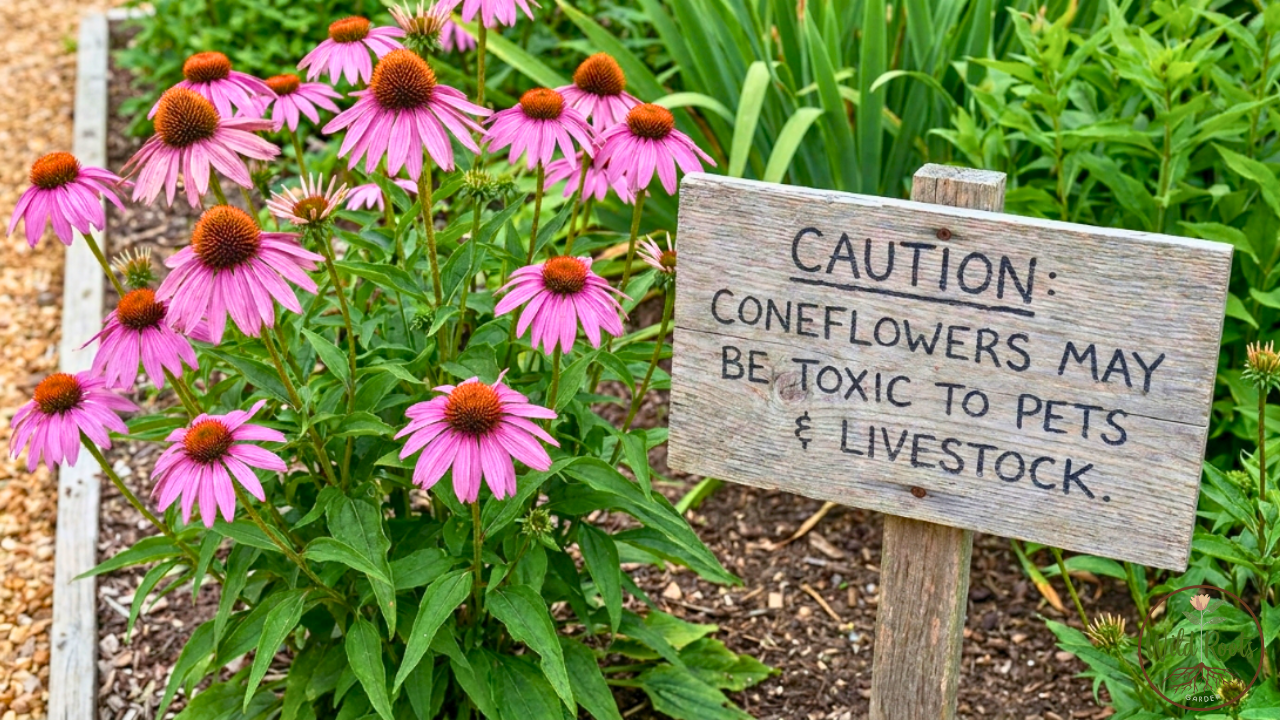
No — coneflowers (Echinacea purpurea) are not considered poisonous to dogs. They’re widely recognized as a non-toxic garden plant by major veterinary and horticultural references, and Echinacea is even used in some herbal supplements marketed for pets. That said, “non-toxic” doesn’t mean “risk-free”: eating large quantities of any plant material can cause mild stomach upset in dogs, and the bristly seed heads can occasionally cause minor mechanical irritation if chewed.
Why Coneflowers Are Considered Safe
Coneflowers belong to the Echinacea genus, which has a long history of use in herbal medicine for both humans and, in some formulations, pets. Unlike genuinely toxic garden plants such as foxglove or lily, coneflowers don’t contain compounds known to cause serious poisoning symptoms like cardiac disruption or organ damage in dogs. This is part of why they’re commonly recommended as a dog-safe option for borders and pollinator gardens.
Could My Dog Still Get Sick From Eating Coneflowers?
Yes, mild reactions are possible even with non-toxic plants:
- Stomach upset: Eating a large amount of any unfamiliar plant material can cause vomiting or loose stool simply from digestive irritation, not toxicity.
- Seed head irritation: The spiky, cone-shaped center of the flower can be mildly scratchy or irritating if chewed or swallowed, especially in smaller dogs.
- Individual sensitivity: Just as with humans, some dogs may have an individual sensitivity or mild allergic-type reaction to a plant that’s broadly considered safe for the species.
If your dog eats a small amount of coneflower foliage or petals, it’s generally not a cause for alarm, but any signs of persistent vomiting, lethargy, or unusual behavior warrant a call to your vet regardless of the plant involved.

Coneflowers vs. Other Popular Garden Plants: Dog Safety Comparison
| Plant | Toxic to Dogs? | Notes |
|---|---|---|
| Coneflower (Echinacea) | No | Considered safe; mild stomach upset possible with large amounts |
| Foxglove | Yes — highly toxic | Contains cardiac glycosides; medical emergency if ingested |
| Lily (true lilies) | Yes — highly toxic | Especially dangerous, though more severe in cats |
| Marigold | Mildly irritating | Can cause mild GI upset or skin irritation |
| Black-eyed Susan | No | Generally considered non-toxic |
| Daylily | No (to dogs) | Non-toxic to dogs, though highly toxic to cats |
Why Coneflowers Are a Popular Choice for Dog Owners
Beyond being non-toxic, coneflowers offer practical advantages for gardens shared with dogs:
- Sturdy stems that hold up better to occasional brushing or bumping by a running dog than delicate annuals.
- Drought tolerance, which means the bed doesn’t need frequent watering that can turn into a muddy mess for paws.
- Long bloom season, providing color from early summer into fall without needing to be replanted around a dog’s favorite path.
- Pollinator support, attracting bees and butterflies without introducing the toxicity risks of many other pollinator plants.
A Note From Experience
In gardens designed for dog-owning clients, coneflower is one of the plants recommended most often specifically because it removes the anxiety around a dog investigating the border — in practice, most dogs show little interest in eating the foliage at all, and on the rare occasion a dog does chew a stem or flower head, it typically results in nothing more than a spit-out mouthful of bitter plant matter. It’s a useful low-worry anchor plant for borders that dogs have regular access to.
Frequently Asked Questions
Is Echinacea safe for dogs to eat? Yes, Echinacea (coneflower) is broadly considered non-toxic to dogs and is even used in some pet herbal products, though it’s not a substitute for veterinary care.
What should I do if my dog eats a lot of coneflower? Monitor for mild stomach upset like vomiting or loose stool. If symptoms are severe or persistent, or if you’re unsure what else the dog may have eaten, contact your veterinarian.
Are coneflower seed heads dangerous to dogs? They aren’t toxic, but the spiky texture can cause minor mouth or throat irritation if chewed, particularly in small dogs.
Can dogs be around coneflowers without supervision? Generally yes, since the plant isn’t toxic, but supervision is still a good habit around any garden plant to prevent overeating or digging.
About the reviewer: This article was reviewed by a gardening consultant specializing in pet-safe landscape design, with over a decade of experience selecting non-toxic plants for dog-owning clients. This article is for general information only and is not a substitute for veterinary advice.