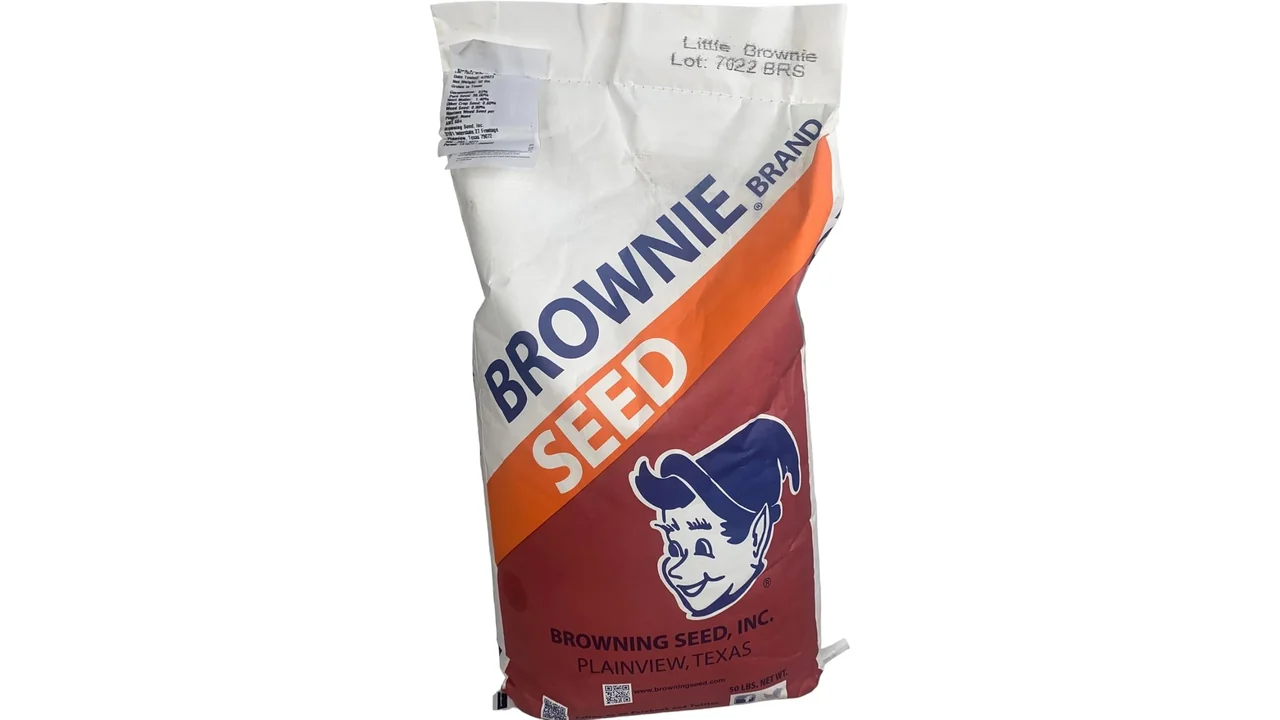
- Looking for a reliable forage sorghum that can withstand dry spells and deliver multiple harvests? The Browning Little Brownie BMR might just be the solution you’ve been searching for, offering a blend of resilience and productivity for your forage needs. This hybrid is designed to perform in challenging conditions while providing a consistent supply of high-quality feed.
- High-quality forage sorghum: Specifically developed for producing excellent forage, with a particular emphasis on suitability for silage.
- Exceptional drought tolerance: Built to thrive even in arid conditions, making it a dependable option where water resources are limited.
- Multiple harvest opportunities: Offers the potential for 2-3 cuts, allowing growers to maximize their forage yield throughout the season.
- Rapid maturity cycle: Ready for harvest in a relatively short 85-95 days from emergence, enabling quick crop rotation and efficient land use.
- Double crop silage capability: Its versatile nature makes it an excellent candidate for double cropping, further enhancing overall forage production efficiency.
- Adaptability to Dry Climates: The strong drought tolerance is a major plus, providing peace of mind for farmers in regions prone to dry spells.
- Maximizing Forage Output: The ability to achieve 2-3 cuts means more feed can be harvested from the same acreage, significantly boosting overall yield.
- Efficient Crop Cycles: A harvest window of 85-95 days is ideal for farmers looking to implement crop rotation or double cropping strategies effectively.
- Versatile Silage Production: Its designation as high-quality forage sorghum for silage makes it a prime candidate for dairy and beef operations focused on nutrient-rich feed.
- Double Cropping Potential: The option to use it for double crop silage adds another layer of economic benefit, allowing for a second valuable harvest within a single growing season.
- The high-quality forage sorghum designation ensures that the resulting biomass is nutritious and palatable, ideal for silage, which requires specific nutritional content for livestock.
- Its drought tolerance is a critical performance factor, reducing the risk of crop failure due to insufficient rainfall. This feature allows for cultivation in areas where water is a limiting resource, expanding its usability.
- The capacity for multiple cuts (2-3) suggests a vigorous regrowth potential after initial harvest, a desirable trait for maximizing yield over an extended period. This regeneration capability is key to its economic value.
- The 85-95 day harvest window indicates a fast-growing hybrid that can be integrated into various cropping systems, including those with shorter growing seasons or where a quick turnaround is needed between plantings.
- The double crop silage option highlights its flexibility and potential for intensive farming practices. This means growers can potentially harvest a primary crop and then follow it with the Little Brownie for a second silage harvest, substantially increasing annual forage production.
- Farmers in drought-prone regions: Its exceptional drought tolerance makes it an ideal choice for areas where water availability is a consistent challenge, ensuring a more reliable forage source.
- Livestock operations requiring high-quality silage: As a high-quality forage sorghum for silage, it’s perfect for dairy and beef producers looking to optimize their feed rations with nutrient-dense forage.
- Growers aiming for multiple harvests: The potential for 2-3 cuts is a significant advantage for those looking to maximize forage production from their land over the growing season.
- Producers interested in double cropping: Its suitability for double crop silage makes it a valuable option for farmers wanting to get the most out of their land within a single year.
- Operations seeking rapid crop turnaround: With a harvest in 85-95 days, it’s excellent for those who need a quick-growing crop that allows for efficient planning of subsequent plantings.
- Drought Tolerance: This is paramount for consistent yields, especially in drier climates. Look for varieties explicitly bred for this trait.
- Forage Quality: If producing silage, prioritize varieties known for high nutritional content and palatability for livestock.
- Regrowth Potential: For multiple cuts, strong regrowth capabilities are essential.
- Maturity Time: Match the maturity date to your growing season length and crop rotation plans.
- Disease Resistance: While not explicitly detailed in the provided features, disease resistance is always a beneficial trait for crop health.
- Climate and Soil Conditions: While drought tolerant, assess your specific regional climate and soil type to ensure optimal growth.
- Intended Use: Whether for silage, grazing, or green chop, choose a variety optimized for that purpose. The Browning Little Brownie BMR is specifically noted for silage.
- Management Practices: Consider your ability to manage irrigation (if any), fertilization, and harvesting schedules effectively to leverage the seed’s full potential.
- Seed Availability and Cost: Ensure the seed is readily available in your area and fits within your budget.
Key Features That Stand Out
The Browning Little Brownie BMR boasts several impressive features that make it a standout choice for forage production. These key attributes are designed to offer both flexibility and robust performance in the field.

What We Like
Based on its presented features, the Browning Little Brownie BMR offers several compelling advantages for growers. Its resilience and productivity are particularly noteworthy.
Performance Analysis
The performance profile of the Browning Little Brownie BMR is largely defined by its ability to deliver consistent results under varied conditions. Its genetic makeup prioritizes characteristics that are crucial for efficient forage management.
Best For
The unique combination of traits offered by the Browning Little Brownie BMR makes it particularly well-suited for specific agricultural applications and environments.
Buying Guide
When considering the Browning Little Brownie BMR or similar forage sorghum varieties, several factors are crucial for making an informed purchase and ensuring successful cultivation.
Key Features to Look For
Important Materials
Forage sorghum seeds are the primary “material” for cultivation. The quality and genetic integrity of these seeds are critical. Ensure you are purchasing from reputable suppliers.
Essential Factors to Consider
Budget Planning
The cost of forage sorghum seed can vary based on the variety, brand, and quantity purchased. Forage sorghum is generally considered a cost-effective option for producing large volumes of feed. When budgeting, factor in seed cost, as well as any associated costs for land preparation, planting, and harvesting. The potential for multiple cuts and double cropping with varieties like the Browning Little Brownie BMR can significantly increase the return on investment.
When to Buy
The best time to purchase forage sorghum seed is typically in the late winter or early spring, well in advance of your planting season. This ensures availability and allows you to secure the best seed for your needs. For double cropping, seed purchase timing will depend on the preceding crop’s harvest schedule. Always check local planting window recommendations for your specific region.
Frequently Asked Questions
What is the primary advantage of Browning Little Brownie BMR for silage production?
Its designation as high-quality forage sorghum specifically suited for silage means it’s bred to yield nutritious and palatable biomass essential for livestock feed.
How does the drought tolerance of Browning Little Brownie BMR benefit farmers?
This feature provides increased reliability in forage production, significantly reducing the risk of crop failure in regions with limited water availability or unpredictable rainfall patterns.
What makes the multiple cut capability of Browning Little Brownie BMR significant?
The ability to achieve 2-3 cuts allows for a substantial increase in the total forage yield from a single planting, making it a very productive option for farmers.
Can Browning Little Brownie BMR be grown in areas with short growing seasons?
Yes, its rapid maturity cycle of 85-95 days from emergence allows it to be harvested quickly, making it suitable for regions with shorter growing windows or for sequential planting.
Is Browning Little Brownie BMR suitable for farmers looking to maximize land use?
Absolutely, its potential for double crop silage makes it an excellent choice for intensive farming, enabling a second valuable forage harvest within the same calendar year.
Final Thoughts
The Browning Little Brownie BMR presents itself as a robust and versatile forage sorghum option, particularly for those prioritizing drought resilience and multi-cut productivity. Its suitability for silage and potential for double cropping make it an attractive choice for efficient farm operations.