The cost of produce can vary between farmstands and farmers markets in California due to differences in overhead, labor, marketing, and the variety of goods offered. Farmstands often have lower operating costs, while farmers markets may offer a wider selection and curated experience that reflects in their pricing.
Understanding Farmstand Pricing
Farmstands, in their simplest form, are often just an extension of the farm itself. Think of a wooden table set up at the edge of a field. The farmer, or a family member, might be there.
Or sometimes, it’s just a self-serve setup with a cash box. This direct-to-consumer model has some clear cost advantages.
The biggest factor is usually reduced overhead. There’s no rent for a booth at a busy market. There are no stall fees that can add up weekly.
The electricity might be minimal, just enough for a small light or a cooler. The labor involved is often just the farmer’s own time, or that of a family member. They might be picking produce in the morning and selling it a few hours later.
This means less money spent on wages for sales staff.
Marketing is usually very low-key. A simple sign by the road, perhaps a mention on their own farm’s social media page if they have one. They don’t need fancy displays or elaborate signage.
The produce itself, sitting right there, is the main draw. This is especially true for seasonal items that are at their peak freshness.
Consider the case of a peach farmer in the Central Valley. They might have a surplus of Elberta peaches that are perfect for eating right now. Instead of trucking them to a distributor or a distant market, they set up a small table near their orchard entrance.
The cost of getting those peaches from the tree to the table is very low. They’ve already paid for the land, the water, the labor to grow them. The selling cost is just the small amount of time and packaging involved.
This efficiency allows farmstands to often offer very competitive prices, especially for produce that is abundant and in season. They pass on those savings directly to you. The variety might be limited to what’s currently ripe on the farm.
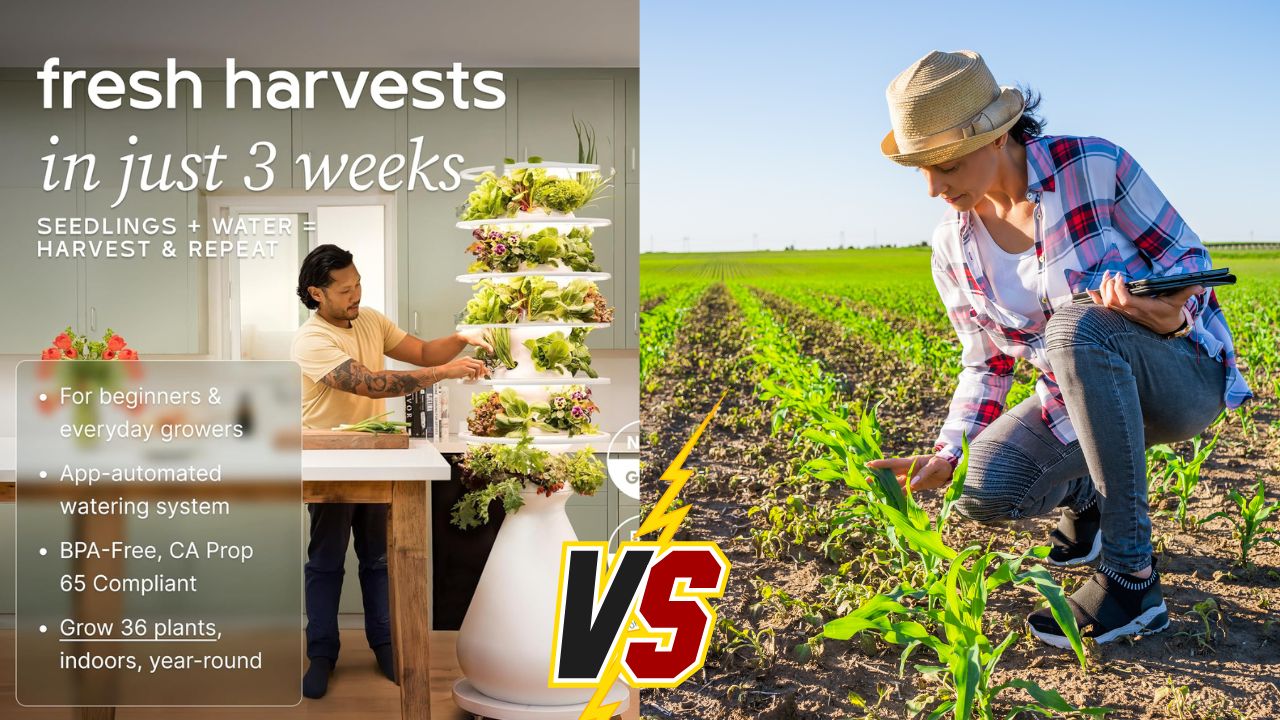
But for those items, you might find some of the best deals available. Read Lettuce Grow Farmstand Large Hydroponic Tower Reviews
Why Farmers Markets Can Cost More
Farmers markets are a different beast. They are often a curated experience. You’ll find a wider array of vendors, not just farmers.
There might be bakers, cheese makers, jam producers, and florists. This variety is part of the appeal, but it also means a different cost structure for the organizers and the vendors.
Market organizers have significant costs. They need to secure a location, which can be expensive, especially in prime urban or suburban areas. They often have to pay for permits, insurance, and staff to manage the market.
They also invest in promotion to draw crowds. All these costs are usually recouped through vendor fees.
These vendor fees can be substantial. A farmer might pay anywhere from $50 to $200 or more per market day. This fee is for their spot, for the privilege of selling to the market’s attendees.
Then there’s the labor. Farmers markets often require vendors to be present for the entire duration of the market, which can be several hours. This means paying employees to staff the booth, load and unload goods, and interact with customers.
If the farmer is doing it themselves, it’s their time, but it’s time they could be spending on the farm.
The presentation at farmers markets is also usually more elaborate. Vendors often invest in attractive tents, display tables, signage, and even payment systems. They might offer samples or recipe ideas.
This all adds to the cost of doing business. They are creating an experience, not just selling produce.
Think about a small organic farm selling heirloom tomatoes at a Santa Monica farmers market. They’ve driven their produce into the city, paid for parking, paid their market fee, and hired someone to help sell. They might be selling a unique variety that took more effort to grow.
They are also competing for attention among many other vendors. To make their efforts worthwhile, their prices might reflect these increased costs and the value of their specialized offerings.
Furthermore, farmers markets often attract customers who are willing to pay a premium for specific qualities. They might be looking for certified organic, unique heirloom varieties, or products with a compelling story. Vendors cater to this demand, and the prices naturally adjust.
The Role of Labor and Time
Labor is a significant factor in the cost of produce, whether you see it directly or not. At a farmstand, the labor is often the farmer’s own. They may not be factoring in a high hourly wage for themselves, especially when starting out or trying to move a lot of product quickly.
They might be motivated by getting their harvest sold and making some profit, rather than maximizing profit per item.
The time spent selling at a farmstand might be integrated into their daily farm routine. They might sell for a few hours after morning chores. It’s efficient because it’s on their land.
They don’t have to travel far. This proximity to the farm is key.
At a farmers market, the labor commitment is often much more intense. Vendors typically need to be there early to set up and stay until the end to pack up. This can easily be a full day’s commitment, including travel time.
If the farmer hires staff, those wages are a direct cost that needs to be covered by sales. These employees expect fair pay for their time and effort.
Imagine a berry farmer. Picking berries is painstaking work. It requires many hands, working carefully to avoid bruising the delicate fruit.
If the farmer is selling at a roadside stand, they might pick a few flats in the morning and sell them. The labor cost is part of their overall farming operation. If they are selling at a busy Saturday market, they might need to employ two people to help them.
One to pick and pack the night before, and one to sell on Saturday. The wages for those two people, plus the farmer’s own time, need to be reflected in the price of the berries.
The difference in how labor is accounted for can significantly impact the final price you see. Farmstands often represent a more direct reflection of the farm’s own labor input, while farmers markets factor in the business of selling as a separate, often more costly, endeavor.
Variety and Specialization
The types of produce offered also play a role. Farmstands often sell what’s most abundant and easiest to grow in their specific location. If it’s strawberry season, you’ll see lots of strawberries.
If it’s corn season, you’ll see corn. The focus is on high-volume, popular crops that are ready for harvest.
Farmers markets, however, tend to be a place where farmers can showcase more specialized or niche products. You might find heirloom tomato varieties that are trickier to grow or have a shorter shelf life. You could see exotic fruits, specialty herbs, or produce grown using specific methods like biodynamics or no-till farming.
These items often come with a higher production cost.
For example, a farmer specializing in rare chili peppers might have higher costs for seeds, specific growing conditions, and careful harvesting. Their yield per plant might be lower than for standard peppers. These peppers are unlikely to be found at a simple farmstand.
At a farmers market, a vendor offering these unique chilies can command a higher price because they are providing something special that you can’t get elsewhere.
Similarly, a farm that focuses on a wide variety of salad greens, offering mixes and individual lettuces, might have higher labor costs for succession planting and harvesting. They are providing choice and diversity, which adds value for the consumer. This value is reflected in the price.
A farmstand is more likely to sell large bunches of romaine or iceberg lettuce, which are easier to grow in bulk and have predictable pricing.
Marketing and Brand Perception
This might seem less obvious, but marketing and how a vendor is perceived can influence prices. Farmstands often rely on their location and reputation within their immediate community. They are part of the local landscape.
Farmers markets, on the other hand, are often where vendors build a brand. They invest in signage, packaging, and customer service to create a memorable experience. They want customers to seek them out week after week.
This effort to build a brand and customer loyalty can justify higher prices.
Think about a farm that has developed a reputation for exceptionally sweet berries or incredibly flavorful peaches. They might participate in farmers markets specifically to highlight these premium products. Customers who know and trust that brand are willing to pay more for that guaranteed quality and taste.
The farmers market acts as a stage for this brand building.
Some farmers markets even have a particular vibe. A high-end market in an affluent area might attract vendors who know their customer base is willing and able to spend more. The vendors adjust their pricing to match the market’s demographic and overall atmosphere.
A farmstand in a more rural area might have a different pricing strategy, aiming for volume sales to local residents.
The story behind the food also matters. Many farmers markets encourage vendors to share their farming practices, their family history, and their passion. This narrative adds value.
Customers feel more connected to their food and the people who grow it. This connection can translate into a willingness to pay more for that perceived authenticity and transparency.
Farmstand vs. Farmers Market: Key Differences
Farmstand:
- Often located directly on the farm or at the roadside.
- Lower overhead costs (no market fees, less elaborate setup).
- Labor is often the farmer’s own, integrated into farm tasks.
- Typically offers produce currently in season and abundant.
- Simpler marketing, relying on location and word-of-mouth.
- Prices often reflect direct cost savings.
Farmers Market:
- Held in a designated public space, often weekly.
- Higher overhead for organizers and vendors (market fees, permits).
- Labor involves dedicated selling time, potentially staff wages.
- Wider variety, including specialized, heirloom, or organic items.
- Focus on branding, customer experience, and storytelling.
- Prices may reflect curated offerings and business costs.
Seasonality and Availability
Seasonality is perhaps the most powerful force shaping produce prices. When a crop is at its peak, and there’s a lot of it, prices tend to be lower. This is true for both farmstands and farmers markets.
A farmstand might be overflowing with zucchini in August. They have an abundance, and they want to sell it before it goes bad. The price will likely be very attractive.
The same zucchini might be available at a farmers market, but if the season is just starting, or if that particular farmer is the only one with them that week, the price might be higher.
At the beginning of a season, produce is scarcer. It might have taken more effort to get the first crops growing well. Think about the first strawberries of spring.
They are a delicacy. They are often grown in protected environments or require careful tending. Farmers markets are often the first place you’ll find them, and you’ll pay a premium for that privilege.
Later in the season, when fields are bursting with berries, both farmstands and markets will likely offer them at lower prices.
The reverse can also be true. If a farmstand has limited space or a less diverse operation, they might not stock certain items that are readily available at a larger farmers market. Or, if a farmstand’s specialty is a particular item, they might maintain a consistent price for it, even if other markets see fluctuations.
For example, a citrus farmstand in Southern California in the winter will have plenty of oranges and lemons, likely at good prices. A farmers market in the same area might also have citrus, but the vendor might also be selling specialty grapefruits or mandarins that are harder to find and thus more expensive.
The Impact of Location
Where you find the farmstand or farmers market makes a big difference. A farmstand located on a busy highway with lots of tourist traffic might charge higher prices than one on a quiet rural road. They are tapping into a different customer base with potentially different purchasing power and expectations.
Similarly, farmers markets in affluent urban neighborhoods will likely have higher vendor fees and attract vendors with higher-priced goods. A market in a more suburban or rural area might have lower costs and attract vendors with more budget-friendly options.
Consider the cost of living and doing business in different parts of California. Land prices, labor costs, and transportation expenses all vary. A farmer selling produce in the Bay Area might face higher operating costs than someone selling in the Central Valley.
These costs are inevitably passed on to the consumer in some way.
The convenience factor also plays a role. A farmstand located right off a major freeway exit might charge a bit more for the convenience of easy access. You’re paying for that quick stop, that impulse purchase.
A farmers market might require a longer drive, parking time, and walking through the market. The pricing there is less about instant convenience and more about the overall shopping experience.
Quick Scan: What Influences Produce Prices?
| Factor | Farmstand Impact | Farmers Market Impact |
|---|---|---|
| Overhead Costs | Lower (minimal setup, no fees) | Higher (market fees, permits, elaborate stalls) |
| Labor | Often farmer’s own, integrated | Dedicated selling time, potential staff wages |
| Variety | Limited to what’s abundant and in season | Wider range, including niche and specialty items |
| Marketing | Simple (signage, word-of-mouth) | Branding, customer experience, promotions |
| Seasonality | Prices fluctuate with abundance | Prices fluctuate, premium for early/late season |
| Location | Varies by traffic and community | Varies by neighborhood affluence and market type |
The Value Proposition: What Are You Paying For?
Ultimately, the price difference boils down to the value proposition. What is each type of selling venue offering you, the consumer?
At a farmstand, you are often paying for simplicity and directness. You are getting produce straight from the source, with minimal intermediaries. The price reflects the cost of growing and the farmer’s time to sell it on their own property.
It’s about pure, unadulterated farm produce.
At a farmers market, you are often paying for a curated experience, variety, and potentially a higher level of specialization or perceived quality. You’re paying for the convenience of finding many producers in one place. You’re supporting a system that often involves more complex logistics and business operations.
You’re also often paying for the story, the brand, and the social aspect of the market.
I remember visiting a small farmstand in Ojai years ago. They had these incredible pluots, bursting with flavor. They were selling them in big bags for what seemed like a bargain.
The farmer was there, happy to chat about how they grew them. It felt like a true connection to the land. Later that day, I went to a farmers market in Ventura.
The same pluots, from a different farm, were selling for nearly double the price. But that vendor had a beautifully arranged booth, offered samples of pluot jam, and had a loyal following. The experience was different, and the price reflected that.
Neither is inherently “better” or “worse.” It’s about what you’re looking for. If your goal is to get the most straightforward, seasonal produce at the lowest possible price, a well-located farmstand might be your best bet. If you’re looking for variety, unique items, a fun weekend activity, and a chance to interact with multiple producers, the farmers market offers that.
When to Expect Lower Prices at Farmstands
You’ll generally find the best deals at farmstands when:
- It’s peak season for a particular crop. When zucchini, tomatoes, corn, or berries are abundant, farmstands will likely have them at attractive prices.
- The farmstand is self-serve. This reduces labor costs significantly.
- The farmstand is in a rural or less populated area. Lower overhead and less competition can lead to lower prices.
- They are clearing out inventory. Sometimes, you can find great deals towards the end of the day or season as farmers try to sell everything.
- The produce is standard or common varieties. Less labor-intensive to grow and more widely available.
It’s about recognizing when the farm has a surplus and can afford to pass those savings on. You become an extension of their efficient distribution.
When Farmers Markets Might Be Worth the Extra Cost
You might find the prices at farmers markets justified when:
- You’re looking for unique or heirloom varieties. These often cost more to produce but offer superior flavor or characteristics.
- You prioritize certified organic or special growing practices. These methods can incur higher costs.
- You value the shopping experience and atmosphere. The market itself is an attraction.
- You want to support small, specialized farms that rely on market sales to survive.
- Convenience of selection. You can buy from multiple vendors at once, saving travel time compared to visiting individual farms.
- The freshness and quality are exceptional. Sometimes, market vendors offer produce that is harvested very close to market day.
It’s about paying for that extra touch, that specific item you can’t find elsewhere, or the convenience of a one-stop shop for a variety of local goods.
Making Smart Choices for Your Wallet and Your Table
Understanding the pricing differences empowers you to make informed decisions. You don’t have to choose one or the other exclusively. Many shoppers mix and match.
They might hit a farmstand for their weekly staple vegetables like potatoes or onions when they’re cheap, and then visit the farmers market for specialty items like artisanal cheese or unique fruits.
Observe the produce. Does it look exceptionally fresh? Is it a type you don’t see everywhere?
Is the vendor knowledgeable and passionate? These can all be indicators of value, regardless of the price. Sometimes, a slightly higher price is for a superior product or a more sustainable practice.
Don’t be afraid to ask questions at either a farmstand or a farmers market. Farmers are usually happy to talk about their produce, their growing methods, and why their prices are what they are. This dialogue can deepen your appreciation for the food and help you understand the value you’re getting.
For instance, I once asked a farmer at a market why their organic blueberries were so much more expensive than the conventional ones at the supermarket. She explained that she uses specific companion planting for pest control, relies on cover crops for soil health, and hand-picks every single berry. That explanation made the price seem very reasonable.
It wasn’t just about “organic”; it was about the intensive care and labor involved.
Is One “Cheaper” Overall?
It’s hard to declare one definitively “cheaper” across the board. It depends on what you buy and where you buy it. If your priority is the absolute lowest price per pound for common vegetables like carrots or cabbage, you might find farmstands win out, especially during peak harvest.
If you’re seeking organic berries, specialty greens, or unique fruits, a farmers market vendor might offer the best overall value for those specific items, even if the per-pound price is higher than a conventional supermarket. The key is that both venues support local agriculture and provide access to fresh, often superior-quality food.
Frequently Asked Questions about Farmstand vs. Farmers Market Costs
Why are some items at farmers markets more expensive than at grocery stores?
Items at farmers markets can be more expensive due to higher operating costs for vendors (market fees, travel, staffing), specialized or heirloom varieties, organic or sustainable growing practices, and the curated experience offered. You’re often paying for quality, unique offerings, and direct support of local farmers.
Do farmstands always have lower prices than farmers markets?
Not always. While farmstands often have lower overhead and can offer very competitive prices, especially for abundant seasonal produce, some farmstands in high-traffic areas or with premium offerings might have prices similar to or even higher than some farmers market vendors.
What are the typical overhead costs for a farmers market vendor?
Typical overhead costs include booth/stall fees (which can range from $50-$200+ per market day), transportation to and from the market, insurance, permits, packaging, and potentially wages for staff to help sell at the booth.
How does seasonality affect prices at both farmstands and farmers markets?
Seasonality significantly impacts prices. During peak harvest, when a crop is abundant, prices tend to be lower at both farmstands and farmers markets. Off-season or early-season produce is scarcer and often commands higher prices due to increased growing costs and limited availability.
Can I negotiate prices at farmstands or farmers markets?
Negotiating prices is uncommon and generally not expected at most farmstands or farmers markets. Vendors set their prices based on their costs and perceived value. While some vendors might offer slight discounts for bulk purchases, haggling is usually not the norm and can be seen as disrespectful.
What is the “value” I’m paying for at a farmers market?
At a farmers market, you’re often paying for a wider variety of produce, including specialty or heirloom items, the convenience of finding multiple local producers in one place, the experience of the market itself, and the direct connection to the farmer and their story.
Conclusion: Celebrating Local Food Options
Whether you’re drawn to the simplicity of a roadside farmstand or the vibrant atmosphere of a farmers market, both are fantastic ways to support local agriculture. Understanding the factors that influence their pricing helps you appreciate the effort and costs involved. You can make smart choices that fit your budget and your taste buds, ensuring you get the freshest, most delicious food possible while backing the farmers who bring it to us.
},
},
},
},
},
} ] }