I’ve killed more houseplants in Florida than I care to admit. Coming from a milder climate, I assumed “indoor plant care” would be the same everywhere — turns out our humidity, intense light, and air-conditioning swings rewrite the rulebook completely. After eight years of gardening in Central Florida (and a horticulture certificate I picked up along the way to stop guessing), I’ve landed on a short list of houseplants that don’t just survive here — they thrive with minimal fuss. This is that list, built from actual trial and error in my own living room.
Why Florida Is a Different Beast for Houseplants
Before I get into the plants themselves, it’s worth explaining why “easy care” in a Florida home doesn’t mean the same thing it does in, say, Ohio.
- Humidity is high year-round, which many tropical plants love, but it also invites fungal issues and root rot if you’re not careful with watering.
- Light indoors is often more intense than people expect, especially near south- and west-facing windows, thanks to our long growing season and high sun angle.
- Air conditioning runs constantly, which dries out the air right around your plants even though it’s humid outside — a contradiction that trips up a lot of new plant owners, myself included.
- Pests like Florida’s warmth too. Mealybugs and spider mites move indoors more readily here than in cooler climates, so I’ve learned to inspect new plants closely before they ever reach my shelf.
With that context, here are the houseplants I keep coming back to.
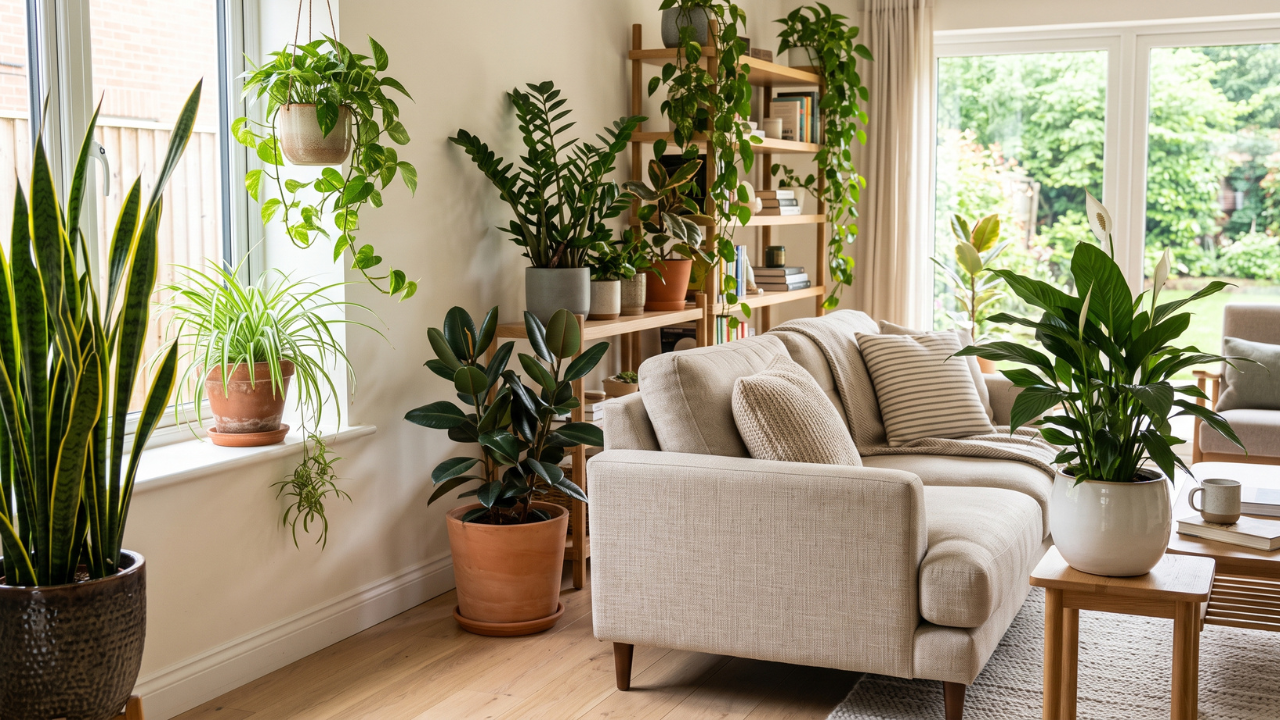
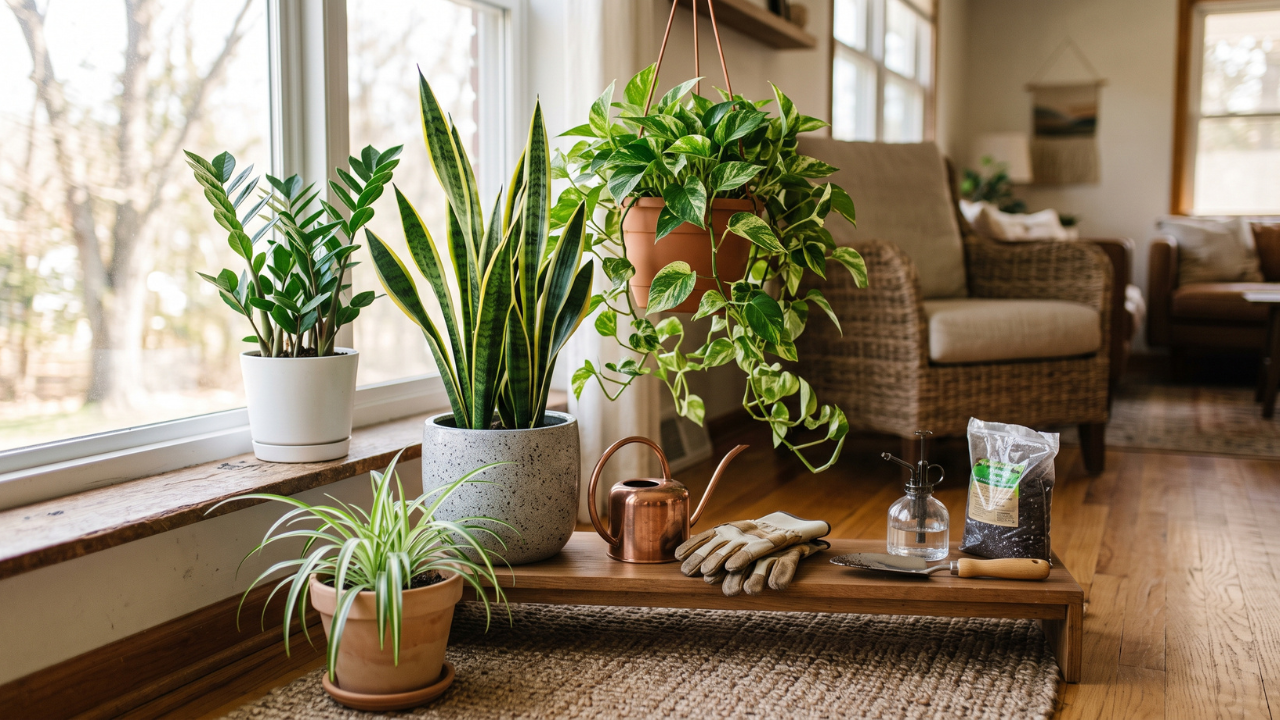
1. Pothos (Epipremnum aureum)
Pothos is the plant I recommend to every Florida friend who says they “kill everything.” Mine has hung in the same spot near an east-facing window for four years and has never once needed pest treatment.
Why it works here: Pothos tolerates our humidity swings well and actually prefers to dry out slightly between waterings, which suits Florida’s air-conditioned interiors. It handles low to bright indirect light, so it’s forgiving if your home doesn’t get consistent sun.
My care notes: I water mine roughly every 7–10 days, checking the soil with my finger first. Overwatering, not underwatering, is what kills pothos in humid climates — I learned this the hard way after losing one to root rot my first year here.
2. Snake Plant (Dracaena trifasciata)
If I had to pick one plant for someone who travels often or forgets to water, it’s this one.
Why it works here: Snake plants are succulent-like and store water in their thick leaves, so Florida’s humidity doesn’t bother them, and they’re remarkably tolerant of our occasional cold snaps if kept indoors. They also handle low light better than almost anything else on this list.
My care notes: I water mine once every two to three weeks, less in cooler months. The biggest mistake I see (and made myself early on) is watering on a fixed schedule instead of checking the soil — in Florida’s humidity, the soil often stays damp longer than you’d think.
3. ZZ Plant (Zamioculcas zamiifolia)
The ZZ plant sits in my dimmest hallway, gets almost no direct light, and still pushes out new glossy leaves every few months.
Why it works here: ZZ plants evolved to survive drought in East African soils, which makes them naturally suited to the “dry air indoors, humid air outside” contradiction of a Florida home. They’re also one of the few houseplants genuinely unbothered by low light.
My care notes: I water mine every two to three weeks and never let it sit in a saucer of water — the rhizomes underground will rot quickly if they stay wet, something I confirmed after an unfortunate autopsy of my first ZZ plant.
4. Peace Lily (Spathiphyllum)
Peace lilies are the one plant on this list that actually benefits from Florida’s humidity outright, rather than just tolerating it.
Why it works here: They’re native to tropical rainforests, so our indoor humidity levels (especially in rooms without heavy AC) mimic their natural environment closely. They’re also fairly communicative — the leaves droop dramatically when thirsty and perk back up within hours of watering, which takes the guesswork out of care.
My care notes: Mine lives in a bathroom with a frosted window, and the ambient humidity from showers keeps it happy with watering only once a week. I’d caution that peace lilies are toxic to pets if chewed, so I keep mine up on a shelf since I have a curious cat.
5. Pothos’s Cousin: Philodendron (Heartleaf variety)
I almost left this off since it’s so similar to pothos, but heartleaf philodendron has slightly glossier leaves and, in my experience, tolerates our AC-dried indoor air even better.
Why it works here: Like pothos, it’s an epiphyte in its native range, meaning it’s adapted to fluctuating moisture and doesn’t demand consistently wet soil — a real advantage when Florida’s humidity makes it easy to overestimate how often a plant needs water.
My care notes: I let the top two inches of soil dry out between waterings and mist the leaves occasionally during the driest AC-heavy months (usually January and February, when we run the heat and it dries the air out further).
Common Mistakes I’ve Made (So You Don’t Have To)
- Assuming humid climate means water more. Indoor AC often creates a drier microclimate around your plants than the humidity outside would suggest.
- Ignoring drainage holes. In Florida, standing water combined with warm indoor temperatures is basically an invitation for root rot and fungus gnats.
- Placing plants too close to west-facing windows. Our afternoon sun is intense enough to scorch leaves that would be fine with indirect light in other climates.
- Not acclimating new nursery plants. Plants grown in a shaded nursery greenhouse can get shocked by a bright Florida window; I now introduce new plants to a spot gradually over a week or two.
Final Thoughts
None of these plants are exotic finds — that’s rather the point. Easy-care houseplants in Florida are less about rare species and more about matching a plant’s natural tolerance for humidity swings and inconsistent light to what our homes actually offer. After years of trial, error, and a few plant funerals, these five are the ones I trust to forgive my occasional neglect and still look good doing it.
If you’re just starting out, I’d suggest picking one from this list, resisting the urge to water it “just in case,” and paying attention to how it responds over the first month. Florida’s climate is forgiving in some ways and unforgiving in others — but once you learn its rhythm, houseplants here are honestly easier to keep alive than in most other states.