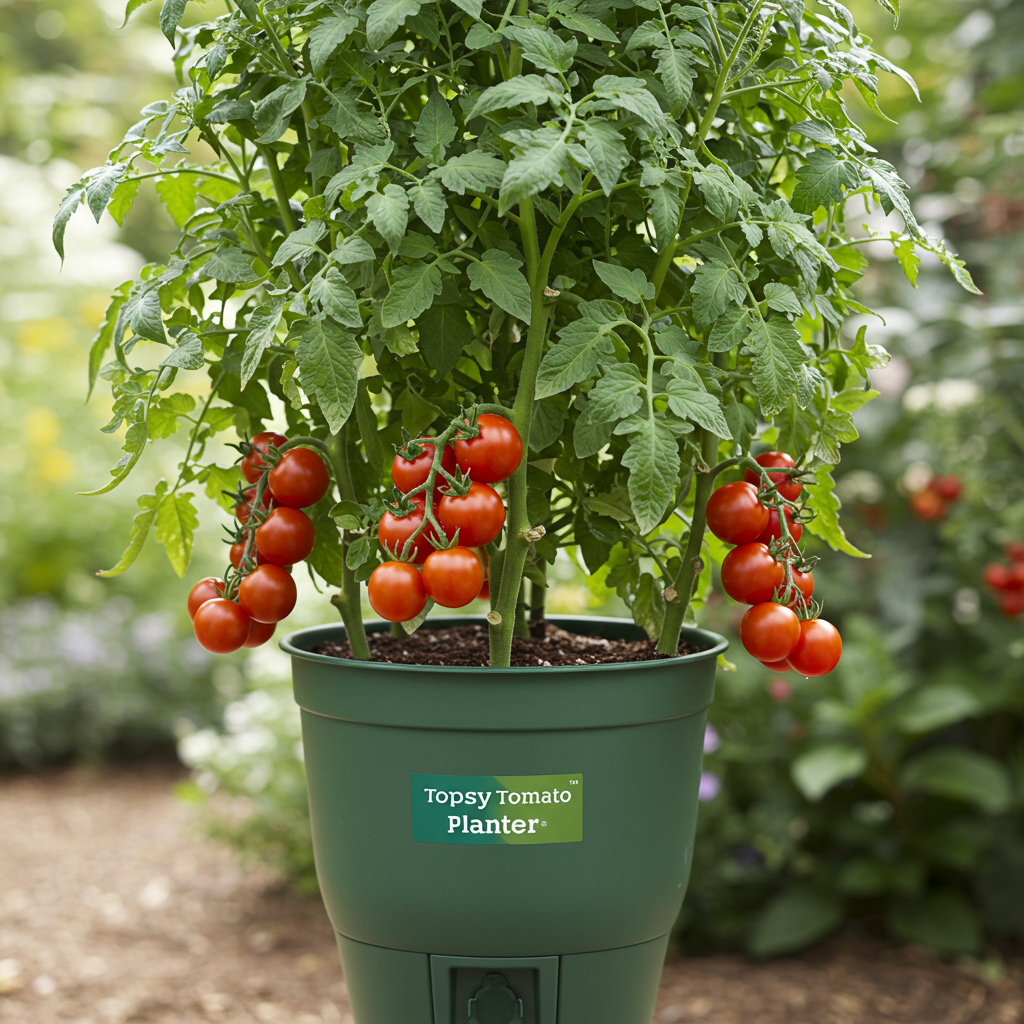
A 1 foot tall tomato plant might seem like the opposite of what a gardener strives for. We’re often conditioned to believe that a massive, sprawling, leafy plant is the ultimate sign of a healthy and productive tomato. We see pictures of gardeners standing proudly next to towering green monsters, and we assume that bigger is always better. But what if the greatest secret to an astonishingly large, high-quality tomato yield isn’t about growing the biggest plant, but about growing the smartest one? This counterintuitive approach focuses on controlled, efficient growth, turning your tomato plant into a highly specialized fruit-production machine, and it all starts by focusing on the plant’s development when it’s just a foot tall.
This article will pull back the curtain on a game-changing technique used by commercial growers and savvy home gardeners alike. Forget the untamed jungle of leaves and vines. We’re going to explore the method of intensive pruning that channels every ounce of the plant’s energy into producing bigger, tastier, and more abundant tomatoes than you ever thought possible from a single plant.
Debunking the “Bigger is Better” Myth
Let’s first address the common vision of a successful tomato plant: a sprawling, leafy behemoth that takes over its cage and spills onto the garden path. While visually impressive, this kind of growth is often incredibly inefficient. Here’s why that giant amateur plant often disappoints:
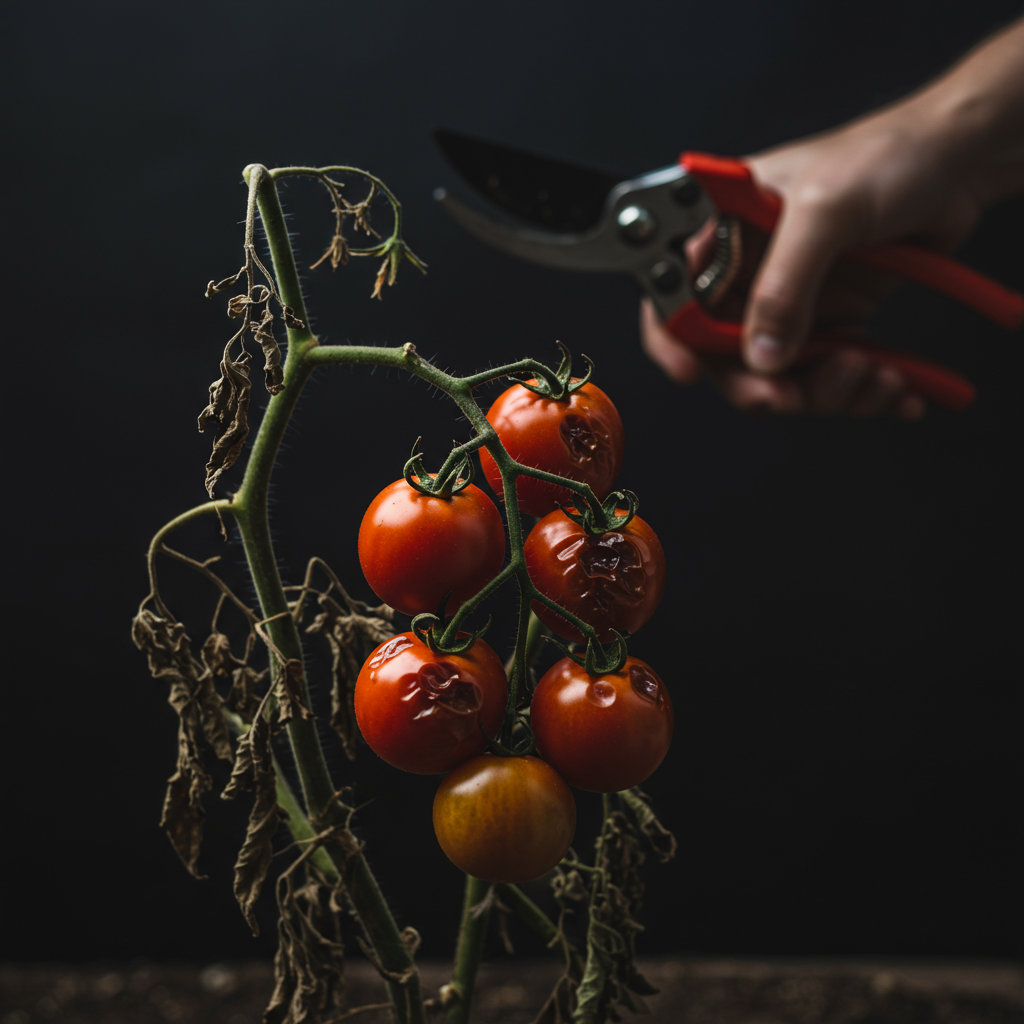
Wasted Energy: A tomato plant, like any living thing, has a finite amount of energy derived from sunlight, water, and nutrients. When it grows unchecked, a significant portion of that energy is spent on producing redundant leaves, stems, and “suckers” (new stems that grow in the V-shape between the main stem and a branch). This is vegetative growth, and while necessary, excess foliage comes at the direct expense of fruit production.
Poor Airflow and Increased Disease: A dense, tangled mass of leaves creates a humid microclimate. This is the perfect breeding ground for fungal diseases like blight, septoria leaf spot, and powdery mildew. Poor air circulation traps moisture on the leaves, allowing spores to take hold and spread rapidly, potentially devastating your entire crop.
Inconsistent Ripening: With sunlight blocked by a thick canopy of leaves, fruits buried deep inside the plant struggle to ripen. This leads to a sporadic harvest of unevenly ripened tomatoes. You might get a few ripe ones on the outside while dozens in the middle stay green for weeks longer than they should.
Smaller, Less Flavorful Fruit: When the plant is supporting hundreds of leaves and dozens of stems, its resources are spread thin. The sugars and nutrients that create delicious, flavorful tomatoes are diluted. The result is often a large quantity of small, mediocre-tasting fruits instead of a concentrated crop of exceptional ones.
By understanding these downsides, we can see that uncontrolled growth isn’t a sign of success; it’s a sign of inefficiency. The goal isn’t to grow the most leaves, but the most tomatoes.
The Secret Behind the 1 Foot Tall Tomato Plant
The “1 foot tall tomato plant” isn’t a specific dwarf variety. Instead, it refers to the critical growth stage where this powerful pruning technique begins. The secret lies in training an indeterminate tomato variety to grow on a single, dominant stem.
Indeterminate vs. Determinate: It’s crucial to understand the difference.
Determinate tomatoes (also called “bush” varieties like Roma or Biltmore) grow to a predetermined, compact size. They produce their entire crop over a few weeks and then they’re done. You should never prune these varieties heavily, as you’ll be cutting off their future fruit.
Indeterminate tomatoes (also called “vining” varieties like Brandywine, Sungold, or most beefsteak and cherry types) will continue to grow, flower, and produce fruit all season long until the first frost kills them. These are the perfect candidates for this single-stem technique because their growth potential is virtually limitless, and we need to harness it.
The single-stem method involves meticulously removing all suckers, forcing the plant to grow vertically up a single, thick, and incredibly robust vine. By starting this process when the plant is just about a foot tall, you establish this growth pattern from the very beginning. You are essentially telling the plant, “Don’t waste your energy growing outward. Send everything upward and into your fruit.”
Your Step-by-Step Guide to the Single-Stem Powerhouse Method
Ready to transform your garden? Follow these steps precisely, and you’ll be amazed by the results.
Step 1: Choose the Right Variety
As mentioned, this is non-negotiable. You must start with an indeterminate tomato variety. Check the plant tag or seed packet. If it says “indeterminate” or “vining,” you’re good to go. Some popular and reliable choices include:
Cherry: Sungold, Sweet Million, Black Cherry
Slicer: Early Girl, Better Boy, Big Beef
Heirloom: Brandywine, Cherokee Purple, Mortgage Lifter
Step 2: Planting and Initial Support
Plant your tomato seedling as you normally would, perhaps burying it a bit deep to encourage a stronger root system. The key difference here is spacing. Because your plants will be growing vertically instead of bushing out, you can plant them much closer together. While traditional spacing might be 3-4 feet apart, you can easily get away with 18-24 inches between single-stem plants. This is a massive space-saving advantage.
Immediately after planting, provide a tall, sturdy support structure. This is not optional. A single-stem plant cannot support itself.
Stakes: Use a solid stake that is at least 7-8 feet tall.
Trellis/String: The “Florida Weave” or a string trellis system is highly effective. With a string trellis, you run a line from an overhead support down to the base of the plant and gently wrap the growing vine around it as it grows.
Step 3: The Critical Pruning Begins (The 1-Foot Mark)
Once your plant reaches about 12 inches in height, it’s time to become a vigilant pruner. Your primary target is the suckers.
A sucker is a new shoot that forms in the “axil,” which is the V-shaped junction where a leaf branch meets the main stem. If left to grow, this sucker will become a whole new main stem, complete with its own leaves, flowers, and more suckers. This is how a plant becomes a chaotic bush.
How to Prune:
1. Identify: Look for the main, vertical stem. Find the leafy branches growing out from it. In the “V” between that branch and the main stem, you will see a tiny new shoot emerging. That’s your sucker.
2. Remove: When they are small (1-2 inches), you can easily pinch them off with your fingers. This is the best method as it creates a small, clean wound. If a sucker gets a bit larger, use a clean, sharp pair of small pruners or scissors to snip it off as close to the main stem as possible without damaging it.
3. Be Ruthless: You must remove every single sucker you find. Check your plants every 2-3 days, as suckers grow incredibly fast. Start from the bottom of the plant and work your way up.
At this early stage, you should also prune off the lowest one or two sets of leaves that are close to or touching the soil. This has the added benefit of preventing soil-borne diseases from splashing up onto the foliage when you water.
Step 4: Ongoing Maintenance and Tying
As your plant grows taller, continue this weekly, if not bi-weekly, routine:
Tie it Up: Gently tie the main stem to its support every 6-8 inches. Use soft plant ties, old nylons, or strips of cloth. Tie it in a loose figure-8 loop to avoid constricting and damaging the stem.
Keep Sucker-Hunting: Stay vigilant. Suckers will continue to appear all the way up the plant. Removing them is your most important ongoing task.
* Prune Lower Leaves: Once the plant is a few feet tall and the first truss of fruit has set, you can begin to prune off the lower leaves below that fruit cluster. This continues to improve air circulation and focuses even more energy on the developing fruit. Many professional growers keep the bottom foot of the stem completely bare.
The Science-Backed Benefits of This Method
This isn’t just garden folklore; the results are rooted in plant biology. By training your tomatoes this way, you unlock several powerful advantages.
1. Concentrated Energy for Superior Fruit: This is the biggest benefit. The plant’s “sugar factory” (the leaves) is no longer supporting a sprawling mess of vegetative growth. All of that energy is redirected to the fruit trusses. This results in noticeably larger individual tomatoes and often a higher overall yield by weight. The flavor is also more concentrated and intense.
2. Dramatically Improved Airflow: A single-stem plant is open and airy. Sunlight can penetrate the entire plant, and breezes can move freely through the leaves. This drastically reduces the humidity around the plant, making it far more difficult for fungal diseases to establish themselves. You’ll spend less time worrying about blight and more time harvesting.
3. Earlier and More Consistent Harvests:** Because the plant is focusing its energy so efficiently, the first fruit trusses will often form and ripen earlier than