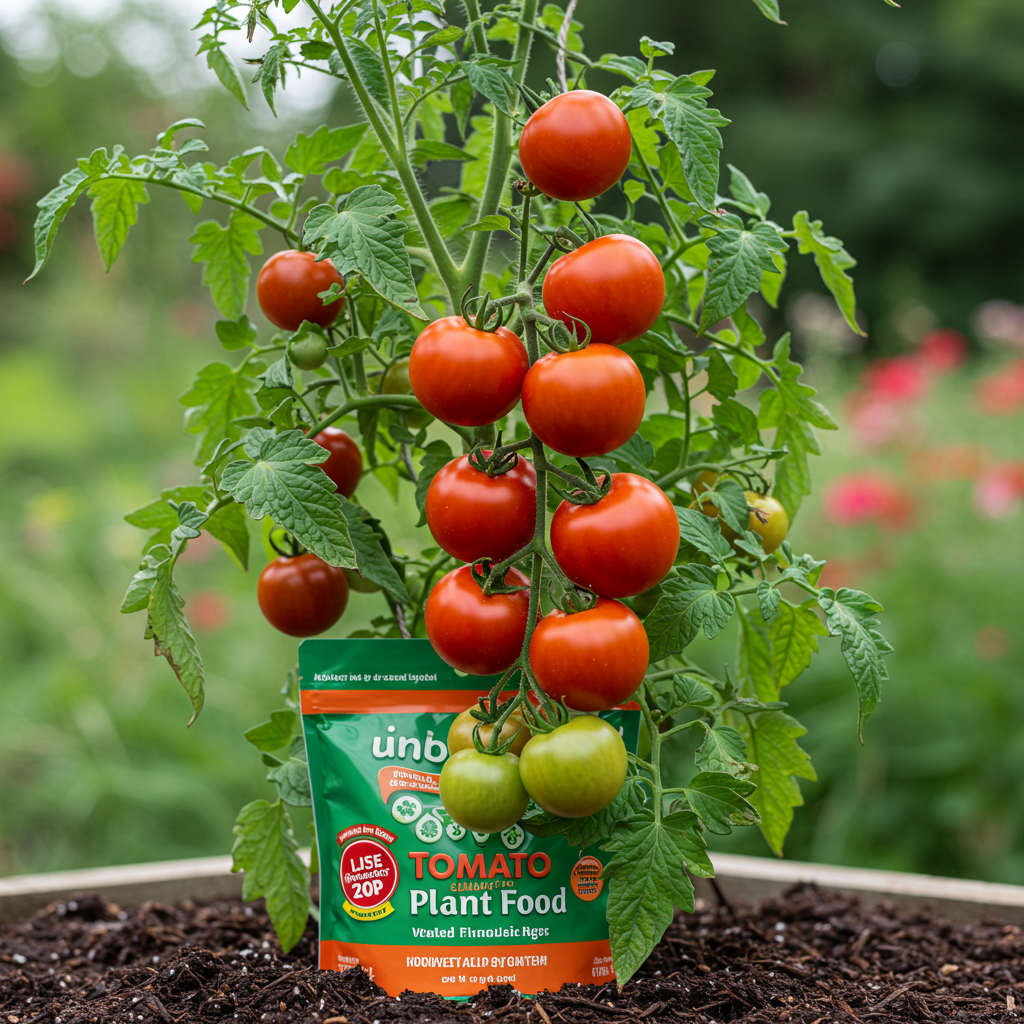
Tomato plant food is the single most important ingredient, besides sunshine and water, for transforming a spindly, hopeful seedling into a robust plant laden with juicy, flavorful fruit. Every home gardener dreams of that perfect tomato—sun-warmed, bursting with sweetness and just the right amount of acid, a world away from the bland offerings at the grocery store. Yet, achieving this dream can feel like a frustrating game of chance. Some years bring a bountiful harvest, while others yield disappointing results. The difference often lies not in luck, but in nutrition. By understanding what your tomatoes are hungry for and when, you can unlock a season of stunning, seemingly effortless growth and enjoy the best tomatoes you’ve ever tasted.
This comprehensive guide will demystify the world of tomato fertilizers. We’ll break down exactly what your plants need, how to choose the right products, and how to implement a simple feeding schedule that guarantees a summer of success.
Why Tomatoes Are Such “Heavy Feeders”
Before we dive into what to feed them, it’s crucial to understand why tomatoes are so demanding. In the gardening world, tomatoes are known as “heavy feeders.” This simply means they require a significant and consistent supply of nutrients from the soil to support their rapid growth, extensive foliage, and, most importantly, their prolific fruit production.
Think about the life cycle of a tomato plant. In just a few short months, it grows from a tiny seed into a large, sprawling vine or bush, produces dozens of flowers, and then develops those flowers into heavy, water-filled fruits. This entire process consumes an enormous amount of energy and nutritional resources.
The key nutrients can be broken down into three main categories:
1. Macronutrients (The Big Three: N-P-K)
This is the holy trinity of plant nutrition, and you’ll see these three letters on every bag of fertilizer.
Nitrogen (N): This is the engine for green, leafy growth. In the early stages of a tomato plant’s life, nitrogen is essential for developing strong stems and a lush canopy of leaves. These leaves are the plant’s solar panels, capturing sunlight to create energy through photosynthesis. However, there’s a catch: too much nitrogen later in the season will give you a beautiful, jungle-like plant with very few flowers or fruit.
Phosphorus (P): Phosphorus is the key to energy transfer, root development, and flower and fruit production. It helps the plant establish a strong root system, which is vital for absorbing water and other nutrients. Most importantly, it plays a direct role in setting blossoms and developing seeds and fruit. A phosphorus deficiency will lead to stunted growth and poor yields.
Potassium (K): Potassium is the great regulator. It’s essential for overall plant health and vigor. It helps regulate more than 60 different enzymes within the plant, aids in water and nutrient transport, and strengthens cell walls. For your tomatoes, this means better disease resistance, improved fruit quality (size, flavor, and color), and greater tolerance to stress like drought or heat.
2. Secondary Nutrients
These are needed in smaller quantities than N-P-K, but are no less critical.
Calcium (Ca): This is perhaps the most famous secondary nutrient for tomatoes because a deficiency leads to the dreaded Blossom End Rot—that dark, leathery spot on the bottom of your tomatoes. Calcium strengthens the cell walls of the fruit.
Magnesium (Mg): As the central atom in the chlorophyll molecule, magnesium is vital for photosynthesis. A deficiency often shows up as yellowing between the veins of older leaves.
Sulfur (S): Important for forming proteins and enzymes within the plant.
3. Micronutrients
These are the trace elements, needed in tiny amounts but still essential for specific functions. They include iron, manganese, boron, zinc, and copper. High-quality soil and well-formulated tomato fertilizers will typically contain all the necessary micronutrients.
Decoding the Fertilizer Label: What Do the Numbers Mean?
Walking down the fertilizer aisle can be intimidating. You’ll see bags and bottles with numbers like 10-10-10, 5-10-5, and 3-4-6. These numbers represent the percentage by weight of Nitrogen (N), Phosphorus (P), and Potassium (K), always in that order.
A “balanced” fertilizer like 10-10-10 has equal parts of each macronutrient. This is good for general garden preparation but is not ideal for tomatoes throughout their entire life cycle.
A fertilizer labeled 5-10-5 has 5% nitrogen, 10% phosphorus, and 5% potassium. Notice the higher middle number? This formula is designed to promote blooms and fruit rather than excessive leafy growth.
A specific “tomato food” like a 3-4-6 formula is lower in nitrogen and higher in potassium and phosphorus. This is tailored for the fruiting stage, encouraging the plant to put its energy into producing high-quality tomatoes.
Types of Tomato Plant Food: Choosing Your Weapon
There is no single “best” fertilizer; the right choice depends on your gardening style, your soil, and your goals. Let’s explore the main types.
Organic vs. Synthetic Fertilizers
This is the most fundamental choice you’ll make.
Synthetic Fertilizers: These are man-made, water-soluble chemical salts.
Pros: They are fast-acting, providing an immediate nutrient boost. The nutrient content is precise and readily available to the plant. They are often less expensive.
Cons: They do nothing to improve the long-term health of your soil. They can easily “burn” plant roots if over-applied. The nutrients can leach out of the soil with watering, requiring more frequent application and potentially contributing to water pollution.
Organic Fertilizers: These are derived from natural sources C like compost, manure, bone meal, and kelp.
Pros: They release nutrients slowly as soil microorganisms break them down. This “slow-and-steady” approach reduces the risk of burning roots. They improve soil structure, water retention, and support a healthy soil ecosystem.
Cons: They are slower to act, so they aren’t ideal for correcting a severe, immediate deficiency. The exact nutrient content can be less precise. Some, like fish emulsion, can have a strong odor.
For the health of your garden ecosystem and the most flavorful tomatoes, an organic approach is highly recommended. Often, the best strategy is a hybrid one: build your soil with organic matter and use a targeted liquid organic fertilizer for supplemental feeding.
Forms of Fertilizer
Granular: These are dry pellets you mix into the soil or sprinkle around the base of the plant (“side-dressing”). They are typically slow-release, providing a steady supply of nutrients over several weeks or months. This is an excellent choice for applying at planting time.
Liquid / Water-Soluble: These are concentrates you mix with water and apply when you’re watering your plants. The nutrients are immediately available, making this a perfect choice for regular “booster” feedings throughout the growing season. Liquid feeding is also a great way to quickly address signs of a nutrient deficiency.
Spikes: These are compressed fertilizer sticks you push into the soil. While convenient, they create a concentrated zone of nutrients that may not be evenly distributed to the entire root system. For heavy feeders like tomatoes, liquid or granular options often provide better results.
A Look at Fantastic Organic Amendments
Compost: The absolute best soil amendment. It’s a balanced, slow-release source of a wide range of nutrients and improves soil structure like nothing else.
Worm Castings: An incredibly rich soil conditioner packed with beneficial microbes and nutrients.
Bone Meal: An excellent organic source of phosphorus and calcium, perfect for adding to the planting hole to promote strong roots and prevent blossom end rot.
* Fish Emulsion / Hydrolyzed Fish & Kelp:** A potent liquid feed rich in nitrogen and trace minerals. Kelp, in particular, contains growth hormones that boost plant vigor.
Your Ultimate Tomato Feeding Schedule: A Step-by-Step Guide
Now, let’s put it all together into a simple, actionable plan