This comprehensive guide explores the absolute best climbing plants for Florida fences, helping you transform a plain barrier into a stunning, living wall. We cover a variety of vibrant, resilient, and beautiful vines—from the iconic Bougainvillea to the native Coral Honeysuckle—and provide expert advice on selection, planting, training, and maintenance. Whether you seek vibrant color, lush privacy, or a fragrant backyard oasis, you’ll find the perfect climbing plant to thrive in Florida’s unique climate.
Transforming a fence in Florida from a simple boundary marker into a breathtaking vertical garden is easier than you think. Climbing plants offer a dynamic solution for creating privacy, adding spectacular color, and enhancing curb appeal. From sun-drenched coastal fences to shady inland backyards, the right vine can turn a functional structure into a natural work of art. This guide will walk you through everything you need to know to select, plant, and care for the perfect climbing plants for your Florida fence.
Why Use Climbing Plants on Your Florida Fence?
A fence serves a purpose, but it doesn’t have to be boring. In Florida’s year-round growing climate, a bare fence is a missed opportunity. Covering it with climbing plants, or vines, offers a multitude of benefits that go far beyond simple aesthetics.
Natural Privacy: A chain-link or gapped wooden fence doesn’t offer much seclusion. A dense, leafy vine can create a “living wall” that provides a lush, impenetrable privacy screen, making your backyard feel like a secluded retreat.
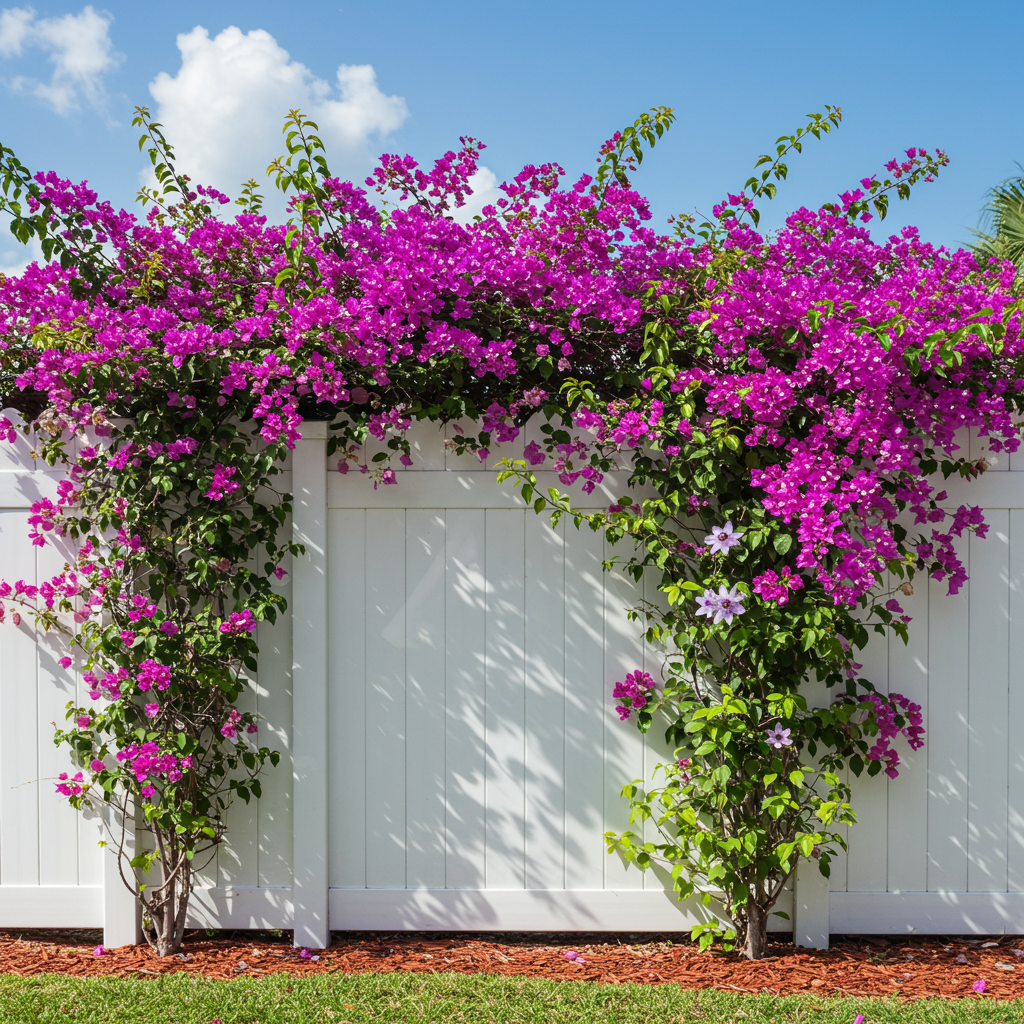
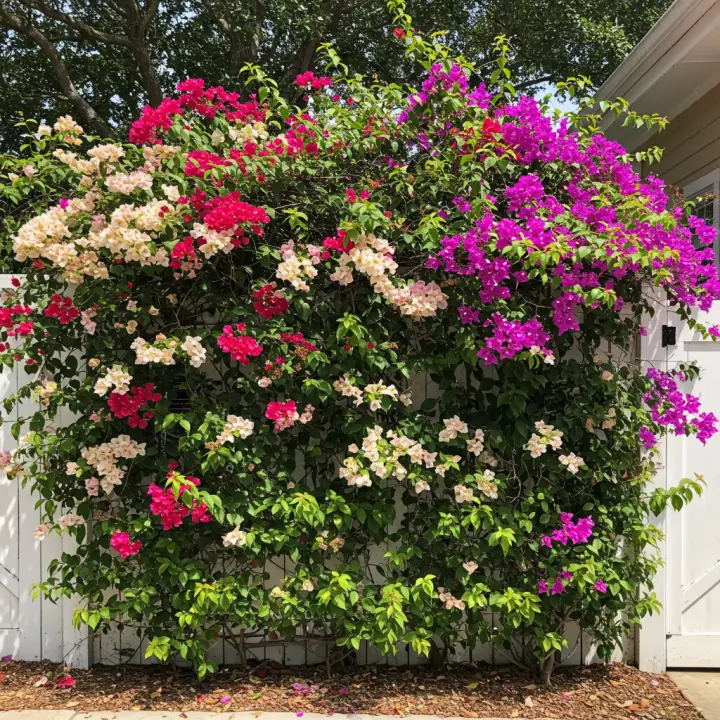
Stunning Beauty and Curb Appeal: Imagine your fence draped in the fiery bracts of a bougainvillea or the fragrant white stars of a confederate jasmine. Flowering vines add layers of color, texture, and visual interest to your landscape, significantly boosting your home’s curb appeal.
Attracting Wildlife: Many flowering vines are a magnet for pollinators. Native choices like Coral Honeysuckle attract hummingbirds, while Passion Flower serves as a host plant for butterfly caterpillars. You can create a vibrant ecosystem right in your backyard.
Covering Imperfections: Have an old, weathered, or slightly unsightly fence? A fast-growing vine is the perfect, cost-effective way to camouflage imperfections and give the structure a beautiful, new life.
Cooling Effect: A wall of green foliage can actually help cool the surrounding area by providing shade and through the process of transpiration. This can make your patio or lanai a more comfortable place to relax on hot Florida days.
Key Considerations Before Choosing Your Vine
Florida’s climate is a paradise for many plants, but it also presents unique challenges like intense sun, high humidity, sandy soil, and hurricane season. Before you head to the nursery, think through these crucial factors to ensure you choose a plant that will thrive, not just survive.
Sunlight Exposure: Full Sun, Part Shade, or Shade?
This is the single most important factor. Observe your fence line throughout the day.
Full Sun: Receives 6 or more hours of direct sunlight. This is common for south- or west-facing fences.
Part Shade: Receives 3-6 hours of sun, often with protection during the hottest afternoon hours. This might be an east-facing fence or one partially shaded by a tree.
Shade: Receives less than 3 hours of direct sunlight.
Choosing a sun-loving plant like Allamanda for a shady spot will result in sparse growth and no flowers. Conversely, a shade-dweller will scorch in full sun.
Salt Tolerance for Coastal Areas
If you live near the coast, salt spray is a major consideration. Many plants cannot tolerate the salty air and soil. Look for salt-tolerant champions like Bougainvillea or the native Railroad Vine to ensure your coastal garden flourishes.
Growth Rate and Aggressiveness
Vines are categorized by their growth habit and speed.
Aggressive Growers: Plants like Creeping Fig (Ficus pumila) can quickly cover a large area. This is great for fast coverage but requires diligent pruning to prevent them from taking over your house, windows, and gutters.
Moderate Growers: Plants like Mandevilla are vigorous but more manageable, making them excellent, lower-maintenance choices.
Clinging Method: How does the vine climb?
Twiners (e.g., Jasmine, Mandevilla): These vines wrap their stems around a support. They need a trellis, wires, or a chain-link fence to climb.
Clingers with Aerial Roots/Adhesive Pads (e.g., Creeping Fig): These attach themselves directly to surfaces like brick or concrete block walls. Be cautious, as they can damage wood or painted surfaces.
Sprawlers with Thorns (e.g., Bougainvillea): These aren’t true climbers but use their long, thorny canes to hook onto and scramble over supports. They need to be tied and trained.
Native vs. Non-Native Plants
Florida Natives: Plants like Coral Honeysuckle and Passion Flower are adapted to local conditions, require less water and fertilizer once established, and are crucial for supporting local wildlife.
Florida-Friendly Non-Natives: Many non-native plants like Bougainvillea and Allamanda are well-adapted to the climate and perform beautifully. Just be sure to avoid invasive species that can escape your garden and harm the local ecosystem.
Top 10 Stunning Climbing Plants for Florida Fences
Here is our curated list of the best, most beautiful, and most reliable climbing plants that will flourish on a Florida fence.
1. Bougainvillea (Bougainvillea spectabilis)
The undisputed queen of Florida landscapes. What appear to be vibrant paper-like flowers are actually modified leaves called bracts, which surround the tiny, inconspicuous white flower.
Best For: Full sun, creating an explosion of color, and salt tolerance.
Sunlight: Full Sun. The more sun, the more blooms.
Growth Habit: A thorny sprawler that needs to be tied to a support. It can be trained to cover fences, arbors, and walls.
Why We Love It: Unbeatable, year-round color in shades of pink, purple, red, orange, and white. It’s incredibly drought-tolerant once established and thrives on neglect.
Heads Up: The thorns are formidable, so handle with care and plant away from high-traffic walkways. Requires regular pruning after blooming cycles to maintain shape and encourage new flowers.
2. Allamanda (Allamanda cathartica)
Often called Golden Trumpet, this fast-growing vine produces enormous, showy, trumpet-shaped yellow flowers. There are also varieties with purple and peach-colored blooms.
Best For: Fast coverage, tropical flair, and show-stopping flowers.
Sunlight: Full Sun to Light Shade.
Growth Habit: A vigorous twining vine that will readily climb a trellis or chain-link fence.
Why We Love It: It’s a relentless bloomer throughout the warm months. Its large, glossy green leaves provide a dense, attractive screen even when not in full bloom.
Heads Up: All parts of the plant are toxic if ingested, so be mindful with pets and small children. It is sensitive to frost and may die back in North Florida winters but typically returns from the roots.
3. Mandevilla / Dipladenia (Mandevilla spp.)
These closely related tropical vines are prized for their tidy growth habit and stunning, trumpet-shaped flowers in shades of pink, red, and white.
Best For: A more controlled and manageable vine, perfect for smaller fences, posts, or containers with a trellis.
Sunlight: Full Sun to Part Shade. Appreciates some afternoon shade in the peak of summer.
Growth Habit: A well-behaved twining vine. Mandevilla tends to be more vining, while Dipladenia often has a bushier habit.
Why We Love It: It provides a lush, tropical look without the aggressive nature of some other vines. The flowers are beautiful and attract hummingbirds.
Heads Up: Not as drought-tolerant as Bougainvillea; requires consistent watering, especially in pots. It is very frost-sensitive and should be protected in North and Central Florida during cold snaps.
4. Confederate Jasmine (Trachelospermum jasminoides)
Don’t let the name fool you; this isn’t a true jasmine, but its fragrance is just as intoxicating. In spring, this evergreen vine is completely covered in small, white, pinwheel-shaped flowers that perfume the entire yard.