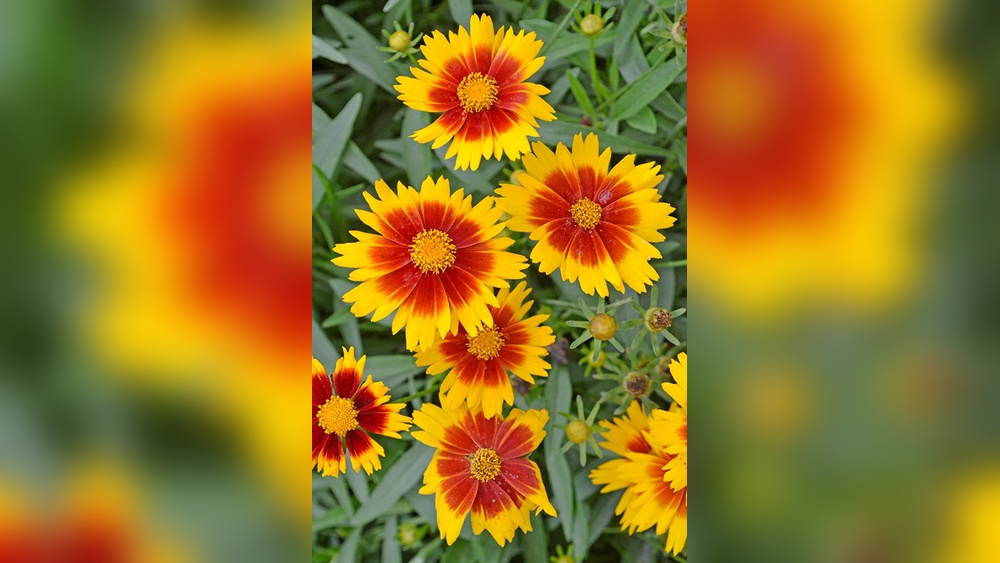

If you want your Florida garden to thrive this fall, knowing what to plant in September is key. This month offers the perfect window to grow a variety of vegetables and flowers that will flourish in Florida’s unique climate.
By choosing the right plants now, you can enjoy a bountiful harvest and vibrant garden through the cooler months. Ready to transform your garden and make the most of September’s planting opportunities? Keep reading to discover the best things to plant in Florida this September—and how to set your garden up for success.
September Climate In Florida
September in Florida signals a shift in the gardening calendar. The summer heat begins to ease, yet the days remain warm. This month marks a transition from the wet season toward drier, cooler conditions. Gardeners can take advantage of this climate to plant a variety of crops that thrive under such conditions.
Temperature And Rainfall Patterns
Average temperatures in September range from 70°F to 90°F. The heat is still present but less intense than in mid-summer. Rainfall starts to decrease compared to August, but occasional showers remain common. Humidity levels stay relatively high, creating a warm and moist environment. These conditions help many plants establish strong roots before cooler months.
Impact On Plant Growth
Warm soil and moderate rainfall support seed germination and growth. Plants benefit from longer daylight hours and sufficient moisture. Some crops can mature quickly during this period. The risk of frost is virtually nonexistent, allowing tropical and subtropical plants to flourish. However, gardeners should watch for pests and diseases that thrive in humid conditions. Proper care ensures healthy growth and bountiful harvests.

Credit: www.almanac.com
Vegetables To Plant
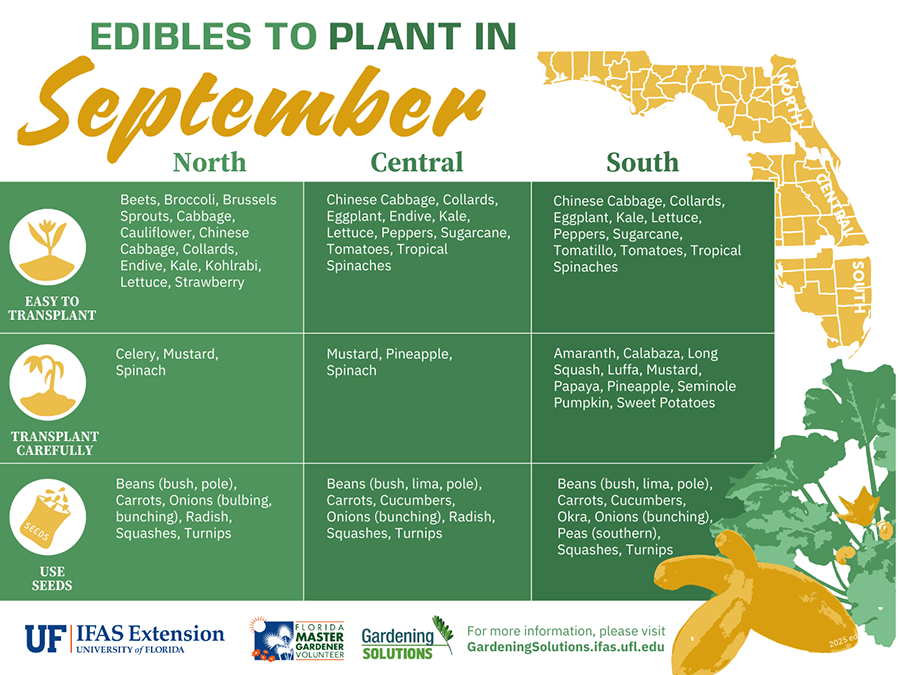
September is a great time to plant vegetables in Florida. The warm climate supports many crops that grow well this season. Choosing the right vegetables ensures a healthy, productive garden. Below are some top vegetable options to start planting now for a bountiful fall harvest.
Beans: Pole, Bush, And Lima
Beans thrive in Florida’s September weather. Pole beans climb and save space. Bush beans grow compact and mature quickly. Lima beans offer a creamy texture and rich flavor. Plant these beans in well-drained soil for best results. They add nitrogen to the soil, helping other plants grow.
Southern Peas Varieties
Southern peas, also called cowpeas, are heat-tolerant and easy to grow. Varieties like black-eyed peas and crowder peas do well in Florida’s fall. They improve soil health by fixing nitrogen. These peas mature fast and resist pests naturally.
Cucumbers For Fall Harvest
Cucumbers love warm soil and plenty of sun. Plant fast-maturing varieties for a fall harvest. They need regular watering and support for climbing. Harvest cucumbers early to enjoy crisp, fresh vegetables. Picking often encourages more fruit production.
Summer And Winter Squash
Squash is versatile and grows well in Florida’s September climate. Summer squash like zucchini mature quickly and produce many fruits. Winter squash such as butternut store well for later use. Plant in rich soil and give them space to spread. Squash plants attract pollinators that help your garden.
Green Onions And Shallots
Green onions and shallots are easy to grow and add flavor. They prefer loose soil and partial shade. Plant sets or seeds directly into the garden. These crops mature fast and need little maintenance. Harvest green onions by cutting tops; shallots grow underground bulbs.
Turnips And Root Crops
Turnips and other root vegetables grow well in cooler fall weather. They develop sweet flavors as temperatures drop. Plant seeds shallowly in well-prepared soil. Carrots, radishes, and beets also thrive this time of year. Root crops store well and add variety to meals.
Herbs And Greens
September is a great month to start planting herbs and leafy greens in Florida. The cooler temperatures and occasional rainfall create perfect conditions. Herbs and greens thrive well in Florida’s warm climate and can be harvested fresh for your kitchen. Growing these plants in September ensures a steady supply through the fall and winter months.
Best Herbs For September
Basil grows quickly and loves Florida’s warmth. Cilantro prefers cooler weather and does well in early fall. Parsley is hardy and can handle the changing temperatures. Dill grows well and attracts beneficial insects. Mint spreads fast and is perfect for containers. These herbs add flavor and freshness to meals.
Leafy Greens Adapted To Florida
Spinach thrives in Florida’s mild fall and winter. Kale grows strong and is resistant to pests. Mustard greens provide a spicy bite and grow fast. Swiss chard is colorful and easy to grow. Collard greens produce large leaves and tolerate heat well. These greens fit perfectly into Florida gardens in September.
Planting Tips For Herbs
Choose a spot with good sunlight, about 6 hours a day. Use well-draining soil rich in organic matter. Water herbs regularly but avoid waterlogging. Pinch back herbs to encourage bushy growth. Start seeds indoors for delicate herbs like basil. Use containers if garden space is limited or soil is poor. Mulch around plants to keep soil moist and cool.
Flower Choices For September
September marks a great time to plant flowers in Florida. The cooler weather helps many flowers grow strong. Choosing the right flowers now can brighten your garden all fall and winter. Flowers add color and life to your outdoor space. Some types do better in September than others. Focus on plants that love the mild Florida fall.
Annuals Suited For Fall Planting
Planting annuals in September gives you blooms before winter. Marigolds and zinnias do well in Florida’s fall climate. Pansies bring bright colors and handle cool nights. Snapdragons offer tall spikes of flowers in many shades. These annuals grow fast and fill spaces quickly. They provide vibrant color right through the season. Choose varieties that resist heat and humidity.
Perennials That Thrive
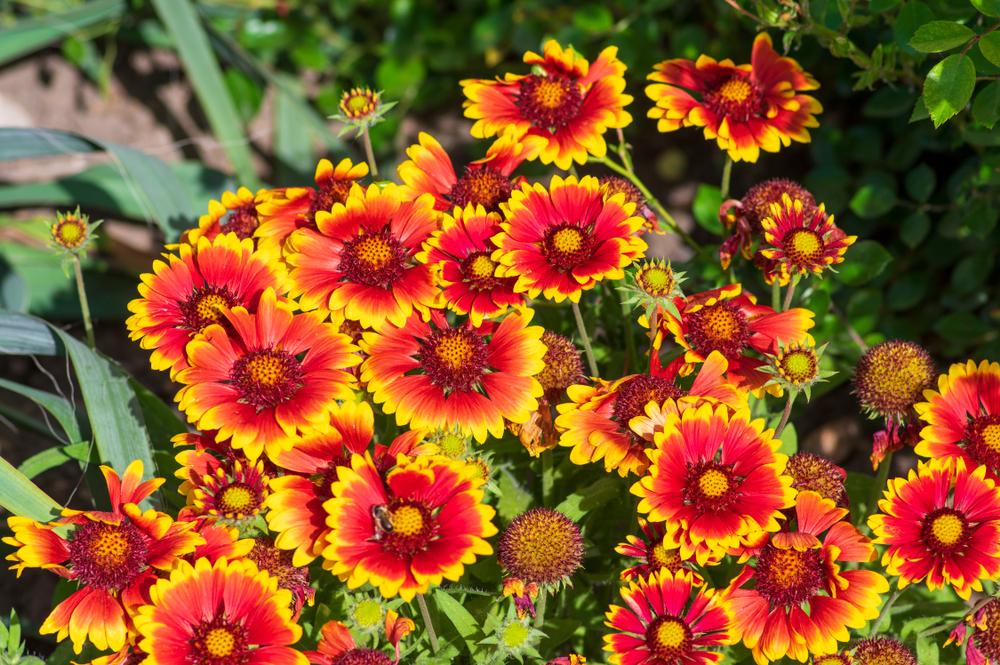
Perennials planted in September establish strong roots before winter. Coreopsis and blanket flower are great choices for Florida gardens. They bloom repeatedly and attract pollinators like butterflies. Salvia and gaillardia add long-lasting color and texture. These plants come back year after year with little care. Perennials give structure and beauty to your garden beds.
Color Combinations And Patterns
Mixing flower colors creates eye-catching garden displays. Pair warm tones like orange and yellow for a sunny look. Combine purple and white for contrast and calmness. Use the rule of three by planting groups of three colors. Repeat patterns across the garden for balance and flow. Play with flower heights to add depth and interest. Color combos make your fall garden stand out.
Fruit Plants To Consider
September is a great time to plant fruit in Florida. The warm climate and the coming cooler months help fruit plants grow strong roots. Choosing the right fruit plants now can lead to a fruitful harvest next season. Here are some excellent fruit plant options to consider for your September garden.
Berry Bushes
Berry bushes like blueberries and blackberries do well in Florida. They need well-drained soil and some sunlight. Planting in September gives them time to settle before winter. These bushes produce tasty, nutritious berries. They also attract pollinators to your garden, boosting overall plant health.
Citrus Tree Seedlings
Citrus trees such as oranges, lemons, and limes thrive in Florida’s climate. September is ideal to plant young seedlings. They require full sun and regular watering. Citrus trees add color and fresh fruit to your yard. Proper care now helps avoid stress during hot summer months.
Tropical Fruit Options
Tropical fruits like mangoes, papayas, and avocados grow well in Florida. These plants enjoy warm weather and plenty of light. Planting in September allows roots to develop before winter. Tropical fruits bring exotic flavors and variety to your garden. They also add a lush, tropical look to your space.
Credit: keithslawncareocala.com
Soil Preparation Tips
Preparing your soil well in September sets the stage for a thriving Florida garden. Good soil helps plants grow strong and healthy. It improves water drainage and provides essential nutrients. Take time now to get your soil ready for the best results.
Testing And Amending Soil
Start by testing your soil’s pH and nutrient levels. You can buy simple test kits or send samples to a local extension office. Knowing your soil’s condition guides your amendments. Add lime if the soil is too acidic. Use sulfur to lower pH if it is too alkaline. Add balanced fertilizers to supply missing nutrients. Mix amendments well into the soil to avoid patchy growth.
Composting Benefits
Compost enriches soil with organic matter and nutrients. It improves soil texture and water retention. Spread a 2-3 inch layer of compost over your garden beds. Work it gently into the top few inches of soil. Compost also encourages beneficial microbes that support plant health. Using compost reduces the need for chemical fertilizers.
Mulching For Moisture Retention
Mulch helps keep soil moist and cool under Florida’s sun. Use natural mulches like pine straw, wood chips, or shredded leaves. Spread mulch around plants but keep it away from stems. Mulching reduces water evaporation and controls weeds. It also protects roots from temperature swings. Replenish mulch as it breaks down to maintain its benefits.
Watering And Care
Proper watering and care are vital for plants planted in Florida during September. The warm climate and occasional rain require a balanced approach. This ensures healthy growth and prevents common problems. Understanding irrigation, pest control, and fertilizing helps your garden thrive through the month.
Irrigation Strategies For September
September in Florida can be humid with sporadic showers. Water plants early in the morning to reduce evaporation. Use drip irrigation or soaker hoses to deliver water directly to roots. Avoid overhead watering to reduce leaf diseases. Monitor soil moisture regularly to avoid overwatering. Adjust watering frequency based on rainfall and plant type.
Pest And Disease Management
Warm weather attracts many pests like aphids and whiteflies. Inspect plants weekly for signs of infestation. Use insecticidal soap or neem oil for safe pest control. Remove damaged or diseased leaves to stop spread. Encourage beneficial insects like ladybugs in your garden. Keep the garden clean to reduce hiding spots for pests.
Fertilizing Guidelines
September is a good time to feed plants for strong growth. Use a balanced fertilizer with equal nitrogen, phosphorus, and potassium. Apply fertilizer early in the day for better absorption. Follow the package instructions to avoid overfeeding. Consider slow-release fertilizers to provide nutrients over time. Mulch around plants to keep soil moist and fertile.
Credit: gardeningsolutions.ifas.ufl.edu
Using The Rule Of Three In Planting
The rule of three is a simple tip for planting in Florida gardens. It helps create beauty and balance. Using this rule, gardeners plant in groups of three. This makes the garden look natural and nice. September is a good time to use this rule. Plants grow well and show their best.
Grouping Plants In Odd Numbers
Planting in groups of three draws the eye. Odd numbers like three feel more lively than even numbers. In Florida, group three of the same plants together. This creates small clusters that look full and bright. Avoid planting just one or two plants alone. Groups of three add rhythm and flow to your garden.
Combining Different Species
Mix three different kinds of plants in one spot. Choose plants with different colors or leaf shapes. This mix adds interest and texture. In September, try combining beans, cucumbers, and squash. These grow well together in Florida’s warm weather. Different species help each other and keep pests away.
Creating Depth With Plant Heights
Use three plants of varying heights for depth. Place tall plants in the back, medium in the middle, and short in front. This layering makes your garden look full and lively. In Florida, try this with southern peas, green onions, and turnips. The height differences catch light and shadows beautifully.
Repeating Patterns For Unity
Repeat your groups of three around the garden. This repetition ties the space together. It makes different parts of the garden feel connected. Use the same trio of plants in several spots. Repeating patterns give a sense of order. Your September garden will look neat and peaceful.
Frequently Asked Questions
What To Plant In Fl In September?
Plant beans, southern peas, cucumbers, summer and winter squash, green onions, shallots, and turnips in Florida in September.
What Is The Rule Of 3 In Gardening?
The rule of 3 in gardening groups plants in threes for natural, balanced, and visually appealing designs. Use three different plants with varying heights and colors. Repeat these groups to unify the garden. This odd-numbered grouping enhances depth and interest in garden arrangements.
What Vegetables Can You Plant In The Fall In Florida?
Plant fall vegetables in Florida like beans, southern peas, cucumbers, summer and winter squash, green onions, shallots, and turnips. These crops thrive in Florida’s mild autumn climate and ensure a productive garden season.
Is September Too Late To Plant Fall Vegetables?
September is not too late to plant fall vegetables in many regions. Choose quick-maturing crops like greens, radishes, and turnips. Ensure soil stays moist and temperatures remain mild for best growth. Planting by early September maximizes harvest before frost arrives.
Conclusion
September offers a great time to start many plants in Florida gardens. Beans, cucumbers, and squash thrive well this month. Planting green onions and turnips adds variety to your garden. Choosing the right crops now leads to a healthy harvest later.
Remember to water regularly and watch for pests. Enjoy the process of growing fresh, homegrown vegetables. Your September garden will reward you with vibrant, tasty produce. Start planting today and watch your garden flourish this season.