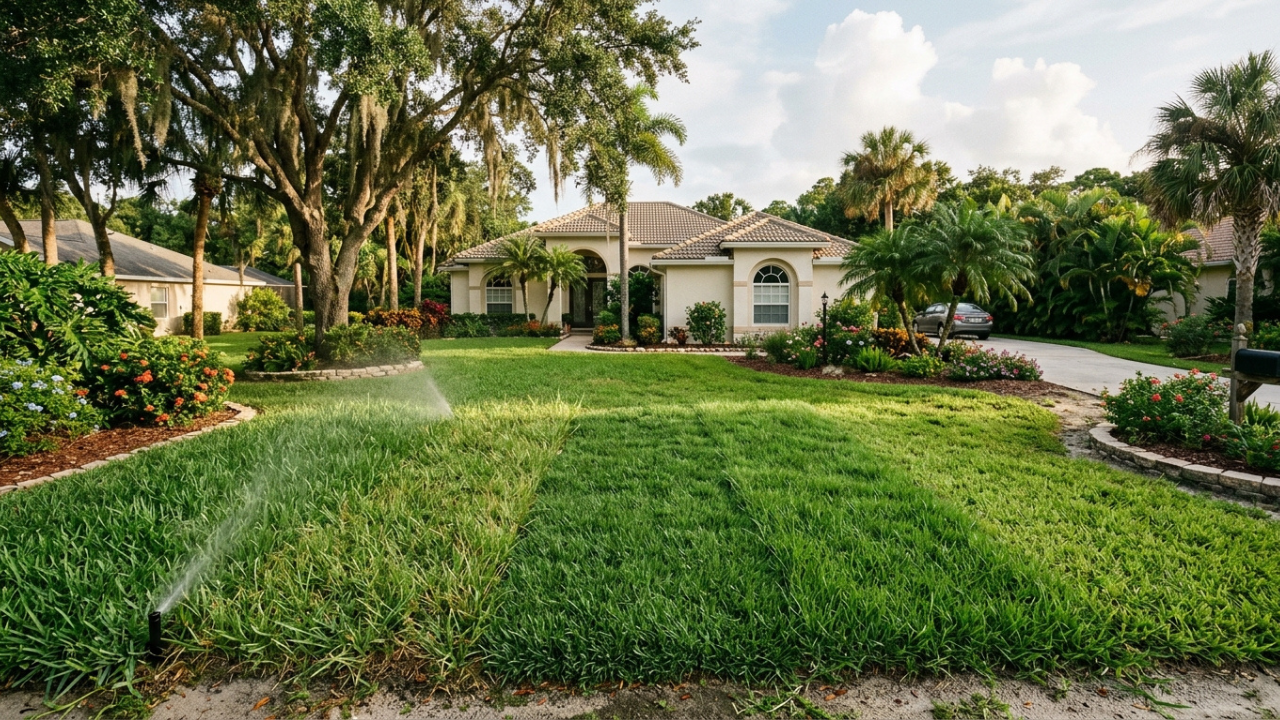
I’ve spent more than a decade working with lawns across Central and South Florida — from sandy coastal yards in Sarasota to the heavier soils further inland — and if there’s one thing I’ve learned, it’s that Florida grass has zero patience for a “one type fits all” approach. Between the humidity, the sandy soil, the intense summer sun, and the occasional drought, choosing the right turfgrass can make the difference between a lawn that thrives and one that turns into a patchy, weed-infested mess by August.
In this guide, I’m walking you through the five grass types I recommend most often to homeowners here in Florida, based on what’s actually worked in real yards — not just what looks good on a seed bag.
Why Grass Selection Matters More in Florida Than Almost Anywhere Else
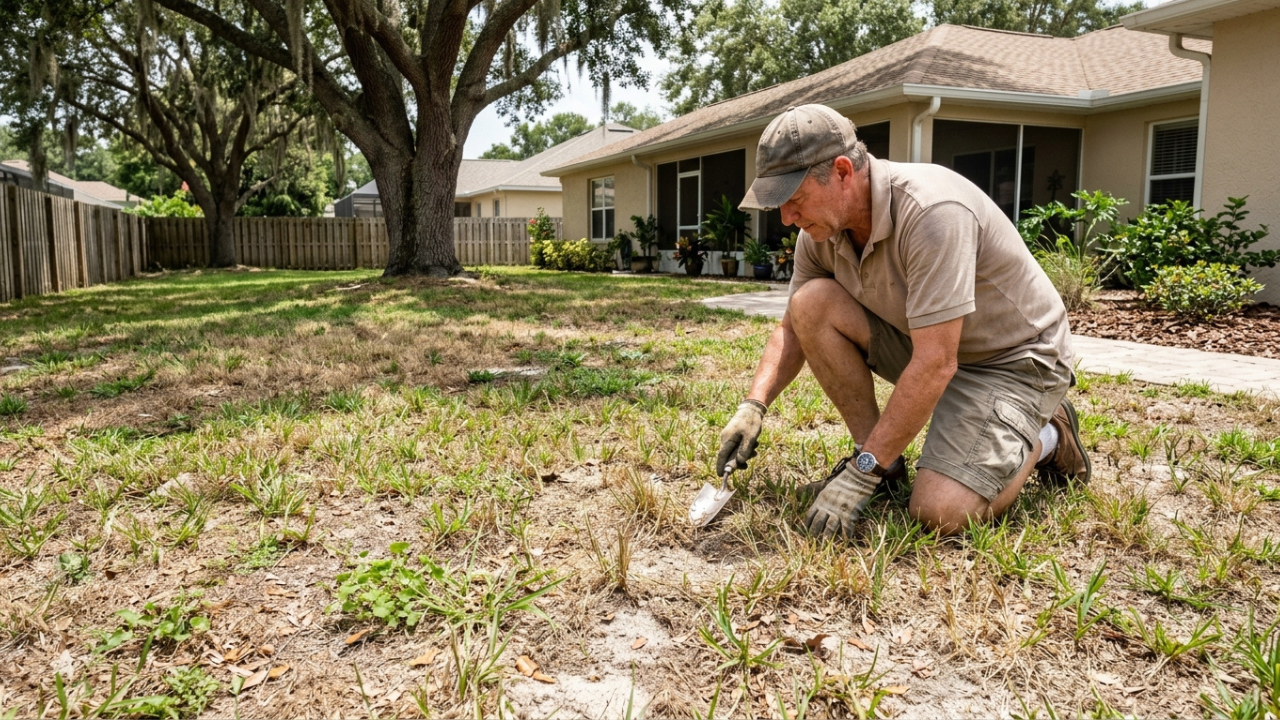
Florida’s climate is unique. We deal with:
- Intense heat and humidity for most of the year
- Sandy, fast-draining soil in many regions
- Heavy seasonal rain followed by dry stretches
- Shade from mature oak and palm canopies in older neighborhoods
- Pest pressure, especially chinch bugs and mole crickets
A grass that performs beautifully in Georgia or the Carolinas can struggle badly here. That’s why nearly all of Florida’s most popular lawns are made up of just a handful of warm-season grass species, each suited to slightly different conditions.
1. St. Augustine Grass
St. Augustine is, by far, the grass I install and maintain most often for Florida homeowners — and it’s the default choice for a reason.
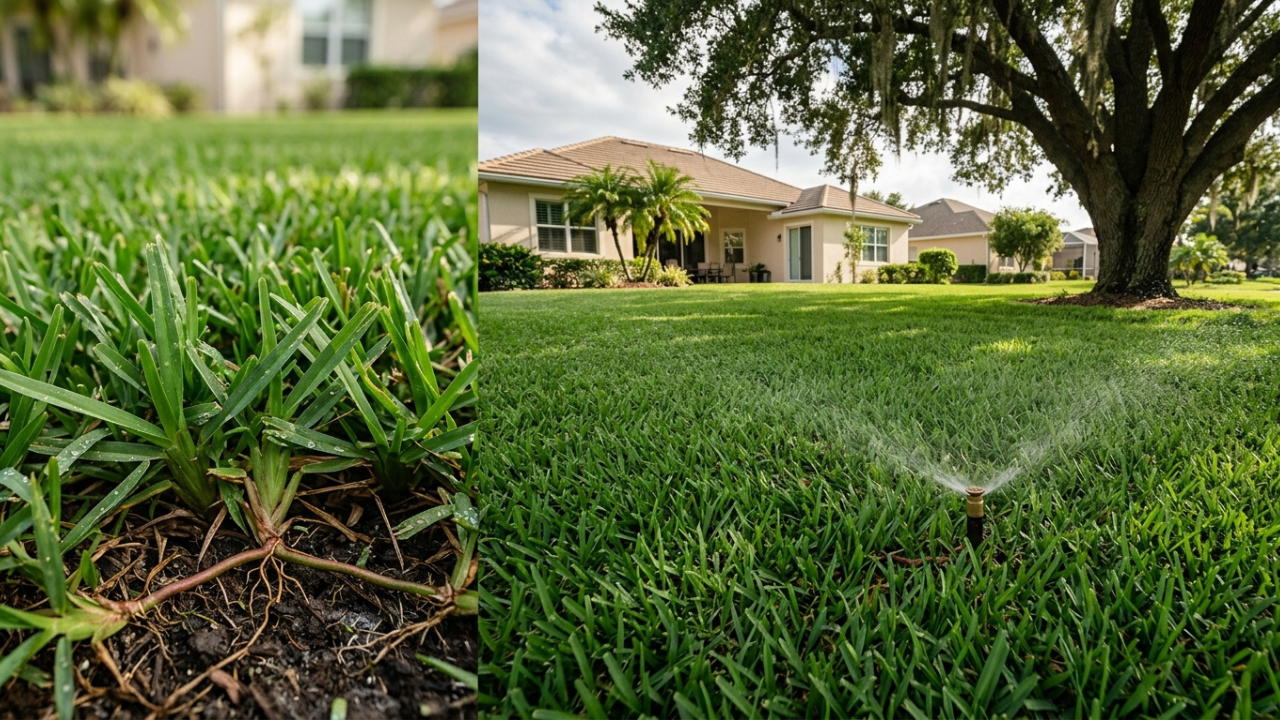
Why people choose it:
- Thick, lush, carpet-like appearance
- Excellent shade tolerance compared to other warm-season grasses
- Good salt tolerance, which matters a lot near the coast
- Spreads quickly via stolons, filling in bare patches
Where it struggles: St. Augustine is thirsty and needs consistent watering, especially during establishment. It’s also more susceptible to chinch bugs and certain fungal diseases like large patch, particularly when overwatered or mowed too short. In my experience, most St. Augustine problems trace back to improper irrigation, not the grass itself.
Best for: Homeowners who want a classic, dense green lawn and have partial shade from trees.
2. Bahia Grass
Bahia is the grass I recommend to clients who want something low-maintenance and don’t mind a slightly less refined look.
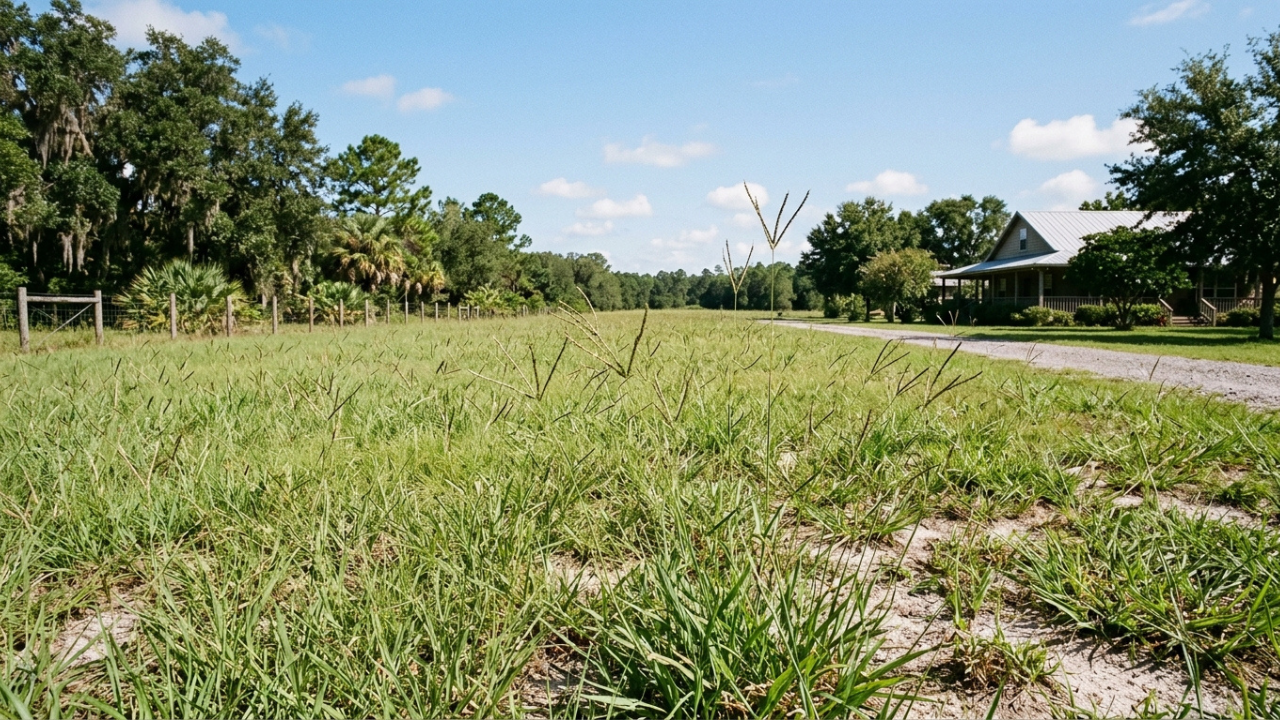
Why people choose it:
- Extremely drought-tolerant once established
- Handles poor, sandy soil better than almost any other option
- Requires less fertilizer and fewer inputs overall
- Very resistant to common pests and diseases
Where it struggles: Bahia has a coarser texture and produces tall, wiry seed heads that need frequent mowing to control. It also doesn’t handle heavy shade well, so it’s not the right pick under a dense tree canopy.
Best for: Large properties, rural lots, or anyone prioritizing low water and low maintenance over a manicured look.
3. Zoysia Grass
Zoysia has become increasingly popular in Florida over the past several years, and I’ve personally installed it in more upscale residential projects than any other grass besides St. Augustine.
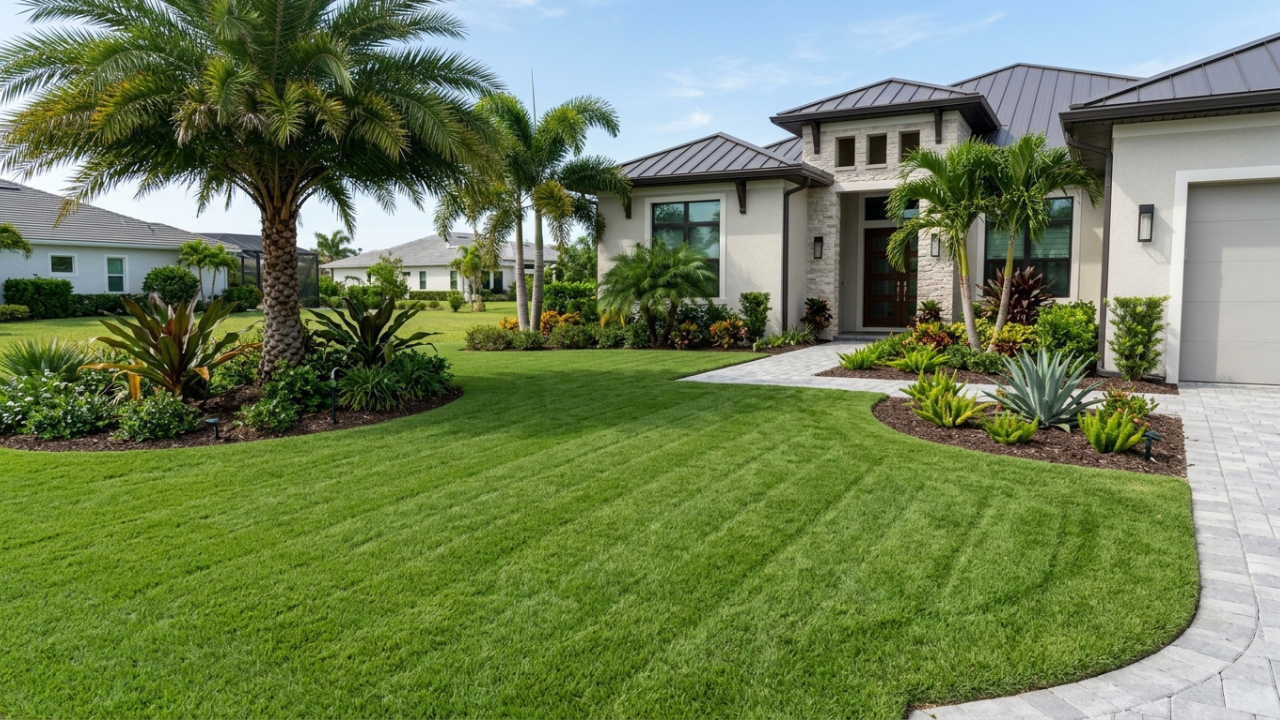
Why people choose it:
- Fine, dense texture that feels great underfoot
- Better wear tolerance than St. Augustine — good for yards with kids or pets
- Reasonable drought tolerance once mature
- Handles moderate shade decently, depending on the cultivar
Where it struggles: Zoysia grows slowly, which means it’s more expensive upfront (usually installed as sod) and slower to recover from damage or bare spots. It also requires precise mowing height management to avoid thatch buildup.
Best for: Homeowners who want a premium lawn appearance and are willing to invest a bit more in installation and mowing equipment.
4. Bermuda Grass
Bermuda is the grass you’ll see on golf courses and athletic fields across Florida, and for good reason.
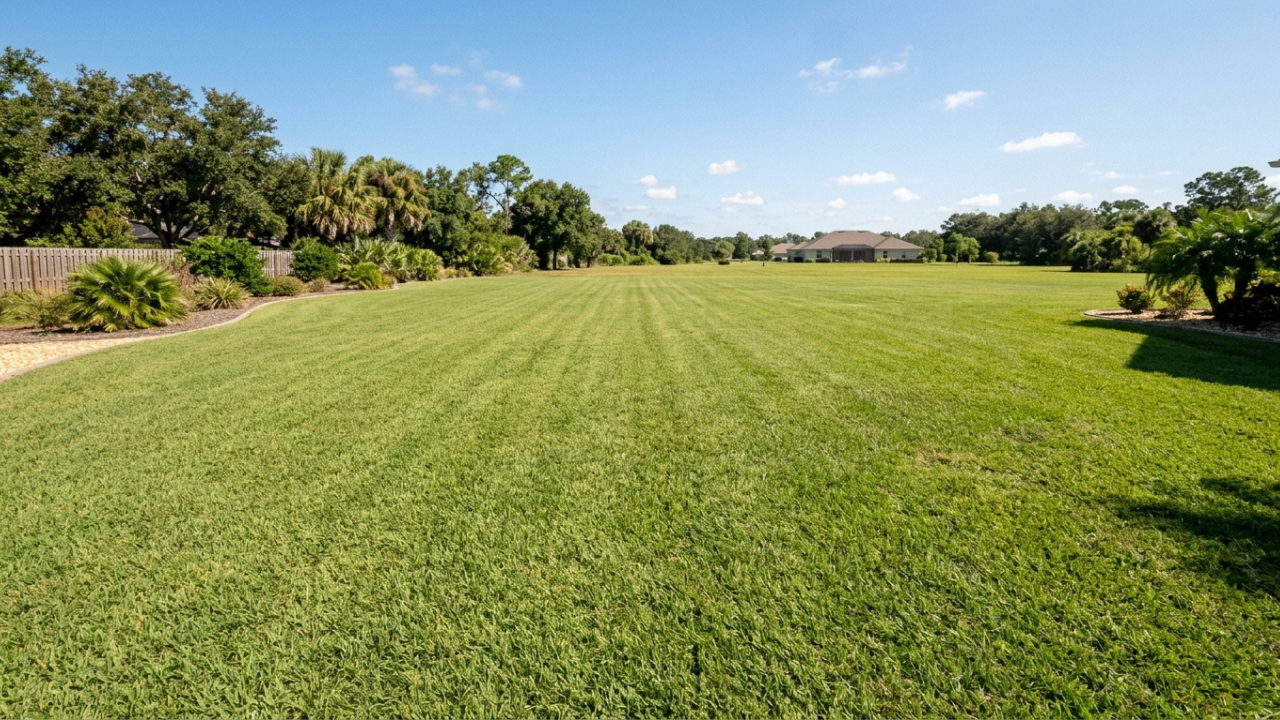
Why people choose it:
- Extremely durable and fast-growing
- Excellent heat and drought tolerance
- Recovers quickly from heavy foot traffic
- Thrives in full sun
Where it struggles: Bermuda is essentially the opposite of shade-tolerant — it needs full, direct sun to perform well and thins out fast under trees. It’s also aggressive, meaning it can invade flower beds if not edged regularly.
Best for: Sunny, open yards, sports fields, and homeowners who want a hardworking, low-fuss lawn and don’t have shade concerns.
5. Centipede Grass
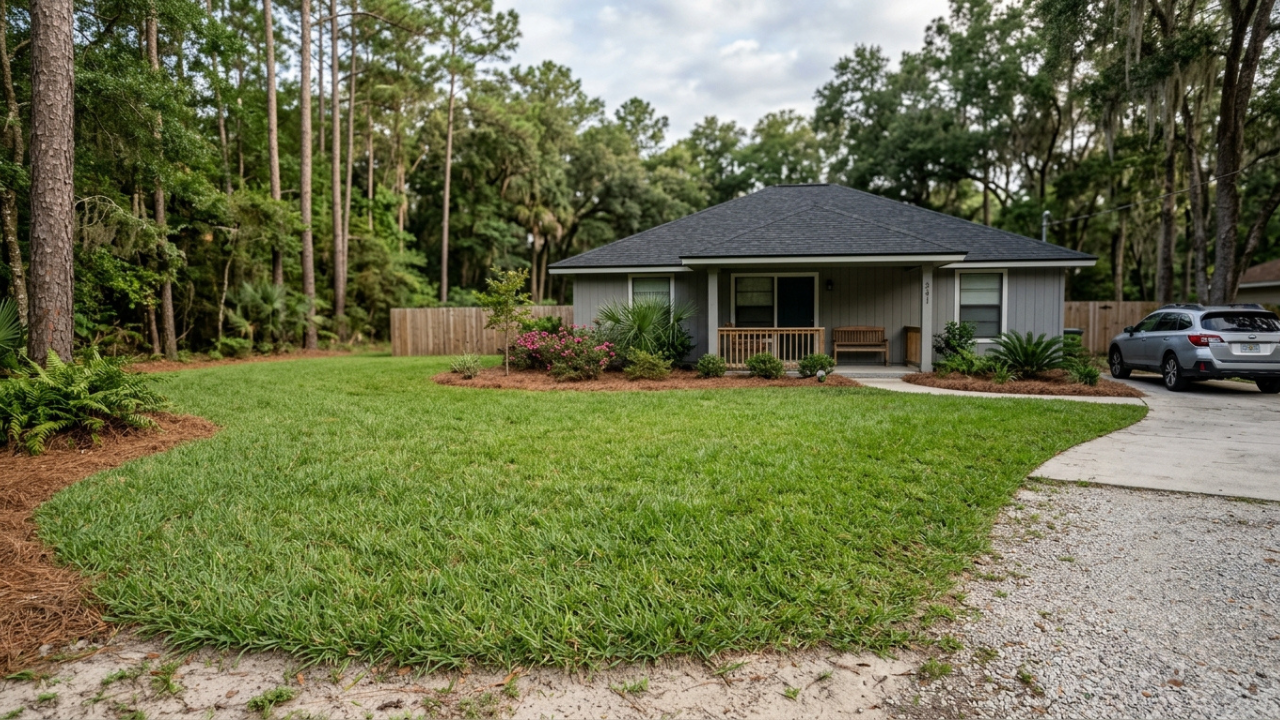
Centipede is less common in South Florida but shows up frequently in North Florida yards, where I’ve seen it perform particularly well.
Why people choose it:
- Naturally slow-growing, meaning less frequent mowing
- Requires relatively low fertilizer input
- Handles acidic, sandy soils well
Where it struggles: Centipede is less cold-hardy than the others and prefers North and Central Florida over the tropical southern regions. It’s also sensitive to over-fertilization, which sounds counterintuitive but is one of the most common mistakes I see homeowners make with it.
Best for: North Florida homeowners who want a low-maintenance, “set it and forget it” style lawn.
Quick Comparison
| Grass Type | Shade Tolerance | Drought Tolerance | Maintenance Level | Best Region in FL |
|---|---|---|---|---|
| St. Augustine | High | Moderate | Moderate–High | Statewide |
| Bahia | Low | High | Low | Statewide, rural |
| Zoysia | Moderate | Moderate–High | Moderate–High | Statewide |
| Bermuda | Low | High | Moderate | Central/South, full sun |
| Centipede | Low–Moderate | Moderate | Low | North Florida |
My Honest Recommendation
If I had to pick one grass for the average Florida homeowner without knowing much else about their yard, I’d lean toward St. Augustine for shaded or semi-shaded lots and Zoysia for sunnier yards where appearance and durability both matter. But the truth is, the “best” grass really depends on your specific sun exposure, soil, budget, and how much upkeep you’re willing to do.
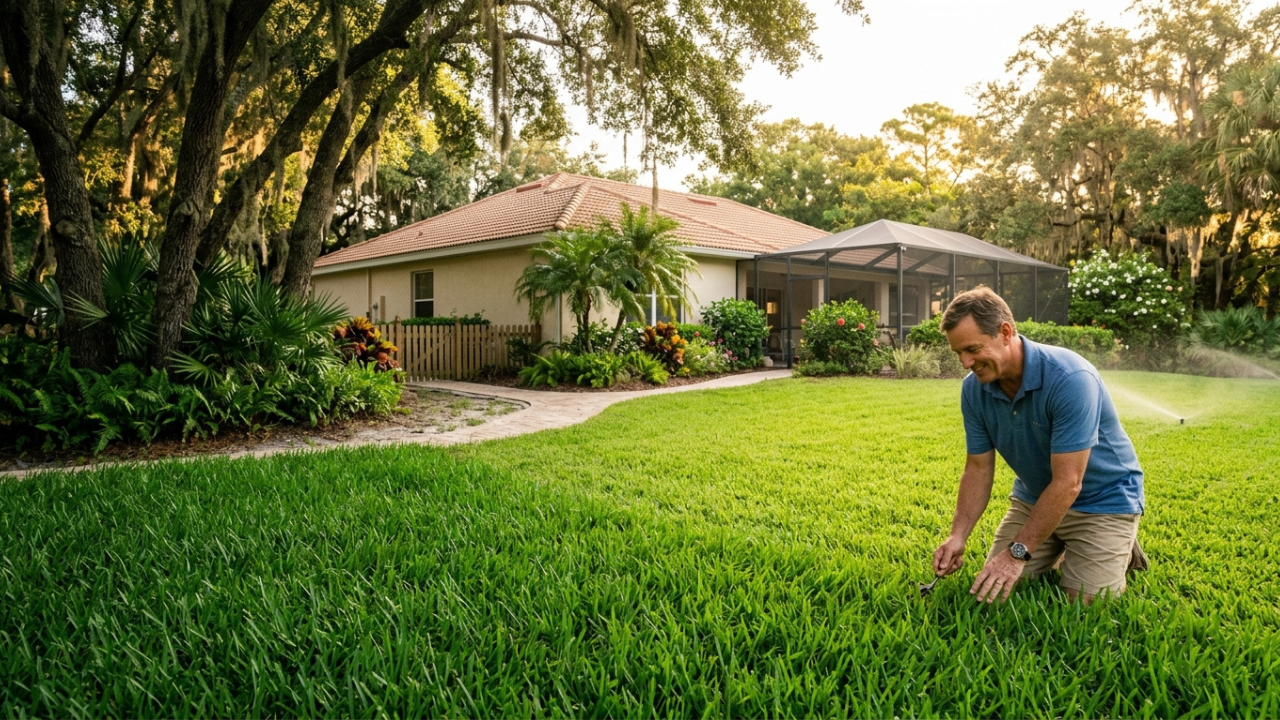
Before choosing, I always suggest doing a simple sun test — track how much direct sunlight different parts of your yard get over a full day — and, if possible, a basic soil test. Both take very little effort and will save you a lot of frustration (and money) down the road.
Frequently Asked Questions
What is the most drought-tolerant grass in Florida? Bahia and Bermuda grass are generally the most drought-tolerant options once fully established.
What grass grows best in shade in Florida? St. Augustine grass, particularly cultivars like Seville or Bitterblue, handles shade better than the other warm-season grasses covered here.
Is Zoysia grass hard to maintain in Florida? Not hard, but particular. It needs consistent mowing height and moderate fertilization to look its best, and it establishes more slowly than St. Augustine.
Every yard is different, and local extension offices (like your county’s UF/IFAS Extension office) can also provide soil testing and grass recommendations specific to your exact location — I’d encourage pairing this guide with that local expertise for the best results.